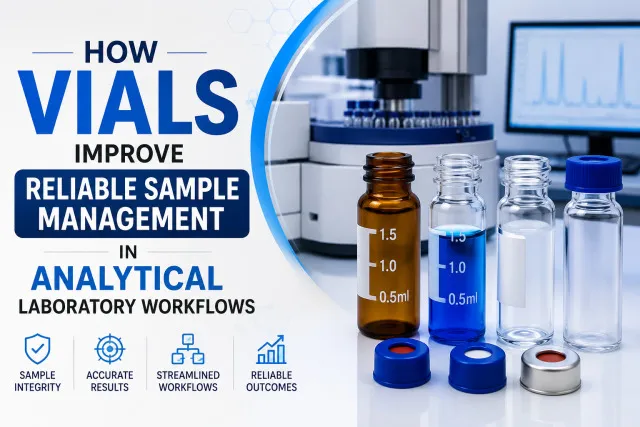

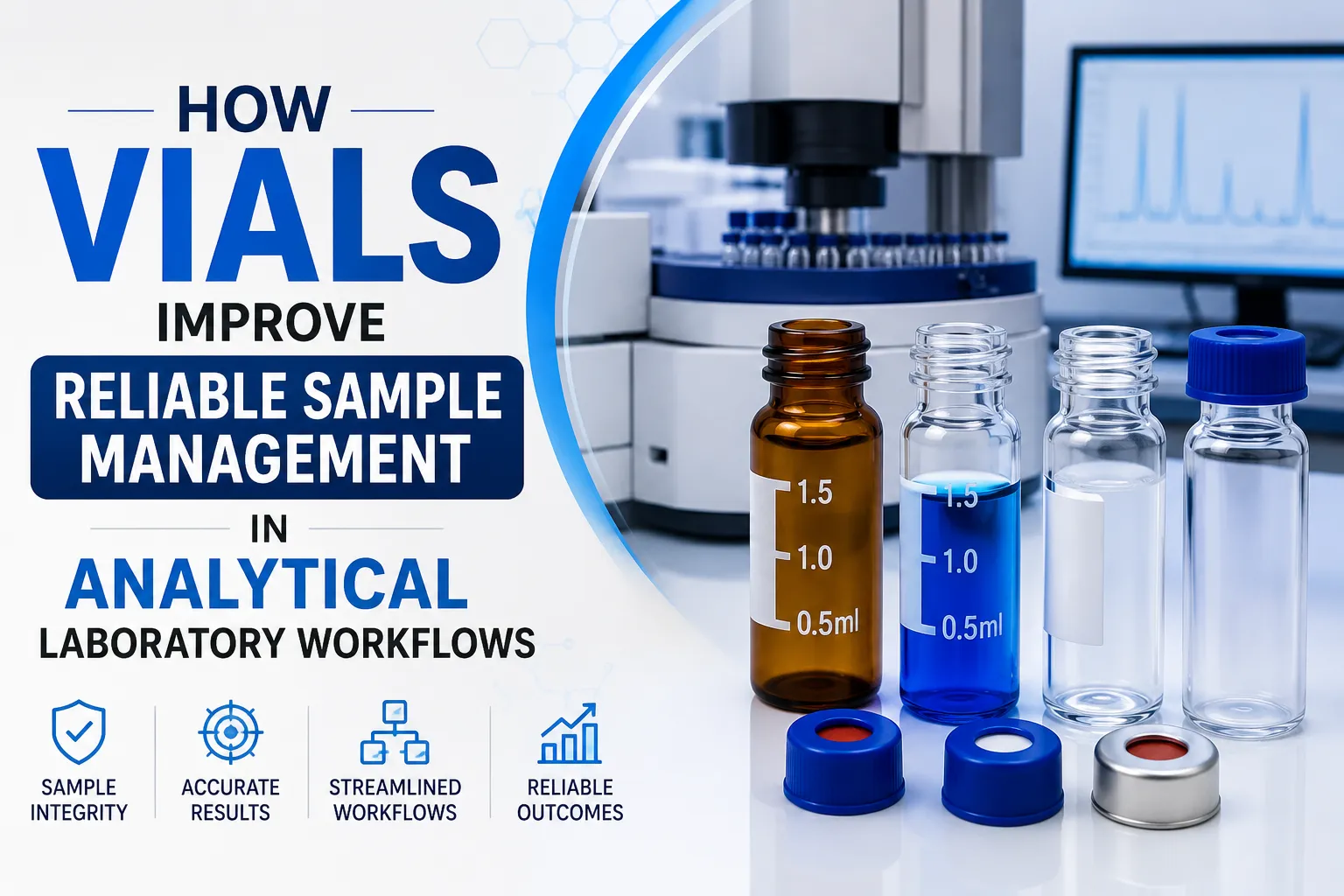
Laboratory results are only as accurate as the samples on which they are based. Regardless of whether a laboratory conducts quality control of pharmaceuticals, environmental analysis, clinical diagnostics, biotechnology studies, food safety, or chemical analysis, sample integrity during the analysis is necessary to obtain accurate and reproducible data.
The contemporary laboratories work in the context of more complicated workflows that imply collection of samples, their transportation, preparation, storage, processing, and instrumental analysis. During this lifecycle, samples are susceptible to various conditions that may affect quality such as contamination, evaporation, adsorption, degradation, oxidation, ingress of moisture, changes in temperature, and handling mistakes.
Among the numerous variables that impact the results of the analysis process, the role of laboratory containers is frequently neglected although they are very important in preserving the samples and traceability. The basic interface between the sample and the analysis workflow is the vials, which can facilitate the safe storage of the sample, its chemical stability, and compatibility with instruments, and compliance with regulations.
In chromatography labs with autosampler systems to pharmaceutical stability tests and environmental surveillance initiatives, well-chosen laboratory vials will directly affect the reliability of the data, productivity, and confidence of the analysis.
Why Sample Management Is Critical in Analytical Laboratories
Sample management involves all the activities that involve treatment of a specimen during collection and up to final analysis and storage. Good sample management guarantees that the results of analysis are accurate in terms of the original sample composition.
Sample Traceability
Traceability allows the laboratories to record the full record of a sample which includes:
- Collection details
- Storage conditions
- Handling procedures
- Analytical testing stages
- Personnel interactions
- Chain-of-custody records
Quality assurance programs and regulatory inspections are based on reliable traceability.
Sample Integrity
Sample integrity is the ability to ensure that the physical, chemical and biological properties of a sample are preserved during all its lifecycle.
Violated integrity can be as a result of:
- Contamination
- Chemical degradation
- Volatilization
- Adsorption losses
- Microbial growth
- Improper storage
Even the slightest changes may cause the major analytical error.
Chain of Custody
Environmental testing, forensic science, and pharmaceutical manufacturing industries are examples of industries that need documented chain-of-custody processes, to ensure the authenticity and accountability of samples.
Adequately labeled and secured vials are also important in keeping custody records.
Data Accuracy and Reproducibility
Analytical methods developed in accordance with FDA guidance, USP requirements, and ICH Q2(R2) principles rely on consistent sample quality. Precision, accuracy and robustness of methods can be compromised by variability introduced in storage or handling.
This makes proper sample management through proper selection of containers to start with.
What Are Laboratory Vials?
Laboratory vials are small containers specifically designed to collect, store, transport, preserve, and present samples for analysis. These analytical laboratory vials play an important role in maintaining sample quality throughout testing workflows.
They come in many materials, capacities, geometries and closure settings to suit a given laboratory needs.
Glass Vials
Glass vials are still the most common in analytical laboratory because of their:
- Chemical resistance
- Low extractables profile
- Thermal stability
- Optical clarity
Borosilicate Glass Vials
Borosilicate glass vials are typically used in chromatography and pharmaceutical laboratories since they have:
- High resistance to thermal shock
- Excellent chemical inertness
- Reduced ion leaching
- Broad solvent compatibility
These characteristics render them to be used in challenging analytical tasks.
Plastic Vials
The vials of plastic are commonly made out of:
- Polypropylene (PP)
- Polyethylene (PE)
- Polystyrene (PS)
Advantages include:
- Impact resistance
- Lower weight
- Reduced breakage risk
- Cost-effective storage
Biological samples, aqueous solutions, field sampling are some of the common applications of plastic vials.
Autosampler Vials
Autosampler vials are designed to be used with automated analytical equipment, such as:
- HPLC systems
- UHPLC systems
- GC instruments
- LC-MS platforms
- GC-MS systems
They offer dimensionality consistency needed in robotic handling and automated injection.
Storage Vials
Vials to be used in storage are:
- Sample retention
- Stability studies
- Reference standards
- Retain samples
- Archival storage
These vials are usually accompanied with special systems of closure to ensure maximum preservation of samples.
Key Functions of Vials in Laboratory Workflows
Sample Collection
Vials give controlled conditions of the initial sample acquisition.
Selection of vials minimizes:
- Environmental exposure
- Sample loss
- Contamination risks
- Handling errors
The quality of collection has a direct impact upon the downstream performance of analysis.
Sample Storage
Most of the samples have to be stored prior to analysis.
Made sample storage vials will preserve:
- Chemical composition
- Concentration levels
- Biological viability
- Physical stability
Storage performance is of particular importance to long-term studies.
Sample Transportation
Samples are often transferred among:
- Collection sites
- Testing facilities
- Contract laboratories
- Manufacturing plants
Secure vial closures are useful in preventing:
- Leakage
- Evaporation
- Cross-contamination
- Physical damage
Sample Preservation
Vials are used to maintain samples by safeguarding them against:
- Oxygen exposure
- Moisture ingress
- Ultraviolet radiation
- Temperature fluctuations
Unstable compounds and biological materials are particularly crucial with regard to preservation.
Instrument Compatibility
Some of the instruments used in the analysis necessitate extremely standardized containers.
Precision-manufactured vials facilitate:
- Consistent positioning
- Reliable robotic handling
- Accurate injection volumes
- Reduced instrument downtime
Contamination Prevention
The cleanliness of containers is an important factor in accuracy of analysis.
Laboratory vials of high quality can be used to minimize contamination as a result of:
- Manufacturing residues
- Surface interactions
- Environmental exposure
- Handling procedures
Traceability
Laboratory processes of the modern world require effective identification systems.
Vials often support:
- Barcodes
- Serialized labels
- RFID-enabled tracking
- Laboratory information management systems (LIMS).
Long-Term Stability
Retention samples, stability studies and regulatory archives could have a storage time between months and years.
Correct vial materials and closures can be used to maintain the quality of the samples during such times.
How Vials Improve Sample Reliability
Chemical Stability
The use of chemically inert vials minimizes contact between vials and sample constituents.
This minimizes:
- Adsorption
- Leaching
- Catalytic degradation
- pH shifts
Biological Stability
Biological samples usually have sensitive enzymes, metabolites, proteins and nucleic acids.
Correct storage vials aid in preserving biological integrity, by limiting environmental stressors.
Volatile Compound Retention
The volatile organic compounds (VOCs) are especially prone to evaporation losses.
Adequate sealing systems are used to conserve the concentrations of the various analytes and enhance quantification.
Moisture Protection
Hygroscopic materials are able to quickly take up moisture in the environment.
The proper closures can be used to ensure the controlled internal conditions.
Light Protection
Some compounds are destroyed in the presence of light (ultraviolet or visible).
Amber-coloured vials are commonly used to store:
- Pharmaceuticals
- Nutraceuticals
- Environmental samples
- Light-sensitive chemicals
Temperature Resistance
The laboratory processes can include:
- Cryogenic storage
- Refrigeration
- Elevated-temperature testing
- Freeze-thaw cycles
Vial materials should be able to withstand the desired storage conditions without affecting the quality of the samples.
Seal Integrity
The closure system can additionally be vital as the vial.
Proper seals reduce:
- Evaporation
- Oxygen ingress
- Moisture transfer
- Leakage
Reproducibility
Consistency is needed in reliable analytical testing.
The use of standardized vial size, material, and closure systems helps to achieve reproducible performance in analysis.
Role of Vials in Analytical Techniques
High-Performance Liquid Chromatography (HPLC)
HPLC relies heavily on autosampler vials for accurate and reproducible sample introduction.
Inadequate quality of vials can be a contributor to:
- Carryover
- Adsorption losses
- Variable recovery
- Inconsistent injections
Gas Chromatography (GC)
Volatile compounds are common to GC applications.
Sealing of vials is essential when analyzing to ensure the concentration of the analyte and evaporation.
GC-MS
The analysis at the trace level by GC-MS needs a very clean vial to limit the background contamination and false positives.
LC-MS
LC-MS methods require low-extractable, low-adsorption containers to enable highly sensitive analyses.
ICP-MS
Trace elemental analysis involves using containers with minimal metal pollution and ion leaching.
UV-Visible Spectroscopy
Temporary storage in laboratory vials is a common procedure in the preparation of samples which are then transferred to measurement cells or automated systems.
Sample Digestion
Acid digestion is commonly carried out by environmental, pharmaceutical and materials labs followed by instrumental analysis.
Vials that are resistant to chemicals aid in the safe handling and storage of prepared samples.
Clinical Diagnostics
To guarantee the integrity and traceability of the samples, diagnostic laboratories rely on safe sample containers.
Pharmaceutical Testing
Applications include:
- Stability studies
- Dissolution testing
- Impurity profiling
- Raw material analysis
- Finished product testing
Environmental Monitoring
Special vials are regularly applied in environmental labs to:
- Water testing
- Soil extracts
- VOC analysis
- Regulatory monitoring programs
Food Testing
Laboratories that deal with food need containers that are resistant to contamination so as to test accurately:
- Residues
- Additives
- Contaminants
- Nutritional components
Read more :- Mastering the Burette: A Complete Guide to Using Burets in Chemistry
Preventing Sample Contamination Using Proper Vials
The most frequent sources of analytical variability are contamination.
Container Cleanliness
The manufacture and handling of laboratory vials ought to be under controlled conditions to reduce contamination by particulates and chemicals.
Surface Inertness
The surface of inert decreases the contact of analytes and enhances recovery.
This is especially vital to:
- Trace-level compounds
- Proteins
- Peptides
- Adsorptive analytes
Proper Sealing
Closures must give a safe channel against environmental pollution.
Simple closure systems are:
- Screw caps
- Crimp caps
- Snap caps
Sterility
Sterile containers may be needed in clinical, microbiological and biotechnology applications to avoid biological contamination.
Cross-Contamination Prevention
Best practices include:
- Single-use items as needed.
- Dedicated storage systems
- Controlled handling procedures
- Proper cleaning validation
Sample Compatibility
The compatibility tests should take into consideration:
- Solvent systems
- Sample pH
- Oxidizing agents
- Temperature conditions
- Analyte stability
Choosing the Right Vials for Different Laboratory Applications
The choice of suitable lab vials would involve the consideration of various technical considerations.
Material Selection
Select vial material depending on:
- Chemical compatibility
- Temperature requirements
- Regulatory expectations
- Analytical sensitivity
Volume Requirements
Vials must be of the correct size to accommodate the size of the sample but should have the least amount of excess headspace where necessary.
Closure Type
Closure selection affects:
- Seal integrity
- Evaporation control
- Instrument compatibility
- Sample stability
Septa Selection
The typical materials of Septa are:
- PTFE
- Silicone
- PTFE/silicone laminates
The choice must be according to the solvent compatibility and injection needs.
Chemical Compatibility
Should be compatible with:
- Acids
- Bases
- Organic solvents
- Oxidizers
Biological matrices
Temperature Resistance
Temperatures of storage and processing should be taken into account when choosing a vial.
Instrument Compatibility
The size of the autosampler must meet the requirements of the manufacturer of the instrument.
Regulatory Requirements
Consumables must support relevant quality standards and documentation requirements which should be ensured in regulated laboratories.
Best Practices for Laboratory Sample Management
Labeling
The labels should be easily readable during the sample lifecycle and contain:
- Sample ID
- Collection date
- Analyst information
- Storage conditions
Sample Tracking
Integrated tracking systems minimize the chances of sample mix-ups, and data integrity problems.
Storage Conditions
The storage of samples must be in line with the established stability requirements.
Handling Procedures
To reduce risks of contamination and degradation, personnel are supposed to adhere to documented procedures.
Transportation Controls
Samples should be safeguarded by their transport conditions against:
- Temperature excursions
- Vibration
- Leakage
- Environmental exposure
Cleaning and Maintenance
In areas where reusable containers are allowed, there has to be validated cleaning procedures.
Disposal
The vials used should be disposed of by laboratories in line with the environmental and safety laws.
Documentation
Well documented traceability, investigations, audits and regulatory inspections are supported.
Regulatory Considerations
Appropriate choice of vials will help in adherence to many quality and regulatory guidelines.
Good Laboratory Practice (GLP)
GLP focuses on documentation, traceability and sample integrity during the laboratory operations.
Good Manufacturing Practice (GMP)
Laboratories in the pharmaceutical industry need validated procedures of handling the samples that aid in product quality.
ISO/IEC 17025
Laboratories should be technically competent in terms of testing and calibration and should have credible sample management.
FDA Guidance
Accuracy, precision, specificity, and robustness are the main tenets of the FDA analytical methods validation, which may be affected by the sample handling and containment.
United States Pharmacopeia (USP)
The emphasis on appropriate sample containers and storage conditions is emphasized in USP chapter about analytical procedures and laboratory practices.
ICH Q2(R2)
The power of the analytical procedures should be revealed to perform reliably under tested conditions, such as the proper preparation and storage of samples.
WHO Laboratory Quality Standards
WHO recommendation stresses on adequate handling, recording, storage and tracking of specimens during laboratory processes.
Common Mistakes Laboratories Should Avoid
Improper Vial Selection
Incompatible materials may result in the degradation of the samples, loss of analytes or contamination.
Poor Sealing
Poor closure mechanisms can lead to evaporation and poor stability of the samples.
Incorrect Storage Conditions
Sample composition may be changed by the improper temperature or light exposure.
Sample Evaporation
Too much headspace and poor sealing lead to risks of evaporation.
Cross-Contamination
Mismanagement and storage may bring in contaminants that may tamper with the analysis results.
Reusing Damaged Vials
Vials which have been scratched, cracked or damaged by chemicals must not be used again.
Improper Labeling
Tracing is put at risk due to incomplete labeling and augmentation of the chances of sample mix-ups.
Overfilling
Vials that are overfilled may lead to problems of pressure, leakage and poor seal.
Future Trends in Laboratory Sample Management
Smart Sample Tracking
The digital tracking systems still enhance the sample traceability and the workflow.
Barcoded Vials
Vials with barcodes can be automatically identified and minimize transcription errors.
RFID Integration
Inventory management and real-time monitoring is possible with RFID technologies.
Laboratory Automation
Chromatography and high-throughput testing platforms are becoming more and more automated with sample handling systems.
Robotics
Robotic workflows minimize the need to intervene manually, and enhance consistency through high sample sets.
Sustainable Laboratory Consumables
Producers are considering new recyclable, less packaging waste, and greener production processes.
Precision Analytical Workflows
With increasing sensitivity of analytical instruments, ultra-clean, low-extractable vials will keep getting in demand.
How Chemscience Supports Modern Laboratory Workflows
The current laboratories need reliable consumables to assist in the sample integrity, reproducibility of analytical methods, and regulatory adherence. Chemscience supports the workflow of laboratories with its wide laboratory offerings, analytical consumables, scientific equipment and workflow-enabling solutions and serves the needs of pharmaceutical, biotechnology, chemical, environmental, academic, food testing and industrial laboratories.
Quality-oriented laboratory supplies used by the company are also in line with the increasing demand to have sound sample management systems, instrument compatible consumables and scientifically proven laboratory practices. With the constantly changing analytical technology, the availability of high quality laboratory consumables such as vials, closures, and filtration products as well as sample preparation instruments are vital in ensuring the confidence and efficiency of the operation of an analysis.
Conclusion
Quality sample management is an essential prerequisite to analytical quality. Each step of the workflow has an impact on the quality of data, reproducibility, and regulatory compliance, since a sample is collected and ultimately reported and stored in archives.
Vials are some of the most valuable laboratory consumables that aid this process. These apparently simple containers are important in the preservation of sample integrity, contamination prevention, traceability, preservation of analyte stability and compatibility with the new analytical instrumentation.
In HPLC, GC-MS, LC-MS, ICP-MS, in the pharmaceutical quality control, clinical diagnostics, environmental testing, or research laboratories, appropriately chosen laboratory vials directly translate into the reliability of the analytical processes and work efficiency. The role of scientifically designed sample containers in laboratories will only be expanding as more labs become automated, digitally tracked, and employ more sensitive means of analysis.
Organizations committed to laboratory quality should view vial selection not as a routine purchasing decision, but as a strategic component of effective sample management and long-term analytical success.
Frequently Asked Questions (FAQs)
1.What are laboratory vials?
Laboratory vials are unique vessels that are employed in the collection, storage, transportation, preservation, preparation and analytical testing of samples. They can be made in glass and plastic versions and find extensive applications in chromatography, pharmaceutical testing, environmental analysis, clinical diagnostics and research laboratories.
2. What is the importance of vials in analytical labs?
Vials serve to preserve the integrity of samples, eliminate contamination, enable traceability, preserve the stability of analytes and compatibility with analytical equipment. The accuracy and reproducibility of their performance is directly dependent on their performance.
3.What is the way that vials keep the samples uncontaminated?
Laboratory vials of high quality reduce contamination by manufacturing a clean product, using a chemically neutral material, using a secure sealing mechanism, sterile designs where necessary, and being compatible with the target sample type.
4.What should the laboratory vials be made of?
Materials will be the best depending on the use. Glass vials made of borosilicate glass are popular in chromatography and analysis with chemically-challenging substances due to their inertness and resistance to solvents. Plastic vials can be useful in cases of biological specimens, field sampling and in those cases where breakage strength is of significance.
5.What are the applications of autosampler vials?
Autosampler vials are intended to be used with automated analysis equipment like HPLC, UHPLC, GC, GC-MS, and LC-MS. They offer standard dimensions and compatibility needed in automated sample injection and high throughput lab workflows.
6.What should be the way laboratory samples should be stored in vials?
Samples are to be kept in vials that are compatible with the proper closures and under the tested environmental conditions. Temperature, humidity, light exposure, oxygen sensitivity, and length of storage are some of the factors that should be considered to ensure that the samples are stable.
7.What are the things that are to be taken into account when choosing laboratory vials?
Among the important factors are compatibility of materials, volume of vials, type of closure, type of septa, resistance to temperatures, method of analysis, regulatory considerations, stability of samples, and compatibility with the instrument.
8.How do good vials enhance the accuracy of analysis?
Vials of high quality minimise the risk of contamination, reduce the adsorption of the analyte, preserve volatile samples, maintain a seal, enable a reproducible introduction of samples, and assist in ensuring that the final analytical results are representative of the original sample composition.

























Sign in to leave a comment.