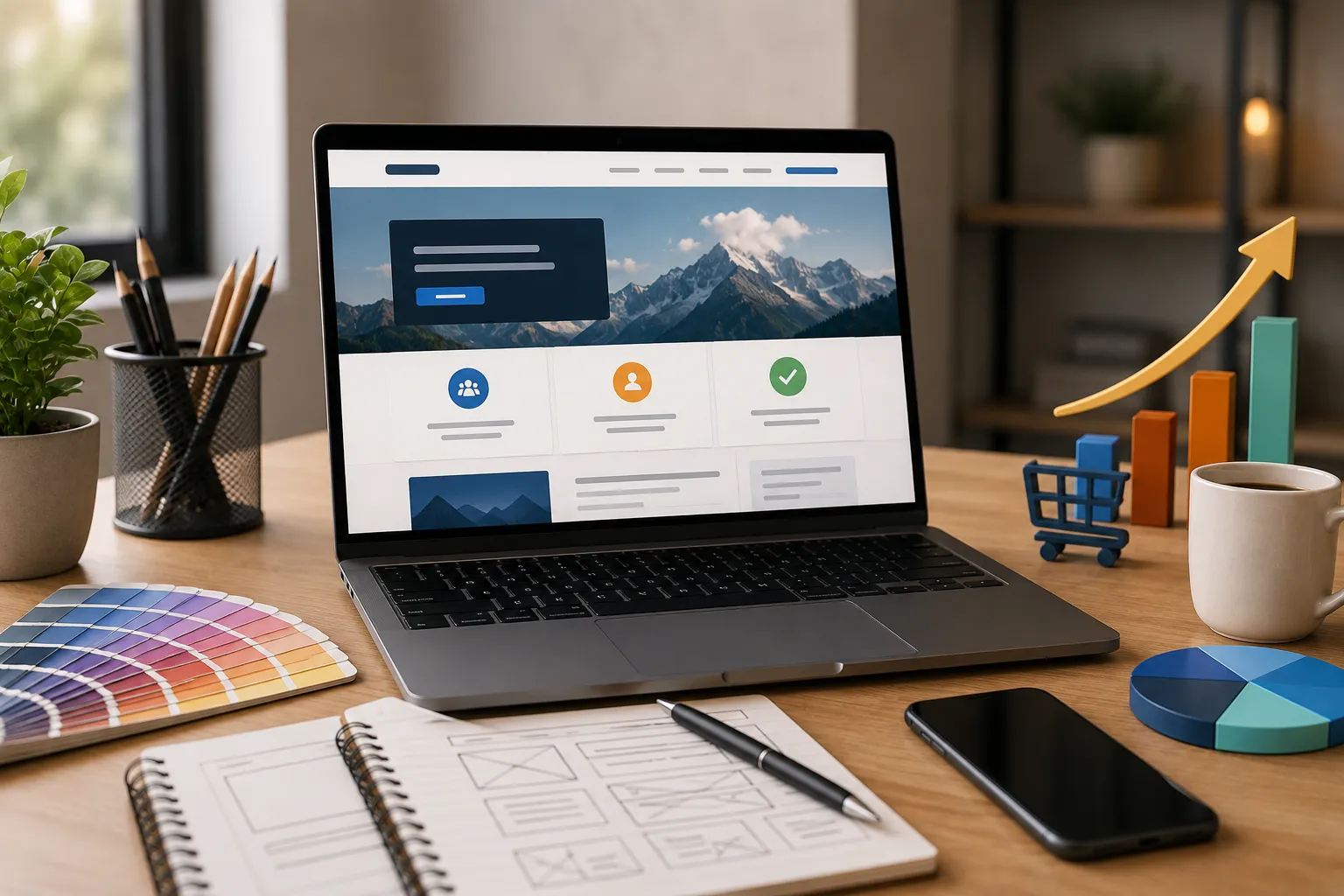

A website is often the first place people go when they want to understand a business. Before contacting a company or buying something, visitors usually look at the website to decide whether the business appears reliable, professional, and worth their time. This is why website design is about much more than choosing attractive colors and images.
A well-designed website can make information easier to find, communicate a company's value clearly, and guide visitors toward useful actions. A confusing or outdated design can have the opposite effect, even when the business itself provides excellent products or services.
Why Website Design Matters for Business
Your website represents your business when you are not available to speak with customers directly.
When someone visits for the first time, they may quickly look for answers to simple questions:
- What does this business offer?
- Can I trust this company?
- Is the information easy to understand?
- How can I contact them?
- Does the business look professional?
Good design helps answer these questions without making visitors work too hard.
It also creates a consistent experience across important pages such as the homepage, service pages, contact page, and blog.
First Impressions Can Influence Customer Trust
Visitors form opinions quickly when they land on a website.
A cluttered layout, outdated graphics, inconsistent fonts, or broken elements can make a business appear less professional. In contrast, a clean layout with clear information can create a stronger sense of credibility.
This does not mean every business needs an expensive or highly complicated design.
The important thing is that the design should feel appropriate for the business and make it easy for visitors to understand what the company does.
Clear Navigation Makes Websites Easier to Use
A beautiful website is not very useful if visitors cannot find what they need.
Navigation should help people move naturally from one section to another. Important pages should be easy to locate, and menus should not contain unnecessary options.
For example, a service business may organize its main navigation around:
- Home
- About
- Services
- Portfolio
- Blog
- Contact
The exact structure depends on the business, but the principle remains the same: visitors should not have to search through multiple pages to find basic information.
Visual Design Should Support the Message
Colors, images, typography, spacing, and layouts all contribute to how visitors perceive a business.
However, visual elements should have a purpose.
A business website should use design elements to:
- Highlight important information
- Separate different sections
- Make content easier to scan
- Establish brand consistency
- Draw attention to useful actions
Adding too many animations, graphics, or decorative elements can make a website harder to understand.
Good design often comes from knowing what to leave out.
Website Speed Also Affects User Experience
Design and performance are closely connected.
Large images, unnecessary animations, excessive scripts, and poorly optimized resources can make pages slower. A visually impressive website may still lose visitors if they have to wait too long for important content to appear.
When designing a business website, performance should be considered alongside appearance.
Images should be optimized, pages should be structured efficiently, and unnecessary elements should be avoided wherever possible.
Build Trust With Clear Business Information
A professional design cannot replace transparency.
Visitors are more likely to trust a website when important business information is easy to find. Depending on the type of company, this may include:
- Business details
- Contact information
- Service descriptions
- Customer testimonials
- Portfolio examples
- Frequently asked questions
- Privacy information
Providing useful information reduces uncertainty and gives visitors more confidence before they make contact.
Use Calls-to-Action Naturally
A website should make it clear what visitors can do next.
A call-to-action could encourage someone to:
- Request a quotation
- Contact the business
- Book a consultation
- View a service
- Submit an enquiry
- Make a purchase
The goal is not to place a button on every section of the website. Instead, calls-to-action should appear where they make sense within the visitor's journey.
For example, a service page could explain the service first and then provide a clear option for visitors who are ready to discuss their requirements.
Consistency Makes a Website Feel More Professional
Imagine visiting one page with a blue color scheme, another with completely different fonts, and another with a different navigation structure.
Even if each page looks attractive individually, the overall website can feel disconnected.
Consistent use of:
- Fonts
- Colors
- Button styles
- Spacing
- Images
- Navigation
- Page layouts
creates a more unified experience.
This consistency can strengthen brand recognition and make the website easier to use.
Design Should Reflect Your Target Audience
There is no universal website design that works for every industry.
A professional services company may prefer a clean and conservative appearance, while a creative agency may use more expressive visuals. An online store may need a design focused heavily on products, categories, filters, and purchasing.
Before designing a website, think about the people who will use it.
Ask:
- What information are they looking for?
- What problems are they trying to solve?
- What devices do they use?
- What might prevent them from contacting or buying?
- What information will help them make a decision?
Design becomes more effective when it starts with the audience rather than personal preferences.
Avoid Common Design Problems
Some design choices can make a website less effective even when they initially appear attractive.
Common problems include:
- Too much text without proper spacing
- Difficult-to-read fonts
- Weak contrast
- Confusing menus
- Excessive pop-ups
- Autoplay media
- Overuse of animations
- Unclear calls-to-action
- Outdated contact information
Removing these distractions can often improve the user experience without requiring a complete redesign.
Good Design Can Support Conversions
A conversion does not always mean a completed purchase.
For one business, a conversion may be a phone call. For another, it could be a quotation request, consultation booking, newsletter signup, or completed order.
Design can support these actions by creating a clear path from information to decision.
For example:
Problem → Service information → Benefits → Proof → Call-to-action
This type of structure helps visitors understand what the business offers and what they should do next.
Work With the Right Web Development Team
Creating an effective business website requires more than making individual pages look attractive. Design, functionality, performance, responsiveness, and technical implementation all need to work together.
If your business is planning a new website or improving an existing one, hire web developers in India who can understand your business requirements and turn them into a professional, user-focused website.
The development team should be able to discuss your goals, recommend practical solutions, and build a website that can continue to support the business as it grows.
Frequently Asked Questions
How does website design affect customer trust?
A clear, professional, and consistent website can make a business appear more credible. Easy navigation, accurate information, quality visuals, and clear contact details can also reduce uncertainty for visitors.
Can good website design increase conversions?
Yes. Effective design can make information easier to understand and guide visitors toward actions such as contacting a business, requesting a quote, booking a service, or completing a purchase.
What makes a business website look professional?
Consistency, clear navigation, readable content, quality visuals, responsive design, fast performance, accurate information, and a logical page structure all contribute to a professional appearance.
Should every business website have the same design?
No. The design should reflect the business, its audience, industry, goals, and type of customer journey. A design that works for an e-commerce company may not be suitable for a professional services business.
Conclusion
Website design has a direct connection with how people experience a business online. A clear and thoughtful design can help visitors understand your services, find information quickly, trust your brand, and take the next step.
The strongest business websites do not rely on visual appearance alone. They combine useful content, intuitive navigation, good performance, responsive layouts, credibility signals, and clear calls-to-action.
By designing around customer needs and business goals, you can create an online presence that does more than look professional—it can actively support your business growth and customer relationships.























Sign in to leave a comment.