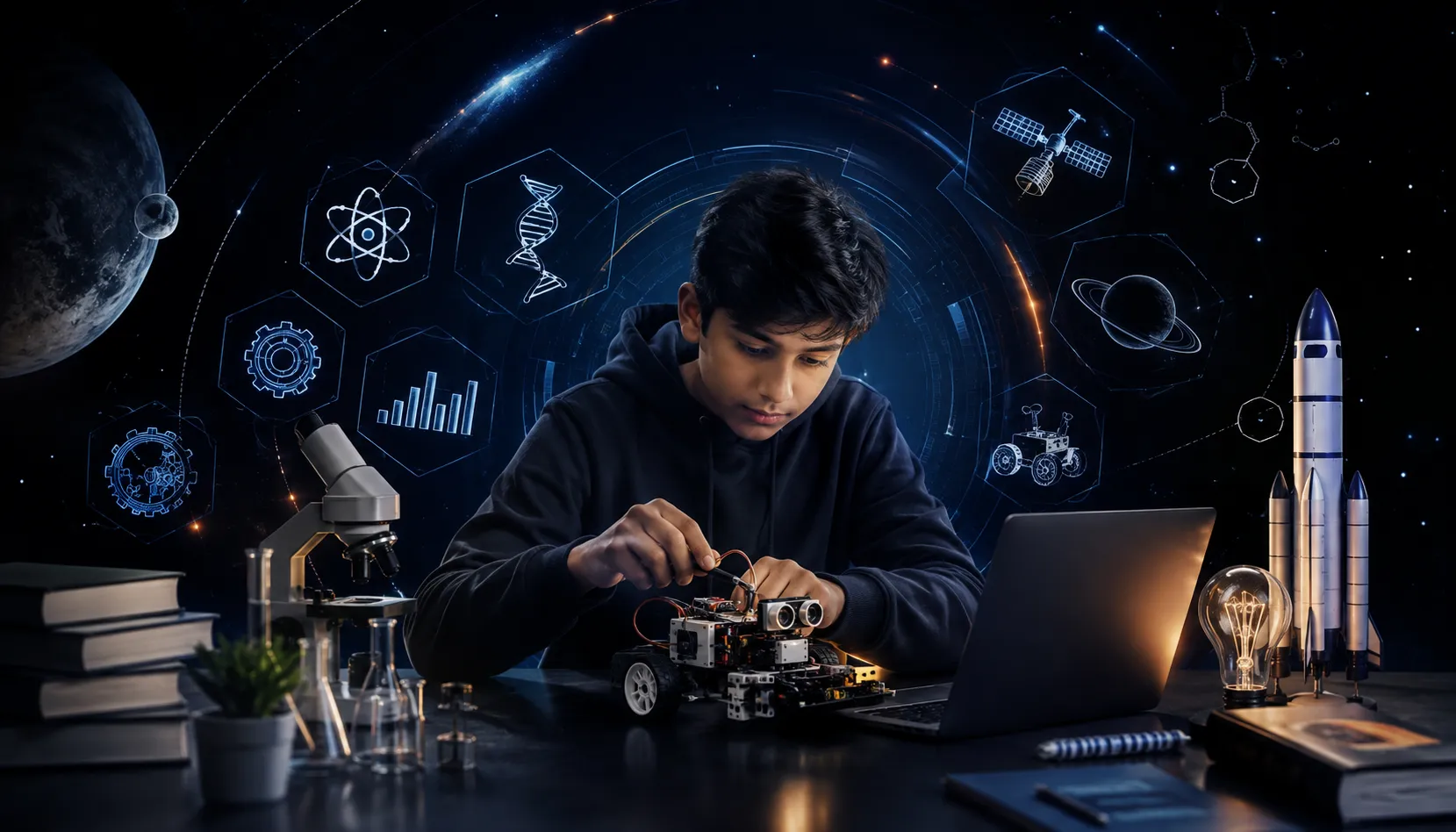

For today’s C-suite executives, business leaders, and forward-thinking founders, preparing the next generation for an increasingly complex digital economy is a strategic priority. Modern industries demand more than rote memorization. They require high cognitive agility, data-driven reasoning, and systems-level problem solving. When young students display a fascination with the cosmos, capturing that spark early can shape their long-term intellectual trajectory.
This is precisely where WhyCosmos courses bridge the gap between passive curiosity and practical capability. By combining rigorous scientific frameworks with experiential learning, these specialized programs equip children with foundational STEM competencies that extend far beyond textbook physics.
Moving Beyond Passive Content Consumption
Standard video lectures and traditional classroom science modules often reduce space exploration to static diagrams and memorized facts. In contrast, interactive learning models engage children as active investigators:
- Live, Small-Group Mentorship: Led by subject-matter experts and aerospace professionals, sessions prioritize dynamic Q&A and critical reasoning over passive listening.
- Real-World Telemetry: Students analyze actual satellite experiment data, learning how researchers monitor space weather, track orbital debris, and manage mission logistics.
- Applied Engineering Simulations: Hands-on exploration of 3D spacecraft hardware demystifies complex aerodynamic and mechanical principles.
Building Systems Thinking and Problem-Solving Grit
Deep space missions require flawless integration across multiple technical disciplines. A mindset directly applicable to leadership and innovation in business. Enrolling your child in WhyCosmos courses introduces them to systems thinking at an early age.
When young learners design simulated satellite payloads or analyze rocket propulsion dynamics, they quickly discover that a single variable impacts an entire mission. This trial-and-error process builds cognitive resilience. Rather than fearing wrong answers, students learn to treat mistakes as valuable data points. A critical habit for future analysts, engineers, and executive decision-makers.
Cognitive Skill Architecture in Space Education
- Applied Physics & Mechanics (Orbital paths, aerodynamic drag)
- Computational & Data Literacy (Telemetry analysis, scale ratios)
- Executive Function (Hypothesis testing, collaborative defense)
A Structured Pipeline for Long-Term Innovation
High-impact education relies on progressive learning tracks rather than isolated workshops. The structured pathways offered through WhyCosmos courses take students from foundational observational astronomy into atmospheric physics, aeronautics, and satellite engineering.
This scaffolded approach ensures that abstract mathematical formulas become tangible, problem-solving tools. As students calculate orbital trajectories or evaluate wing lift ratios, mathematics transforms from a dry academic requirement into an essential language of discovery.
Conclusion
Nurturing an early passion for space technology is an investment in a child’s lifelong intellectual capability. By engaging with WhyCosmos courses, young explorers transition from fascinated stargazers into confident, analytical problem solvers equipped to lead in tomorrow’s technology-driven world.
























Sign in to leave a comment.