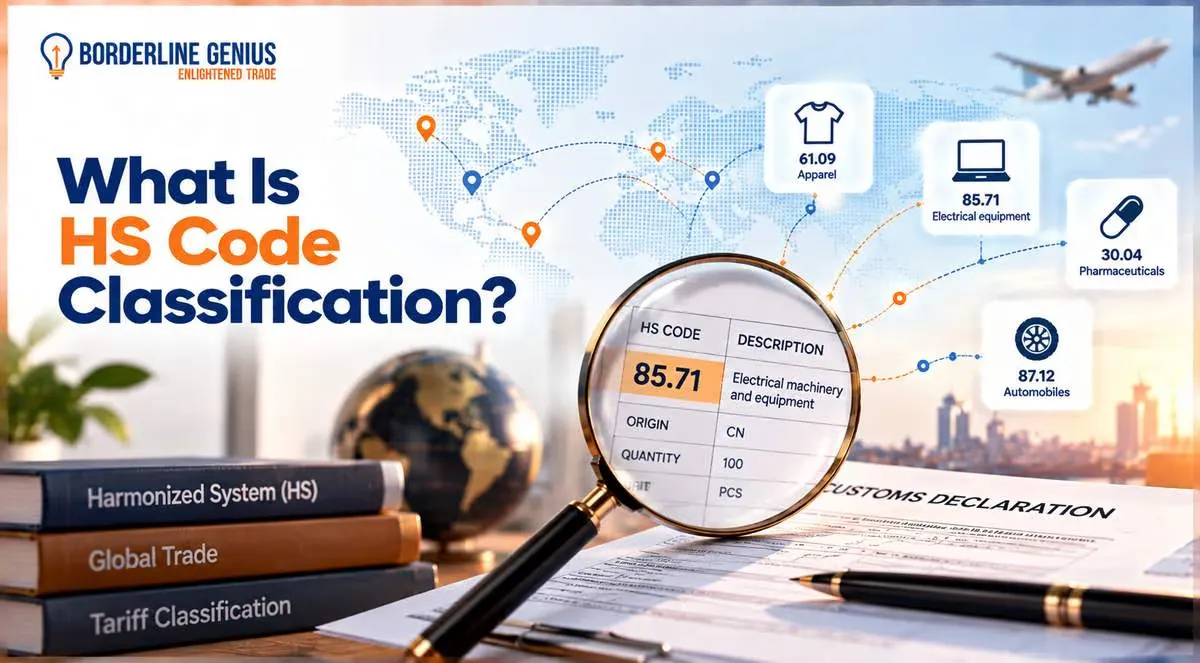

International trade involves several responsibilities beyond transporting goods from one country to another. Businesses must identify products correctly, determine applicable customs requirements, and maintain accurate information for import and export procedures.
HS code classification supports these activities by providing a standardized system for categorizing internationally traded products. For importers, exporters, manufacturers, and customs brokers, understanding this system is essential for managing tariff requirements and reducing avoidable classification errors.
Understanding How HS Codes Work
The Harmonized System (HS) is developed and maintained by the World Customs Organization (WCO). It establishes an international framework for classifying goods through a six-digit code structure.
The first two digits identify the chapter, the next two identify the heading, and the final two identify the subheading.
Countries can extend this international structure to create more detailed national tariff codes. These extensions help identify country-specific duties, trade measures, and regulatory requirements.
Consequently, businesses must verify the complete tariff code required by the destination country rather than relying exclusively on an international six-digit classification.
What Determines the Correct Classification?
HS code classification requires an assessment of the product and the applicable tariff provisions. A commercial product name alone may not provide enough information to determine the appropriate code.
Depending on the product, relevant considerations may include:
- Material composition and construction.
- Technical specifications and functional characteristics.
- Intended use, where relevant under the classification rules.
- The wording of tariff headings.
- Applicable Section Notes and Chapter Notes.
- The General Rules of Interpretation (GRIs).
- Requirements in the destination country's national tariff schedule.
For a comprehensive explanation of these elements, including the classification process and common mistakes, consult this guide to understanding HS code classification.
The Importance of GRIs and Tariff Notes
The General Rules of Interpretation establish the framework for determining the appropriate classification under the Harmonized System. They are applied in their prescribed sequence and are particularly important when products involve multiple materials, components, or potentially relevant headings.
Section Notes and Chapter Notes clarify the scope of tariff sections and chapters. They can establish whether a product falls within a particular provision or is excluded from it.
Explanatory Notes provide additional interpretative guidance. Together, these references help classification professionals make decisions based on the tariff framework rather than relying on superficial product similarities.
How Classification Errors Affect Import Operations
An incorrect HS code can affect several aspects of international trade.
Customs duties: Different classifications may be subject to different tariff rates or additional trade measures.
Regulatory requirements: Classification can help identify applicable licenses, permits, restrictions, and other product-specific obligations.
Landed costs: Incorrect classification may lead to inaccurate duty estimates and unexpected import expenses.
Customs clearance: Errors may result in additional scrutiny, documentation requests, or delays, depending on the circumstances.
Accurate classification is therefore relevant to both compliance management and financial planning.
Building a More Reliable Classification Process
Businesses can improve consistency by maintaining complete product records and documenting the reasoning behind classification decisions.
A structured process should include collecting product specifications, identifying relevant tariff headings, reviewing legal notes, applying the GRIs, and checking the result against the destination country's tariff schedule.
Previous classifications should also be reviewed when product specifications change or applicable tariff requirements are updated.
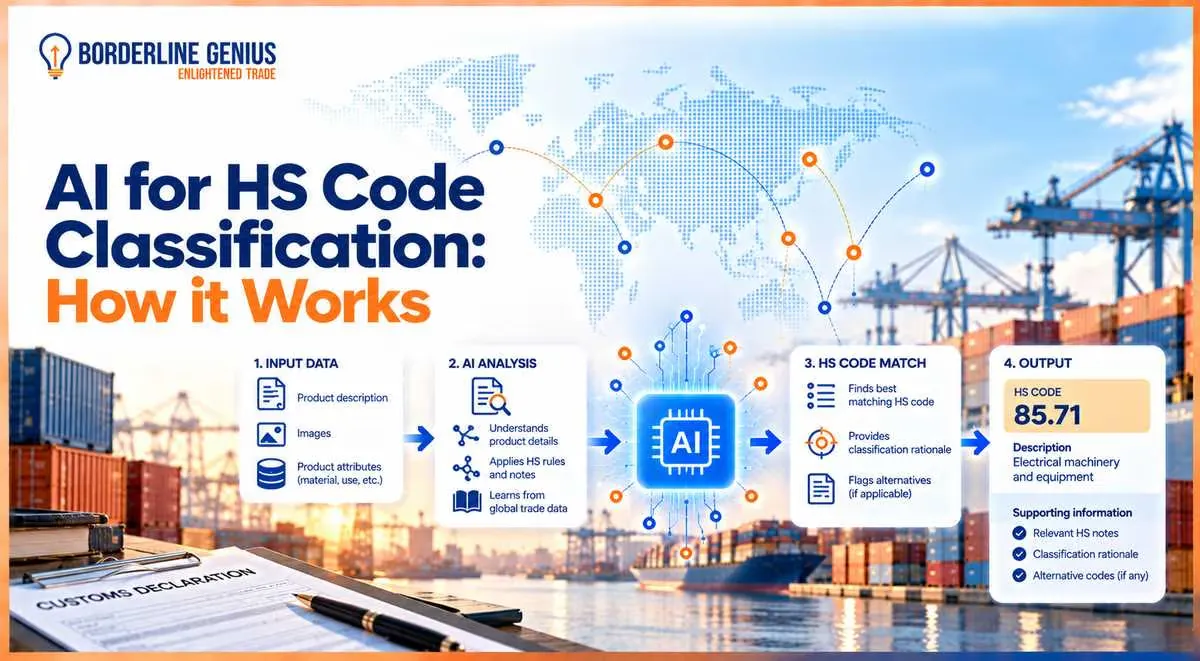
For organizations managing large product portfolios, HS code classification software can support product-data management, classification research, and review workflows. Appropriate verification remains necessary, especially when classification questions are complex or carry significant compliance implications.
Conclusion
HS code classification is a fundamental part of customs compliance and international trade operations. Reliable product information, proper application of interpretation rules, and verification against national tariff requirements all contribute to more consistent classification decisions.
Businesses should approach classification as a documented process rather than a simple keyword lookup. This makes it easier to review decisions, identify potential errors, and maintain accurate trade records.
For further guidance on HS code structures, country-specific tariff extensions, GRIs, legal notes, and common classification mistakes, read the full article on what HS code classification is and how it works.
Borderline Genius Inc. brings trade expertise, regulatory content, proprietary AI, and enterprise technology together to support more informed trade-compliance decisions. Explore Borderline Genius Inc. for more insights.
























Sign in to leave a comment.