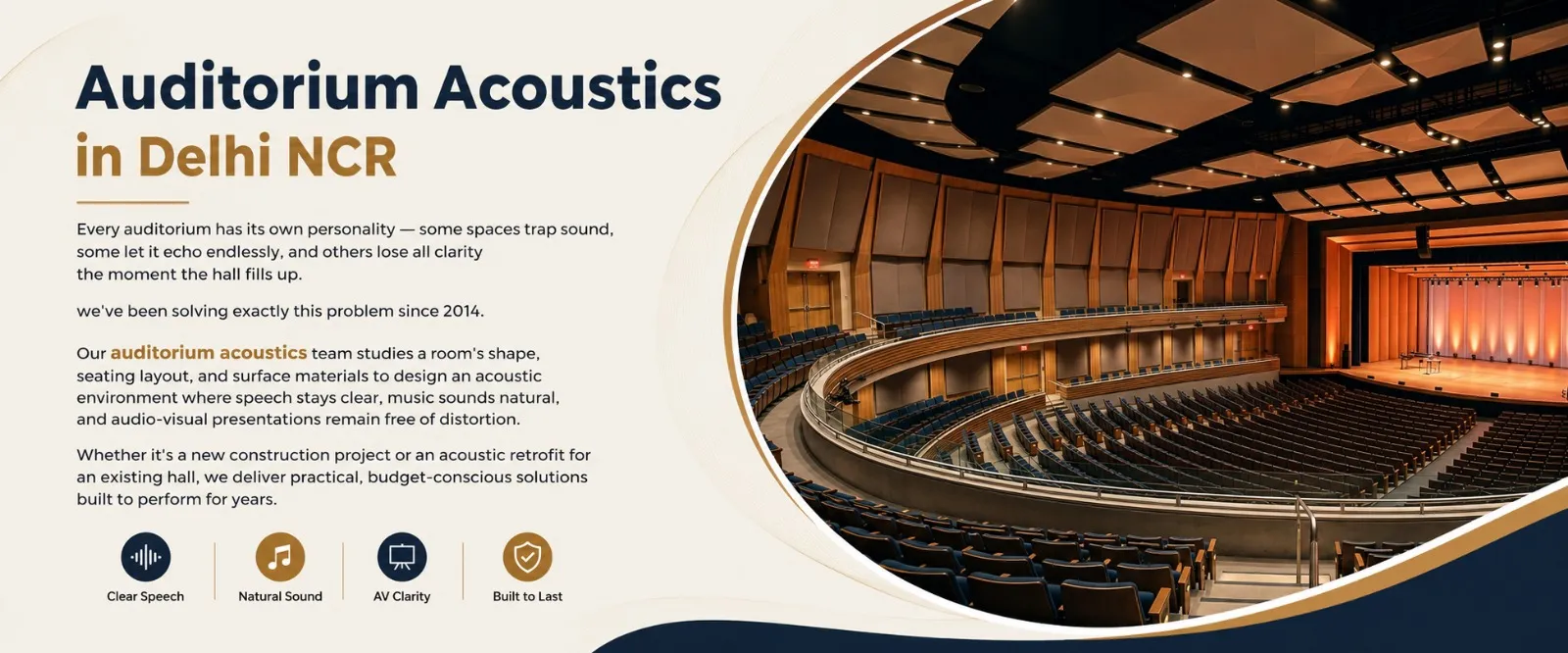

Auditorium Acoustics in Delhi NCR for Clear and Balanced Sound
Auditorium Acoustics in Delhi NCR shapes how every speech, lecture, song and presentation is heard in a hall. A beautiful auditorium can still feel tiring to sit in if the sound is muddy, echoing or uneven. People strain to follow the speaker, music loses its balance, and the audience goes home remembering the noise instead of the event.
Good acoustics help the voice reach every seat clearly, let music sound natural, and keep the space comfortable for long programmes. Schools, colleges, theatres, conference halls and multipurpose venues all have different needs. A lecture hall needs crisp speech, while a theatre may need a more balanced blend of voice and music. The right treatment depends on room size, seating layout, ceiling height, wall surfaces and how the hall will be used. This guide explains the basics in simple words.
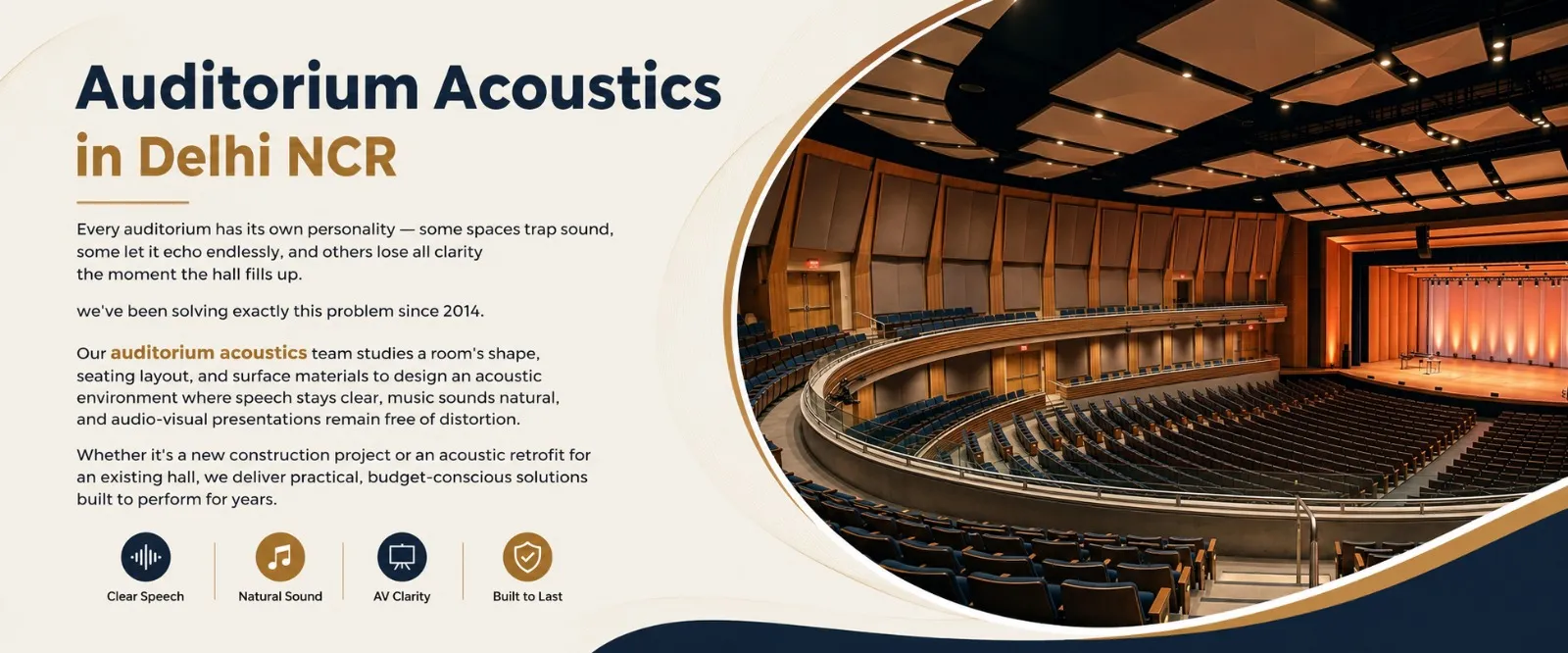
Why Auditorium Acoustics Matter
Acoustics decide what the audience actually hears, whatever equipment sits on the stage. Sound travels through the air, hits walls, ceilings, floors and seats, and bounces back. When those reflections are not controlled, they pile up and blur the original sound.
Poor acoustics make speeches hard to understand. Words run together, and listeners miss important points. Music may sound boomy or harsh, with some instruments standing out too much and others getting lost.
Acoustic planning is best considered early, during design or renovation. Fixing sound problems after the interiors are finished is possible, but it is easier when the walls, ceiling and seating are planned with sound in mind.
Common Acoustic Problems in Auditoriums
Most auditoriums face a few familiar sound problems. Knowing them helps you describe what you hear and what you need.
Echo and Sound Reflection
Hard surfaces such as bare concrete, glass and polished walls bounce sound back into the room. If the reflected sound arrives late, listeners hear it as an echo, a repeat of what was just said. This is common in large halls with flat, hard walls at the back.
Excessive Reverberation
Reverberation is the lingering of sound after the source has stopped. A little gives a room warmth, but too much makes speech hard to follow because each word overlaps the next. Think of a speaker talking in an empty hall where the voice seems to hang in the air.
Uneven Sound Distribution
Sometimes the front rows hear clearly while the back or the side seats struggle. Room shape, speaker placement and reflections from walls and balconies can all cause this. Every seat in the audience deserves a fair listening experience.
Background Noise
Traffic outside, air conditioning equipment, corridor activity and nearby rooms all add unwanted noise. Even a low hum can reduce speech clarity.
Assess Each Problem Separately
Echo, reverberation, uneven coverage and noise need different solutions. A treatment that helps one problem may do little for another, so each should be looked at on its own before products are chosen.
Acoustic Treatment Solutions for Auditoriums
Auditorium acoustic treatment uses different products to manage how sound behaves in the room. Several are often combined.
Acoustic Wall Panels
Suitable acoustic wall panels absorb part of the sound that strikes the walls. This reduces reflections and helps control reverberation. Placement matters as much as the panel itself, because panels in the wrong spots may do little.
Ceiling Acoustic Treatment
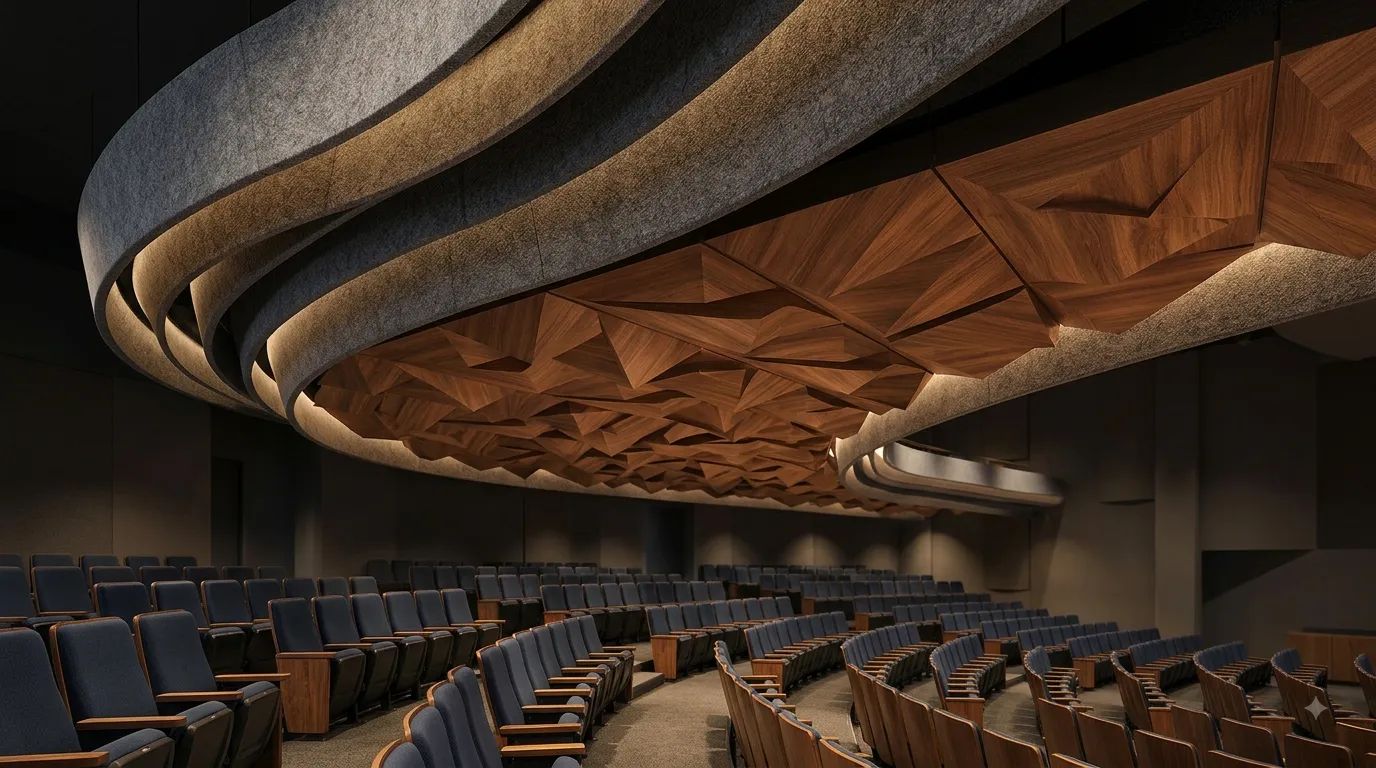
Large halls often have tall, hard ceilings that reflect a lot of sound. Ceiling acoustic panels and hanging acoustic clouds can help manage these reflections. They are especially useful where the ceiling sits directly above the audience or the stage.
Sound Diffusers
Diffusers scatter sound in many directions instead of letting it bounce back in one concentrated path. They keep a room lively and natural while avoiding harsh reflections. They are often used on rear walls and in performance spaces where some energy should be kept in the room.
Bass Traps and Low Frequency Control
Low sounds, such as deep notes from instruments or speakers, can build up in corners and make the room sound boomy. Bass traps and other suitable products help manage this where it is a real problem.
Choosing the Right Acoustic Materials
No single material suits every hall. The right choice depends on the room design, the acoustic goals, durability, appearance and the way the space is used. A school hall that hosts rough daily activity may need tougher finishes than a small theatre. Be wary of anyone who says one product solves everything.
Auditorium Acoustics for Different Venues
Every venue has its own purpose, and its acoustic plan should reflect that. Understanding Auditorium Acoustics in Delhi NCR means looking at how each type of hall is actually used.
School and College Auditoriums
These halls host assemblies, lectures, presentations, annual days and music events. Speech clarity comes first, because students at the back must follow the speaker. Music and cultural programmes need a balance that does not overwhelm the room.
Corporate Conference Halls
In meetings, panel discussions and presentations, clear speech is everything. Unclear sound wastes time, forces repetition and tires participants. Microphones and video calls also work better when the room is not overly reflective.
Multipurpose Halls
One hall may host talks, performances, meetings and cultural programmes in the same week. The acoustic plan must support all of these reasonably well, so a sensible balance is needed instead of tuning the room for a single use.
Theatres and Performance Spaces
Here, speech, music and audience experience all matter. The right balance depends on the type of performance. A drama needs clear dialogue, while a musical event may need more fullness and warmth.
Community Centres
Community halls serve weddings, classes, meetings, functions and local events. With such a wide range of activities, acoustic planning should consider all of them instead of assuming one use.
The Auditorium Acoustic Assessment Process
An assessment before choosing products is the smartest first step. Without it, treatment becomes guesswork, and money may go into products that do not address the real problem.
Room Size and Layout
The assessment looks at room dimensions, ceiling height, seating arrangement, stage position and wall surfaces. These factors strongly influence how sound moves in the hall.
Reverberation and Sound Reflection Assessment
Acoustic professionals measure how long sound lingers and where reflections cause trouble. They also listen to the room in different seats to spot problem areas that numbers alone might miss.
Identifying Treatment Requirements
With this information, it becomes clearer where sound absorption, diffusion or other measures may help. Some halls need more absorption, others need more diffusion, and many need a mix.
Planning the Installation
Where treatment goes matters as much as what is used. A good plan decides panel positions, ceiling layouts and how the work fits with lighting, air conditioning and interiors.
The Importance of Installation Quality
Even a well-designed plan can fall short if the work is rushed or products are placed carelessly. Proper placement and careful installation help ensure the design is carried out as intended.
Checking the Results After Installation
After installation, measurements and listening tests help confirm how the room performs. They can also show areas that need small adjustments, so the final result matches the plan as closely as possible.
How to Choose an Auditorium Acoustic Solution
Property owners and project managers often ask where to begin. When looking into Auditorium Acoustics in Delhi NCR, start with a few simple questions.
- What is the hall mainly used for?
- How large is the room, and how many people does it seat?
- What sound problems do people already notice?
- Are there design preferences or restrictions on finishes?
- What are the installation requirements and timeline?
- What budget is available?
Answering these gives a clear brief. Then consider a customised assessment instead of picking materials off a catalogue. Two halls of the same size can behave very differently because of their shape, surfaces and use. Understanding the room first leads to better decisions.
Acoustic Treatment and Audio Visual Systems
Room acoustics and audio visual equipment work together. Speakers, microphones and sound systems all depend on the room they operate in.
Good equipment alone may not fix every problem. If a hall has heavy reverberation, even a quality sound system can sound unclear, because the room keeps adding reflections. In the same way, acoustic treatment does not replace correct sound system design. Speaker placement, microphone choice and system setup still matter.
The best results usually come when both are planned together. Treatment controls how the room behaves, and the audio system delivers the sound where it needs to go. Together they support clearer speech and a better experience.
Benefits of Proper Auditorium Acoustic Planning
Careful acoustic planning can bring practical benefits:
- Clearer speech for lectures, meetings and presentations
- Better control of unwanted echoes
- More balanced listening conditions across the seating area
- A more suitable environment for performances and events
Results always depend on the room conditions, the treatment chosen, the quality of installation and how the auditorium is used. No honest professional can promise perfect sound without measurements. Good acoustic planning is about improving conditions in a sensible, measured way. That is why attention to Auditorium Acoustics in Delhi NCR pays off for any hall that depends on spoken word or music.
Frequently Asked Questions
What Is Auditorium Acoustics
It is the study and design of how sound behaves inside an auditorium. It covers how speech and music travel, reflect and fade, so the audience can hear clearly and comfortably.
Why Is Acoustic Treatment Important in an Auditorium
Treatment helps control sound reflections and reverberation. This can improve speech clarity and make music sound more balanced, depending on the room and the products used.
Which Acoustic Materials Are Used in Auditoriums
Common choices include acoustic wall panels, ceiling panels and clouds, diffusers and bass traps. The right mix depends on the hall's design and needs.
Can Existing Auditoriums Be Improved With Acoustic Treatment
Often, yes. Existing halls can be assessed for possible improvements, though what is achievable depends on the structure and the specific sound problems.
How Is the Right Acoustic Solution Selected
By assessing the room, understanding its intended use, checking current acoustic conditions and planning the installation carefully.
Final Thoughts
Whether it is a school hall, a corporate conference room, a theatre or a multipurpose venue, sound shapes how people experience the space. Clear speech and balanced music do not happen by accident. They come from understanding the room, choosing suitable materials, installing them carefully and checking the results afterward. Anyone planning improvements to Auditorium Acoustics in Delhi NCR should begin with a proper assessment and a clear idea of how the hall will be used. With thoughtful planning, an auditorium can serve its audience well for years.
























Sign in to leave a comment.