

It’s 1:47 am. The alert fires.
The remote developer on call can’t access production logs. The in-house project manager assumes permissions were already provisioned. Slack threads multiply, but what should have been a 15-minute fix becomes a 2-hour incident. And it’s already happening somewhere.
Hybrid teams rarely fail because of talent quality. They mostly fail because structure was an afterthought. The difference between chaos and velocity isn't headcount; it’s knowing what stays core and what remains elastic.
That is why hybrid teams with staff augmentation are more than just a hiring strategy. They represent an operating model choice that directly affects delivery reliability, knowledge continuity, and architectural integrity.
When designed intentionally, this model increases delivery capacity without locking organizations into rigid cost structures. But if designed poorly, it simply amplifies confusion. The difference is in structure.
How can you effectively structure a hybrid workforce with staff augmentation?
The answer isn't hiring stronger contractors. It's structural clarity and operating discipline
Below is a framework you can use for creating a successful staff augmentation team structure:
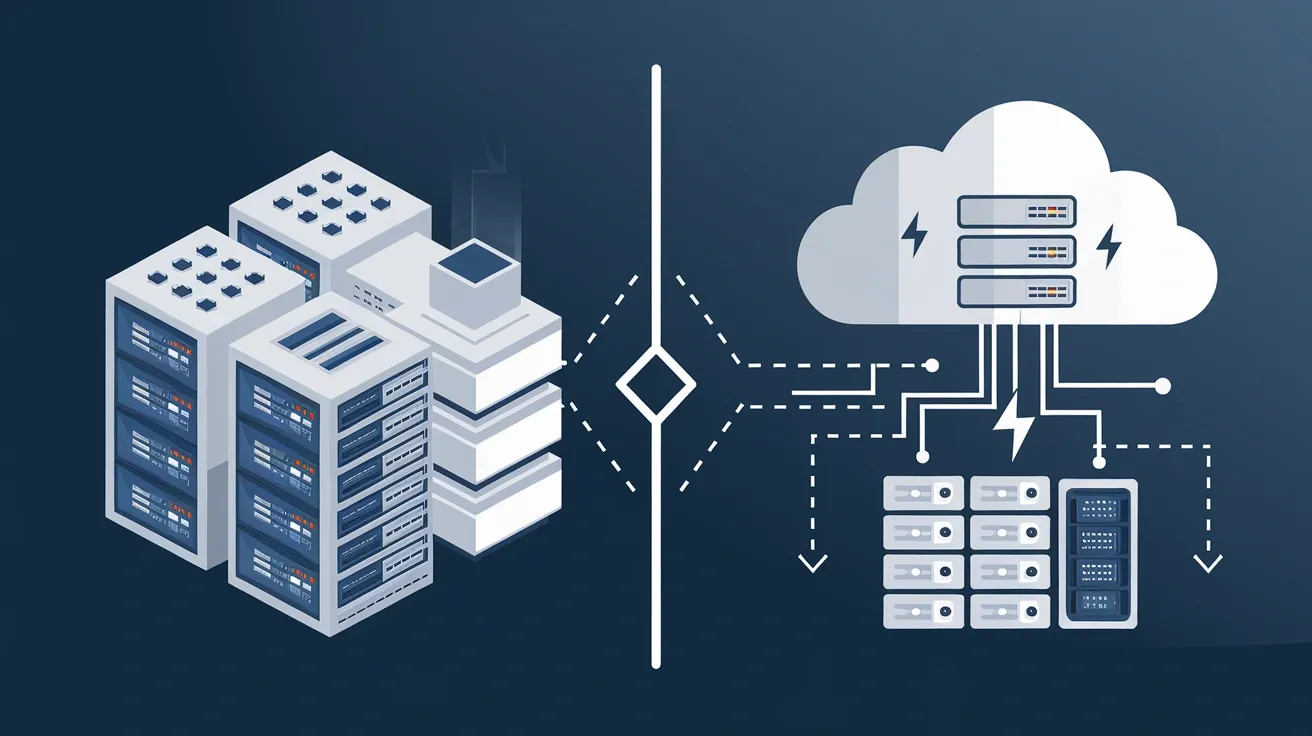
1. Define what is core and what is elastic
Before building any hybrid team structure, separate institutional knowledge from execution bandwidth.
- Core usually includes system architecture, security governance, long-term product direction, and customer context. These are the layers you never fully delegate.
- Elastic often includes migrations, feature bursts, performance optimization, or specialized integrations. These are the layers where external capacity adds maximum value.
You must remember: If everything is core, nothing is scalable. And, if everything is elastic, ownership erodes.
The discipline is knowing the difference.
2. Make ownership unmistakable
Effective hybrid team management starts with a simple rule: every critical function has one accountable in-house owner (or manager). Neither shared ownership nor implied ownership. But a named ownership.
When an augmented developer joins a squad, they must know exactly who makes final technical calls, who approves merges, and who carries delivery accountability.
Ambiguity compounds quickly in distributed systems. Clear ownership protects velocity.
3. Integrate contributors into workflows, not around them
There is a fundamental difference between outsourcing and managing hybrid teams with external talent.
Outsourcing hands off responsibility. Augmentation shares it.
External contributors should join sprint planning, participate in retrospectives, review code, and access the same documentation systems as full-time staff. If they work in parallel channels, friction is inevitable. Integration builds shared context and reduces coordination drag.
4. Real-time collaboration between on-site and remote developers
Remote and on-site hybrid team collaboration doesn’t happen naturally. Organizations should design this.
Breakdowns often follow familiar patterns:
- In-office decisions are made after meetings, or
- Documentation lags behind architecture changes.
If a contractor can’t contribute meaningfully within 48 hours, your documentation system is the real bottleneck, not the external talent.
Scaling hybrid teams with outsourced talent is not simple, but it is manageable when communication rituals, tooling access, and documentation standards are treated as first-class infrastructure.
5. Scale capacity without scaling ego
Scaling teams with staff augmentation introduces a human challenge that brands discuss rarely. Full-time engineers often perceive external talent as a threat, while contractors may overcompensate to prove value.
Silent resentment slows collaboration more than any tooling issue. To overcome, leadership must frame augmentation clearly:
- It expands capability, it doesn't replace it.
- It protects the core team from burnout.
- It supports roadmap velocity.
Cultural friction rarely appears in dashboards, but it influences cycle time, code review quality, and knowledge-transfer effectiveness. Leaders who address it early prevent performance erosion later.
6. Preserve elasticity without losing control
The strategic advantage of staff augmentation for diverse hybrid teams lies in elasticity.
You must expand the capacity during product launches or infrastructure overhauls and contract responsibly once the goals are met.
To successfully do this, you should ensure:
- Knowledge transfer is documented,
- Access controls are standardized, and
- Architectural authority remains internal.
Without proper guardrails, flexibility turns into dependency. But with structure, it becomes leverage.
The hybrid team scorecard: How to measure the success of your staff augmentation?
As a leader, you can’t manage what you do not measure.
In a hybrid model, hours logged is a vanity metric. But to truly understand whether your staff augmentation is providing real value, track these five KPIs:
| Metrics | What it measures | Why it matters |
| Time to First PR | The efficiency of your onboarding and documentation | Proof of low technical debt and a mature system. If it takes 2 weeks to ship a line of code, your infrastructure is broken. |
| Review Change Rate | Alignment between external output and internal standards | Ensures you aren't paying on-site leads to fix everything the augmented talent produces |
| Sprint Predictability | Stability of delivery velocity after adding talent | Scalability is useless if it causes volatility in your roadmap |
| Knowledge Distribution | How much critical info lives outside your core team | Prevents vendor lock-in and protects continuity if a partner leaves |
| Cycle Time | Speed from in progress to production | Hybrid models should solve bottlenecks, not add coordination drag |
Red flags: What most owners miss during staff augmentation?
Hybrid models rarely collapse because of budget overruns or talent deficiencies. They collapse for structural reasons:
- Undefined accountability
- Poor documentation
- Inconsistent communication
- Blurred authority lines
Organizations that treat external resources as infrastructure rather than a temporary staffing shortcut tend to sustain velocity and predictability. Those who do not often experience hidden coordination costs that offset initial savings.
Professional IT staffing solutions providers like Unified Infotech specialize in making this integration seamless. With 15+ years of expertise, they help enterprises build hybrid teams where external contributors operate with the same context and velocity as internal staff.
Final thoughts: Using staff augmentation for diverse hybrid teams
Managing hybrid teams with staff augmentation is about building adaptable execution systems in uncertain environments. When ownership is clear, integration is deliberate, communication is engineered, and culture is protected, you create speed without sacrificing accountability.
The companies that master this balance do not just scale faster. They make scaling predictable.
And predictability? That's what engineering leadership is really trying to buy.




























Sign in to leave a comment.