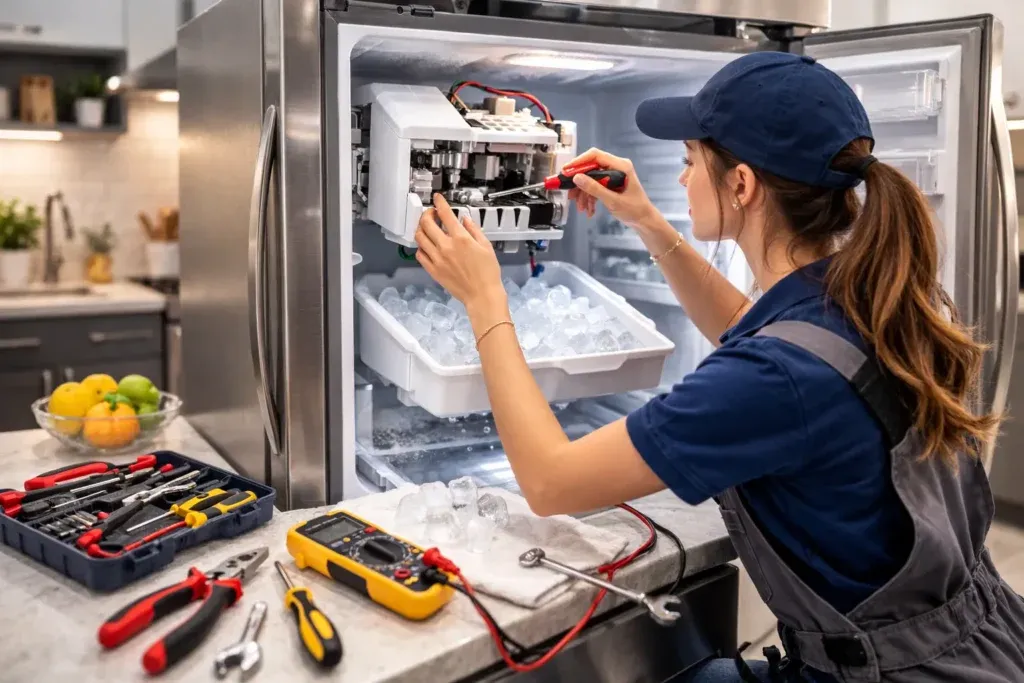

A small puddle beside an ice vending machine can look harmless while the machine is still dispensing. That is exactly why leaks deserve attention early. A leaking ice machine can point to something as simple as a loose water supply line or as serious as an internal valve, pump, drain, or refrigeration problem.
Left alone, the same leak can interfere with production, damage nearby surfaces, create slip hazards, and turn a manageable service call into larger ice machine repair. The first goal is not to dismantle the machine. It is to identify where the water begins, protect the area, and decide whether the problem belongs to basic maintenance, plumbing, or professional ice machine service.
Key Takeaways
- A leaking ice machine does not always mean the machine itself has failed; supply and drainage problems can create the same puddle.
- Common causes include a loose water supply line, clogged drain line, faulty water inlet valve, blocked water filter, and malfunctioning drain pump.
- Persistent internal leaks, electrical concerns, or refrigeration symptoms call for an ice machine technician.
- Regular preventive maintenance can catch small problems before they create machine downtime.
How Do You Trace a Leak Back to Its Source?
The most useful first question is whether water is coming from outside the machine or inside it.
External leaks often trace back to plumbing. A supply connection may be loose, a hose may be damaged, a shutoff fitting may seep, or drainage may be backing up around the equipment. The supplied research notes that many suspected ice-machine leaks originate outside the unit and commonly involve water lines or drainage.
Internal leaks are different. Water moves through pumps, valves, fill tubes, reservoirs, filters, distribution channels, and drains before becoming ice. A failure or misalignment anywhere along that path can redirect water into the bin, base, or floor.
Before scheduling ice machine repair, the operator should observe where moisture first appears and whether it develops constantly or only during a cycle. That distinction helps a water ice vending operator call the right professional instead of losing time on the wrong type of service.
What Should Be Checked First When an Ice Machine Leaks?
Safety comes before diagnosis. When water is near outlets, wiring, or energized equipment, operators should avoid the puddle and handle shutdown according to manufacturer guidance.
Once the situation is safe, visible checks can narrow the problem without opening sealed systems:
- Look for drips or mineral tracks around the water supply line and fittings.
- Check for standing water or signs of a clogged drain line.
- Inspect accessible filter housing for moisture around a blocked water filter or poor seal.
- Note whether water appears only during fill or recirculation.
- Check whether the machine or bin appears unlevel.
The supplied source recommends determining whether the leak starts inside or outside the machine before deciding whether a plumber or machine specialist is needed.
For an ice vending service, these observations are useful because a technician receives something more specific than “there is water under the machine.”
The Most Common Leak Sources Inside the System
When external plumbing and drainage look normal, attention shifts to the machine’s water-handling components.
A faulty water inlet valve may allow too much water into the system or fail to stop flow correctly. A loose fill tube can send water outside the reservoir or freezing area. Hoses can loosen, seals can deteriorate, and pumps can fail.
Drainage is another major source. A clogged drain line can back water up until it escapes elsewhere. A malfunctioning drain pump can create similar symptoms even when the drain opening appears clear. The source material also identifies misaligned fill components, blocked condensate drains, faulty valves, filter problems, and other worn components as possible causes.
A blocked water filter can restrict flow and contribute to pressure problems around fittings. The puddle is only the symptom; effective ice machine repair traces the water backward to the component that allowed it to escape.
Ice Machine Leak Symptoms, Causes, and Next Steps
| What the operator sees | Possible cause | Safe first response | Professional help? |
| Drip at supply connection | Loose water supply line | Inspect visible fitting | Plumber or service if damaged |
| Water backs up near drain | Clogged drain line | Check visible obstruction | Yes if recurring |
| Unit keeps overfilling | Faulty water inlet valve | Stop operation | Usually yes |
| Water pools despite open drain | Faulty drain pump | Stop repeated cycles | Yes |
| Leak around filter housing | Blocked water filter or poor seal | Inspect accessible filter seating | If leak remains |
| Water inside cabinet | Internal hose, valve, pump, or trough | Avoid deep disassembly | Ice machine technician |
| Water plus cooling symptoms | Refrigeration issue | Shut down safely | Certified technician |
Why Do Drain Problems Look Like Machine Leaks?
Drain problems are easy to misread because the water often appears directly under the machine.
Ice equipment constantly has water that must leave the system. Meltwater, purge water, and condensation all need a clear drainage path. If debris, mineral deposits, poor drain positioning, or a backup interrupts that path, water can collect and overflow.
The commercial-machine guidance supplied for this article identifies clogged bin drains, condensate drainage, drainage-pump problems, and improper installation among issues that can leave water pooling around ice equipment.
Good water ice vending maintenance therefore looks at the full water path: incoming supply, machine flow, and outgoing drainage.
When Is Professional Ice Machine Repair Necessary?
There is a clear point where observation should stop and professional diagnosis should begin.
An ice machine technician should be contacted when the leak continues after safe visible checks, water appears inside protected electrical areas, an internal valve or pump seems to be failing, or the machine repeatedly overfills.
Professional help is also appropriate when oily residue appears around refrigeration tubing, unusual hissing comes from a sealed system, or ice production drops sharply alongside the leak. Those signs may involve refrigeration components rather than ordinary plumbing.
EPA rules require technicians who maintain, service, or repair equipment in ways that could release regulated refrigerants to hold appropriate Section 608 certification. That is a strong reason not to disturb a sealed refrigeration circuit during troubleshooting.
Calling early can prevent a repairable issue from becoming prolonged machine downtime.
What Can a Small Leak Cost if It Keeps Running?
Water does not need to arrive as a flood to become expensive.
A slow leak can wet flooring, damage nearby materials, encourage corrosion, reach stored products, and create a recurring slip hazard. Inside the machine, escaping water can reduce the amount reaching the freezing process and contribute to ice clumping or freeze-up conditions. The supplied source also warns that ignored leaks can lead to damage around the machine and contribute to production problems.
The U.S. Environmental Protection Agency reports that household leaks collectively waste nearly 1 trillion gallons of water annually nationwide. Although that figure covers households rather than vending equipment, it illustrates why recurring leaks should never be dismissed as “just a drip.”
For unattended vending, the business impact is straightforward: a leak that forces shutdown means machine downtime, lost customer access, and an unplanned ice machine service visit.
Preventive Maintenance Keeps Small Problems Small
A reliable vending machine should not need a puddle to announce that something is changing.
Preventive maintenance gives operators a chance to find loose fittings, worn tubing, slow drains, scale, filter issues, unusual moisture, and weak seals before they become full leaks.
“Nine tenths of wisdom consists in being wise in time!” — Theodore Roosevelt
That idea fits equipment maintenance particularly well. Small warning signs are easier to address while they are still manageable than after they develop into a leak, shutdown, or larger repair.
A practical routine should include visible checks around the water supply line, drainage path, filter housing, and machine base. Operators should also track changes in ice production, recurring moisture, unusual cycle behavior, and service history.
If the same clogged drain line or fitting keeps causing trouble, the goal should shift from clearing the symptom to correcting the reason it returns.
For water ice vending, preventive maintenance protects both equipment reliability and the customer’s expectation that ice and water will be available when they arrive.
Before You Call: Check This, Skip That
A leaking machine can tempt operators to keep testing until they find the answer. The better approach is to collect useful information without turning a safe inspection into risky troubleshooting.
Do this: note where the water first appears and whether the leak is constant or cycle-related.
Not that: assume every puddle originates inside the machine.
Do this: check safe, visible areas such as the water supply line, drain path, and accessible filter housing.
Not that: open protected electrical or refrigeration components.
Do this: record error codes, unusual sounds, and changes in ice production.
Not that: repeatedly restart a machine that continues leaking.
Do this: photograph the puddle location, staining, or affected connection before cleanup when it is safe to do so.
Not that: rely on memory when describing the problem later.
Do this: mention whether the issue followed a filter change, plumbing work, machine movement, or another site change.
Not that: leave those details out of the ice machine service request.
Do this: call an ice machine technician when the leak is internal, persistent, or approaching electrical areas.
Not that: keep troubleshooting simply because the machine is still producing ice.
From a Small Puddle to a Smart Service Decision
Consider a composite vending location beside a busy convenience store. Staff notice water near the machine base during an afternoon check. The equipment is still dispensing, so the easiest response would be to mop the puddle and continue operating.
Instead, the operator inspects the visible area and notices that water appears near the drain side rather than the incoming supply. The accessible drain is cleared, but the puddle returns during another cycle.
At that point, continued DIY work adds little value. The machine is taken out of service safely, and a qualified technician receives clear observations about when the leak appears, where it collects, and what has already been checked.
The technician can then evaluate the drain pump, internal drainage, valves, and related components without starting from zero.
A strong ice vending service plan helps operators recognize problems quickly without asking them to become refrigeration technicians.
Conclusion: Find the Source Before the Leak Finds the Cost
A leaking ice machine deserves attention even when the puddle looks small. The cause may be a loose water supply line, clogged drain line, faulty water inlet valve, blocked water filter, malfunctioning drain pump, or an internal component that needs professional attention.
The safest approach is to locate the water, protect the area, complete only appropriate visible checks, and know when ice machine repair belongs with an ice machine technician. Regular preventive maintenance can catch warning signs before they create machine downtime.
For businesses and communities that depend on accessible purified water and ice, Double T Holdings focuses on water and ice distribution and ice vending solutions centered on purified water, filtration, accessibility, and dependable supply. A strong maintenance plan helps keep that access reliable.
Frequently Asked Questions
What makes a good response to a leaking ice machine?
Protect the area, locate where the water first appears, check only safe visible components, and arrange qualified help when the cause is internal or persistent.
What are the best practices for ice machine service?
Keep drainage clear, inspect visible connections, maintain filters, document recurring issues, and use preventive maintenance rather than waiting for failure.
How can an operator tell if a plumber or technician is needed?
Leaks from building plumbing or the external water supply line may require a plumber. Water originating inside the machine usually calls for an ice machine technician.
When should professional ice machine repair be scheduled immediately?
Schedule help when water reaches electrical areas, the machine repeatedly overfills, an internal pump or valve appears faulty, or refrigeration symptoms accompany the leak.
Can filtration problems contribute to water leaks?
Yes. A blocked water filter, poor filter seating, or restricted flow can contribute to leakage around water-handling components.



















Sign in to leave a comment.