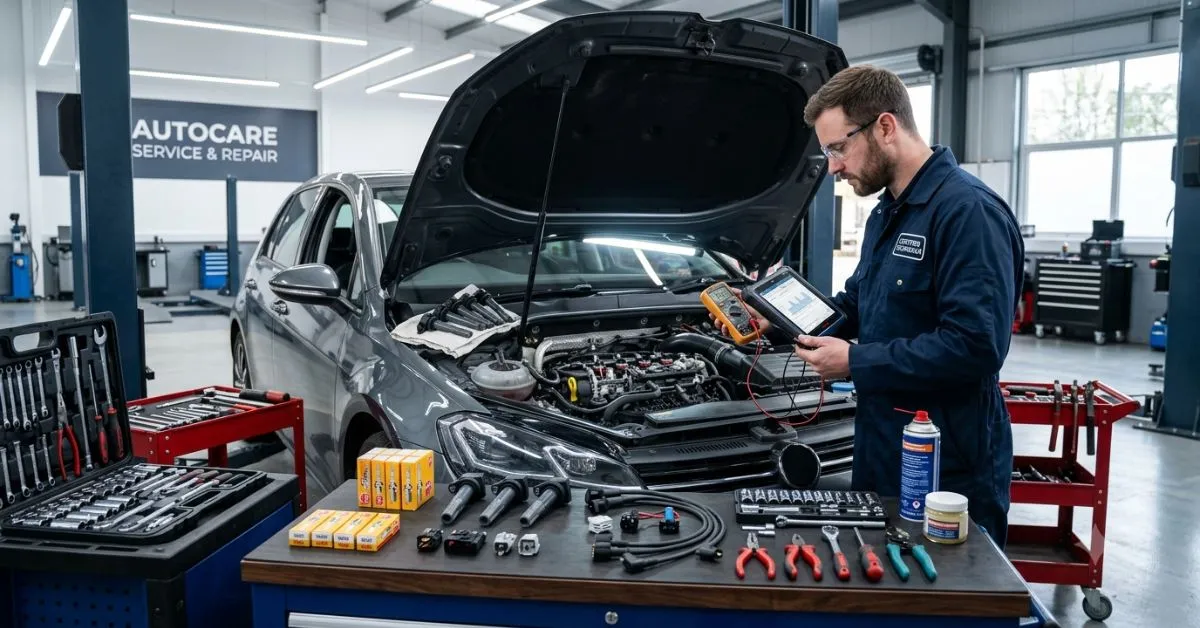

A healthy ignition system is the heartbeat of your engine and understanding its repairs is essential for anyone who wants to avoid sudden breakdowns on busy UK roads.
When spark plugs or ignition coils begin to fail, you'll likely notice frustrating symptoms: rough idling, sluggish acceleration, or a noticeable dip in fuel economy.
Left unchecked, these small issues can snowball into costly engine damage that could have been easily prevented. That's why quick, accurate diagnosis is so critical and why you should search for the best auto shop near you at the first sign of trouble, ensuring a professional can pinpoint the fault and restore your car's performance before it leaves you stranded.
This guide walks you through exactly how the ignition system works, what typically goes wrong, and the smart steps to take when things start to misfire.
1. How Your Car’s Ignition System Operates
At its core, the ignition system transforms low-voltage battery power into the thousands of volts needed to create a spark. This high-voltage burst travels through the coils and leads, reaching the spark plugs at the exact right moment.
Every cylinder must fire in a precise sequence to keep your engine running smoothly and efficiently. If any part of this timing chain breaks, your vehicle’s combustion cycle loses its necessary rhythm. Regular maintenance ensures this delicate balance stays intact, keeping your commute stress-free.
2. Spotting Common Ignition Faults
Drivers often ignore minor signs of trouble until the engine refuses to start on a cold morning. You should be aware of several clear warnings that indicate it is time to check your system:
- Engine Misfiring: A sudden stutter or loss of power while accelerating is a major warning.
- Poor Fuel Economy: Inefficient combustion forces your engine to use more petrol than necessary.
- Hard Starting: Taking several turns of the key to fire up the engine is a classic sign.
- Check Engine Light: Modern computers will flash a warning when they detect a problem with combustion.
3. Dealing with Faulty Ignition Coils
One of the most common issues involves a malfunctioning coil pack. You might notice various faulty ignition coil symptoms such as a shaky engine or a distinct lack of acceleration power.
These coils convert low battery voltage into the high-voltage spark required to fire the plugs. When a coil pack breaks, it often affects only one cylinder, causing that frustrating "lumpy" engine feel. Professional technicians can test these components using specialist equipment to confirm exactly which pack needs replacing.
4. The Importance of Spark Plug Maintenance
Spark plugs are small but vital components that endure extreme heat and pressure every time you drive. Over many thousands of miles, the electrodes wear down, making it harder for a consistent spark to form.
Neglecting spark plug and ignition issues leads to decreased performance, rough idling, and even permanent damage to your catalytic converter.
Most manufacturers recommend replacing them at specific service intervals to ensure your engine runs at its best. Investing in new plugs is one of the cheapest and most effective ways to boost performance.
5. Professional Diagnosis and Repair Process
When you suspect a problem, taking your car to a professional shop is the smartest move. Experts perform a thorough engine misfire diagnosis to ensure they fix the actual problem rather than guessing.
| Repair Stage | Key Action |
| Code Scanning | Reading the onboard computer for specific error codes relating to engine firing. |
| Component Testing | Using a multimeter to check the resistance and voltage levels in ignition coils. |
| Spark Inspection | Physically removing and checking the condition of each plug for carbon buildup. |
| Component Replacement | Installing high-quality parts that meet the original manufacturer’s exact specifications. |
| Verification Run | Testing the vehicle on the road to confirm the misfire is completely gone. |
6. Essential Vehicle Starting System Repairs
Sometimes, the issue is not the spark itself, but the signal that starts the process. Problems with the ignition switch or the starter relay can also mimic the signs of a dead battery.
A comprehensive vehicle starting system repair addresses these deeper electrical connections that allow the engine to turn over. If your car clicks but does not start, these components are likely the main culprits. Experienced mechanics can trace these wiring faults quickly to get you back on the road today.
Conclusion
Your car’s ignition system is a complex network that requires regular care to function perfectly. Being aware of the signs of trouble allows you to address ignition system repairs before they lead to bigger issues.
Do not ignore engine stutters, warning lights, or poor fuel performance, as these are all symptoms of an underlying failure. Professional diagnosis is always the safest and most cost-effective way to restore your engine's reliability and power. Regular servicing is truly the best way to keep your vehicle moving reliably across the UK.
FAQ’s
1. How often should I replace my spark plugs?
Most manufacturers recommend changing spark plugs every 30,000 to 100,000 miles, depending on the material used. Check your service manual for the exact requirements for your specific vehicle and engine model. Timely replacement is vital for avoiding serious spark plug and ignition issues that can damage your engine.
2. Can a faulty ignition coil damage my engine?
Yes, a failing coil can cause incomplete combustion, which leads to unburnt fuel reaching your catalytic converter. This extra heat can destroy the converter, leading to very expensive ignition system repairs that could have been avoided. Replacing a bad coil pack immediately protects your vehicle from these major downstream problems.
3. What does it mean when my engine misfires?
An engine misfire occurs when the fuel-air mixture in a cylinder fails to ignite properly. You will typically feel a sudden loss of power or a rhythmic stutter while your vehicle is running. Proper engine misfire diagnosis is needed to determine if the cause is a bad plug, coil, or fuel injector.
4. Why does my car struggle to start in cold weather?
Cold weather makes the oil thicker and the battery weaker, which puts extra strain on your entire ignition setup. If your system is already struggling, these conditions often highlight car ignition system problems that were not obvious before. Keeping your battery and plugs in top shape is the best way to ensure winter reliability.
5. What are the common symptoms of a bad ignition switch?
A failing switch often causes the engine to stall unexpectedly or prevents the starter motor from engaging entirely. You might notice that the dashboard lights flicker or fail to turn on when you insert the key. This often points towards a need for a professional vehicle starting system repair to restore reliable starting.
6. Do I need to replace all ignition coils at once?
While it is not strictly necessary to replace every coil, many mechanics suggest it for cars with high mileage. If one coil has failed, the others are likely near the end of their service life as well. Replacing them together is a sensible way to prevent multiple faulty ignition coil symptoms from appearing later.
7. How do I know if the problem is electrical or fuel-related?
A professional will use diagnostic software to distinguish between a spark failure and a fuel delivery problem. Misfires caused by electrical faults are often easier to trace using specific engine misfire diagnosis testing tools. It is best to avoid guessing and let an expert identify the exact source of your engine's trouble.
8. What is the difference between a spark plug and a glow plug?
Spark plugs are used in petrol engines, whereas glow plugs are used in diesel engines to assist with cold starting. Diesel engines do not use a traditional spark to ignite fuel, so they never require spark plug and ignition issues repairs. If you drive a diesel car, you will need to focus on glow plug maintenance instead.
9. Can I test an ignition coil at home?
You can use a multimeter to measure the resistance of the coil, but this requires knowing the specific manufacturer's specs. Incorrect testing can be misleading, so it is usually safer to visit a garage for faulty ignition coil symptoms assessment. They have the right equipment to provide a definitive answer about the health of your coils.
10. Will driving with a misfire harm my car?
Yes, driving with a misfire will put severe strain on your engine and potentially ruin your catalytic converter. You should schedule ignition system repairs as soon as possible to avoid long-term mechanical harm to your vehicle. Continuing to drive with a known misfire is a fast way to turn a small repair into a very large bill.























Sign in to leave a comment.