
Experiencing pain in one tooth when biting or chewing can be confusing, especially when the tooth feels completely normal at other times. You might be able to drink water, talk and brush your teeth without discomfort, but notice a sharp pain as soon as you bite into something.
This type of tooth pain should not be ignored. It can be associated with a cracked tooth, tooth decay, a damaged filling, inflammation around the tooth root or pressure from teeth grinding. In some cases, the problem may be developing beneath the surface, even when there are no obvious changes to the tooth.
Understanding what causes pain when biting down can help you recognise when to seek dental attention and what treatment options may be available.
Why Does a Tooth Hurt When You Bite Down?
Pain that occurs specifically when pressure is applied to a tooth is often associated with irritation or damage affecting the tooth structure or the tissues supporting it.
When you bite, pressure travels through the enamel, dentine, inner pulp and surrounding periodontal ligament. If any of these structures are damaged or inflamed, the pressure can trigger discomfort.
The nature of the pain can provide useful clues:
- Sharp pain when biting: May indicate a cracked tooth, damaged filling or localised structural problem.
- Pain when releasing your bite: Can be associated with a cracked tooth, particularly when a crack causes the tooth segments to move slightly.
- Dull pain under pressure: May occur with inflammation around the tooth root or supporting tissues.
- Pain when chewing hard foods: Could indicate weakened tooth structure, decay or a damaged restoration.
- Persistent throbbing pain: May suggest inflammation of the dental pulp or an infection that requires prompt assessment.
These symptoms are not enough to identify the exact problem. A clinical examination is needed to determine the underlying cause.
7 Possible Reasons Why One Tooth Hurts When Biting
1. A Cracked or Fractured Tooth
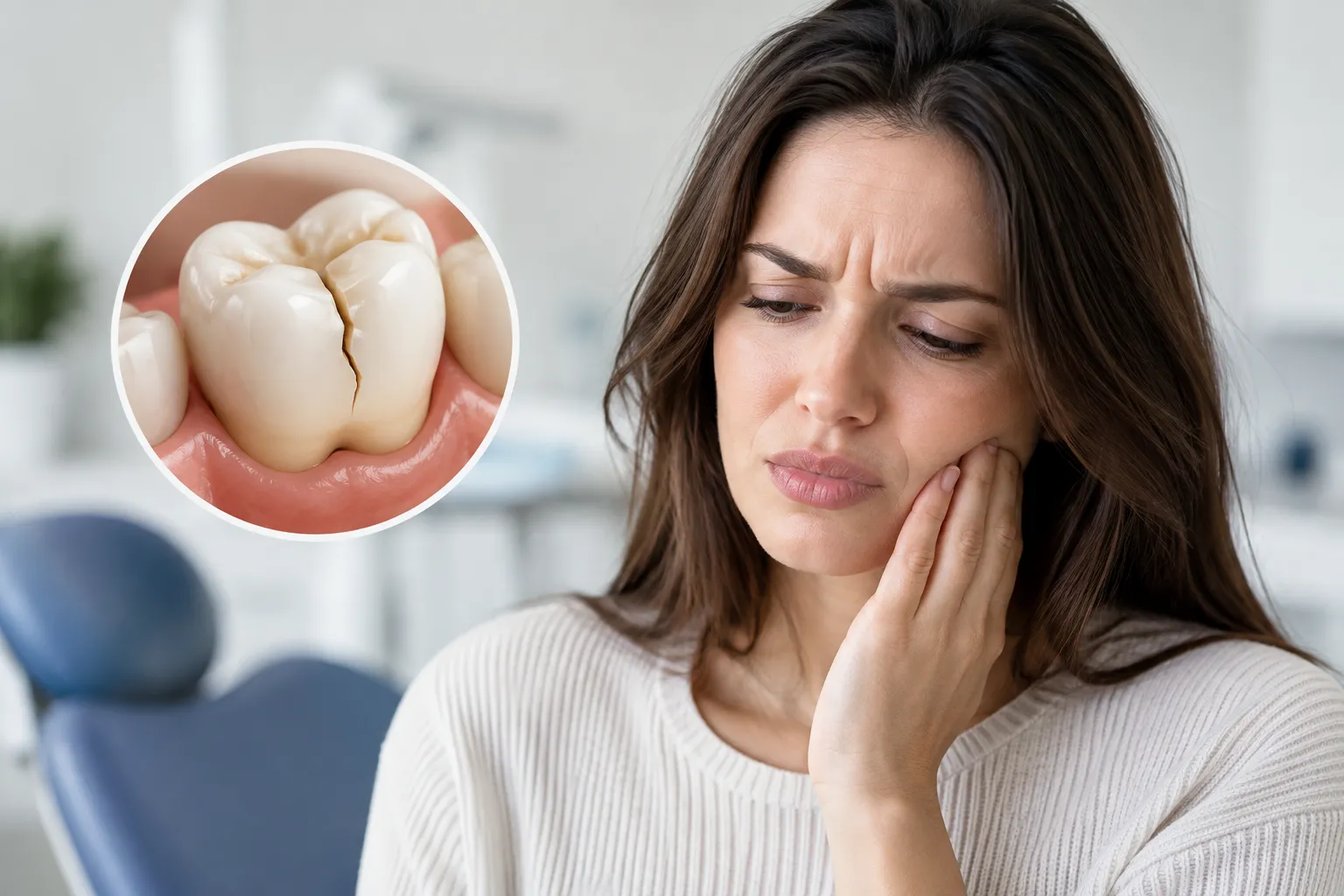
A cracked tooth is one of the possible reasons for pain that appears only when biting down.
Small cracks may develop after biting hard foods, experiencing an injury or putting repeated pressure on a tooth. Sometimes, an existing filling or weakened tooth structure can also contribute.
Unlike a visibly broken tooth, a small crack may be difficult to identify without a dental examination.
Common signs include:
- Sharp pain when biting certain foods.
- Discomfort when releasing biting pressure.
- Pain that comes and goes rather than remaining constant.
- Sensitivity to hot or cold temperatures.
- Difficulty chewing on one side of the mouth.
The location and depth of the crack influence treatment. Depending on the damage, a dentist may recommend a dental crown, bonding or another restorative procedure. If the crack extends into the pulp, root canal treatment may be necessary. Severely damaged teeth may not be restorable.
2. Tooth Decay Reaching Deeper Layers
Tooth decay does not always cause immediate pain. In its early stages, it may develop without noticeable symptoms.
As decay progresses through the enamel and reaches the dentine, the tooth can become more sensitive. If the decay approaches or affects the dental pulp, biting pressure may become uncomfortable.
You may also experience:
- Sensitivity when eating sweet foods.
- Discomfort when chewing.
- Sensitivity to hot or cold drinks.
- Food getting trapped in a particular area.
- Toothache that gradually becomes more frequent.
A dental examination can help determine how far the decay has progressed. Depending on its severity, treatment may involve a filling, crown or root canal treatment.
3. A Damaged or Loose Dental Filling
If you have an existing filling, it could be responsible for pain when biting down.
Fillings can wear down, become damaged or lose their seal over time. This may expose vulnerable tooth structures or allow bacteria to enter beneath the restoration.
Sometimes, a recently placed filling may also be slightly higher than the surrounding teeth. This can cause the affected tooth to receive more pressure whenever you close your mouth.
Signs of a filling-related problem include:
- Pain when chewing on the filled tooth.
- A feeling that one tooth touches before the others.
- Sensitivity around an existing filling.
- A rough or broken edge.
- Discomfort that started after recent dental treatment.
Do not attempt to adjust a filling yourself. A dentist can check your bite, examine the restoration and determine whether it needs adjustment or replacement.
4. Inflammation Around the Tooth Root
The periodontal ligament is a group of tissues that connects the tooth root to the surrounding jawbone. It helps support the tooth and absorbs forces during chewing.
When this area becomes inflamed, even normal biting pressure can cause pain.
Possible contributing factors include:
- Dental infections.
- Trauma to the tooth.
- Excessive biting pressure.
- A high dental filling or crown.
- Inflammation following certain dental procedures.
One common symptom is tenderness when biting down, sometimes accompanied by a feeling that the affected tooth is slightly raised or higher than the surrounding teeth.
The treatment depends on what is causing the inflammation. Addressing the underlying problem is important to prevent further damage.
5. Teeth Grinding and Clenching
Repeatedly grinding or clenching your teeth can place considerable pressure on individual teeth and the surrounding structures.
This behaviour, known as bruxism, can happen during sleep or while you are awake. Some people do not realise they are doing it.
Over time, excessive pressure may contribute to enamel wear, small cracks, muscle discomfort and tenderness around the teeth.
You may notice:
- Tooth pain when chewing in the morning.
- Jaw stiffness after waking up.
- Frequent headaches.
- Flattened or worn tooth surfaces.
- Increased tooth sensitivity.
- Tenderness around multiple teeth.
A dentist may assess your bite and look for signs of wear. Depending on your symptoms, treatment may include a custom-fitted night guard, management of contributing factors and restorative care where necessary.
If you suspect teeth grinding, getting it assessed can help reduce the risk of further damage.
6. A Dental Abscess or Infection
An infection around the tooth root can cause pressure and inflammation, making biting particularly painful.
A dental abscess may develop when bacteria enter the tooth through untreated decay, cracks or other damage. The infection can affect the pulp and surrounding tissues.
Possible warning signs include:
- Severe or worsening toothache.
- Pain when biting or touching the tooth.
- Swelling around the gums or face.
- A persistent unpleasant taste in the mouth.
- Pus or discharge near the affected tooth.
- Fever or feeling generally unwell.
However, an abscess does not always cause every symptom listed above.
A dental infection requires prompt professional assessment. Treatment may involve draining the infection, root canal treatment or tooth extraction, depending on the condition of the tooth. Antibiotics may be required in certain circumstances, but they do not replace treatment of the source of the infection.
Facial swelling, fever or worsening pain should not be left untreated. If you experience difficulty breathing or swallowing, seek emergency medical care immediately.
7. A Loose or Damaged Dental Crown
Dental crowns protect weakened or heavily restored teeth. However, crowns can become loose, damaged or worn over time.
If the crown does not fit properly or the underlying tooth develops decay or a crack, you may experience pain when chewing.
Some common signs include:
- Pain when biting on the crowned tooth.
- A feeling that the crown moves.
- Sensitivity around the gumline.
- Food becoming trapped near the crown.
- Discomfort when chewing hard foods.
A dental examination can help determine whether the crown needs adjustment, repair or replacement.
How Can You Tell What Is Causing the Pain?
Different dental problems can produce similar symptoms. However, the timing and type of discomfort can help your dentist narrow down the possible causes.
Here are some common symptoms and what they may indicate:
- Sharp pain when biting: May indicate a cracked tooth or damage to the tooth structure.
- Pain when releasing pressure: Can be associated with a cracked tooth, particularly when the damaged sections move slightly.
- Pain after a new filling: May indicate a high filling or an imbalance in your bite.
- Pain with hot and cold sensitivity: Could be related to tooth decay or inflammation of the dental pulp.
- Morning tooth tenderness: May be associated with teeth grinding or clenching during sleep.
- Pain with gum or facial swelling: Could indicate a dental infection or abscess.
- Pain around an existing crown: May suggest a loose crown, underlying decay or damage to the tooth.
These symptoms are general indicators rather than a way to diagnose the problem yourself. Several dental conditions can produce similar discomfort, so a professional examination is important to identify the exact cause.
How Do Dentists Diagnose Tooth Pain When Biting?
Finding the exact cause is important because treating the wrong problem may not resolve the pain.
During your appointment, the dentist may use a combination of examination methods.
Dental Examination
The dentist will inspect the affected tooth, surrounding gums and existing dental restorations. They may look for visible cracks, cavities, damaged fillings or signs of infection.
Bite Testing
A small instrument may be used to apply controlled pressure to different parts of the tooth. This can help identify where the pain occurs and whether it is associated with biting or releasing pressure.
Dental X-Rays
Dental X-rays can help identify problems such as deep decay, changes around the tooth root, bone loss and certain infections.
However, very small cracks may not be visible on a conventional X-ray. Additional examination methods may be required.
Pulp Sensitivity Testing
The dentist may use temperature or other tests to assess how the dental pulp responds. This helps determine whether the nerve tissue inside the tooth may be inflamed or damaged.
Checking Your Bite
If the tooth is receiving excessive pressure when you close your mouth, the dentist may assess how your upper and lower teeth come together.
The combination of these findings helps determine the most appropriate treatment.
What Should You Do If One Tooth Hurts When You Bite?
If you notice pain in one tooth while eating, avoid putting unnecessary pressure on that area until you understand what is causing it.
Here are some practical steps you can follow while arranging a dental appointment.
1. Avoid Chewing on the Affected Side
Try chewing on the opposite side of your mouth. Avoid hard, crunchy or sticky foods that could increase pressure on the painful tooth.
2. Keep the Area Clean
Continue brushing gently with a soft-bristled toothbrush. Clean between your teeth carefully to remove trapped food particles without irritating the affected area.
3. Avoid Very Hot or Cold Foods
If the tooth is also sensitive to temperature, choose foods and drinks that are comfortable to consume.
4. Do Not Attempt to Repair the Tooth Yourself
Avoid using household adhesives, applying aspirin directly to the tooth or attempting to adjust a filling or crown. These approaches can cause additional damage.
5. Arrange a Dental Appointment
Even if the pain disappears temporarily, the underlying problem may still be present. If the discomfort continues, returns or becomes more noticeable, arrange an examination rather than waiting for it to become severe.
If you need professional dental attention, you can contact a dentist to have the affected tooth assessed.
When Should You See an Emergency Dentist?
Not every instance of pain when biting requires emergency treatment. However, certain symptoms indicate that you should seek urgent dental attention.
Contact an emergency dentist if you experience:
- Severe or rapidly worsening tooth pain.
- Swelling around the gums, jaw or face.
- A suspected dental abscess.
- Fever alongside tooth pain.
- A broken tooth causing significant pain.
- Pus or an unpleasant taste around the affected tooth.
- Difficulty opening your mouth due to pain or swelling.
Do not wait for a routine appointment if you suspect a dental infection. If swelling causes difficulty breathing or swallowing, or spreads around the eye or neck, seek emergency medical care immediately.
Australian healthdirect guidance also recommends prompt dental assessment for pain when biting, particularly when accompanied by fever, swelling or a bad taste in the mouth.
Can a Tooth Hurt When Biting Without Being Infected?
Yes. A tooth can hurt when biting down even when there is no infection.
A small crack, damaged filling, excessive biting pressure or inflammation around the tooth can cause discomfort without an abscess being present.
For example, a cracked tooth may produce sharp pain during chewing because pressure causes movement within the damaged tooth structure. Similarly, a high filling can place additional pressure on one tooth when you close your mouth.
However, the absence of swelling or fever does not rule out a dental problem. An examination is the best way to identify the cause.
Can Tooth Pain When Biting Go Away on Its Own?
Sometimes, mild discomfort may settle temporarily, particularly if it is associated with minor irritation or recent dental treatment.
However, pain that repeatedly occurs when biting should not be considered normal.
A cracked tooth, untreated decay, damaged filling or dental infection will not necessarily resolve simply because the pain disappears for a few days.
Delaying treatment may allow the underlying condition to progress and make treatment more complicated.
How Can You Prevent Tooth Pain When Chewing?
Although not every dental problem can be prevented, good oral hygiene and regular dental care can reduce the risk of several common causes.
Consider these habits:
- Brush twice daily using fluoride toothpaste.
- Clean between your teeth daily.
- Avoid regularly biting hard objects such as ice or hard confectionery.
- Limit frequent consumption of sugary foods and acidic drinks.
- Wear a suitable mouthguard during contact sports.
- Have damaged fillings and crowns checked.
- Seek advice if you notice signs of clenching or grinding.
- Attend regular dental check-ups.
If you grind your teeth at night, ask your dentist whether a custom-fitted mouthguard may help protect your teeth.
Frequently Asked Questions
1. Why does only one tooth hurt when I chew?
One tooth may hurt because of a localised problem such as a crack, cavity, damaged filling, dental infection or inflammation around the root. A dental examination can help identify the exact cause.
2. Why does my tooth hurt when I bite down but not when I am resting?
When you bite, pressure is transferred through the tooth and its supporting tissues. If a tooth is cracked, inflamed or affected by a damaged restoration, this pressure may trigger pain even when the tooth feels normal at rest.
3. Does pain when biting mean I need a root canal?
Not necessarily. Pain when biting does not automatically mean the dental pulp is infected or damaged. Depending on the diagnosis, treatment may involve a filling, crown, bite adjustment or other restorative procedure. Root canal treatment is considered when the pulp is irreversibly inflamed or infected.
4. Can a cracked tooth heal without treatment?
A cracked tooth cannot naturally grow back together. Although discomfort may temporarily disappear, the crack can remain and potentially worsen. Early assessment may help preserve the tooth.
5. Why does my tooth hurt when I bite down after getting a filling?
A recently filled tooth may feel uncomfortable if the filling is slightly higher than the surrounding teeth or if the tooth is temporarily sensitive following treatment. Persistent or worsening pain should be checked so that other problems, including deeper inflammation, can be ruled out.
6. Can sinus problems cause pain in one tooth when chewing?
Sinus inflammation can sometimes cause referred pain in the upper back teeth, particularly when several upper teeth feel uncomfortable. However, pain isolated to one tooth should also be assessed for a dental cause.
7. Should I stop brushing the painful tooth?
No. Continue cleaning the area gently with a soft toothbrush and fluoride toothpaste. Avoid aggressive brushing or applying excessive pressure to the painful tooth.
8. How long should I wait before seeing a dentist for pain when biting?
You should arrange an assessment promptly rather than waiting for the pain to become severe. Healthdirect advises seeking dental care when toothache lasts more than two days, does not improve or occurs with symptoms such as pain when biting or swelling.
9. Can teeth grinding cause pain in just one tooth?
Yes. Although grinding often affects several teeth, pressure may be concentrated on a particular tooth, especially if it has an existing crack, restoration or other weakness. A dental examination can help determine whether grinding is contributing to the discomfort.
10. Will a dental X-ray show a cracked tooth?
Not always. Some small cracks are difficult to detect on conventional dental X-rays. Your dentist may need to use additional examination techniques, including bite testing and visual assessment, to investigate the problem.
Final Thoughts
A tooth that hurts only when you bite down may seem like a minor issue, particularly when there is no pain at other times. However, it can be an early indication of a cracked tooth, developing decay, a damaged filling or inflammation around the tooth root.
The important thing is to identify the cause rather than simply manage the discomfort. Early dental assessment can help prevent further damage and allow the appropriate treatment to be considered before the problem becomes more complicated.
Do not ignore recurring pain when chewing. Getting it checked early is a sensible step towards protecting your natural teeth and maintaining good oral health.























Sign in to leave a comment.