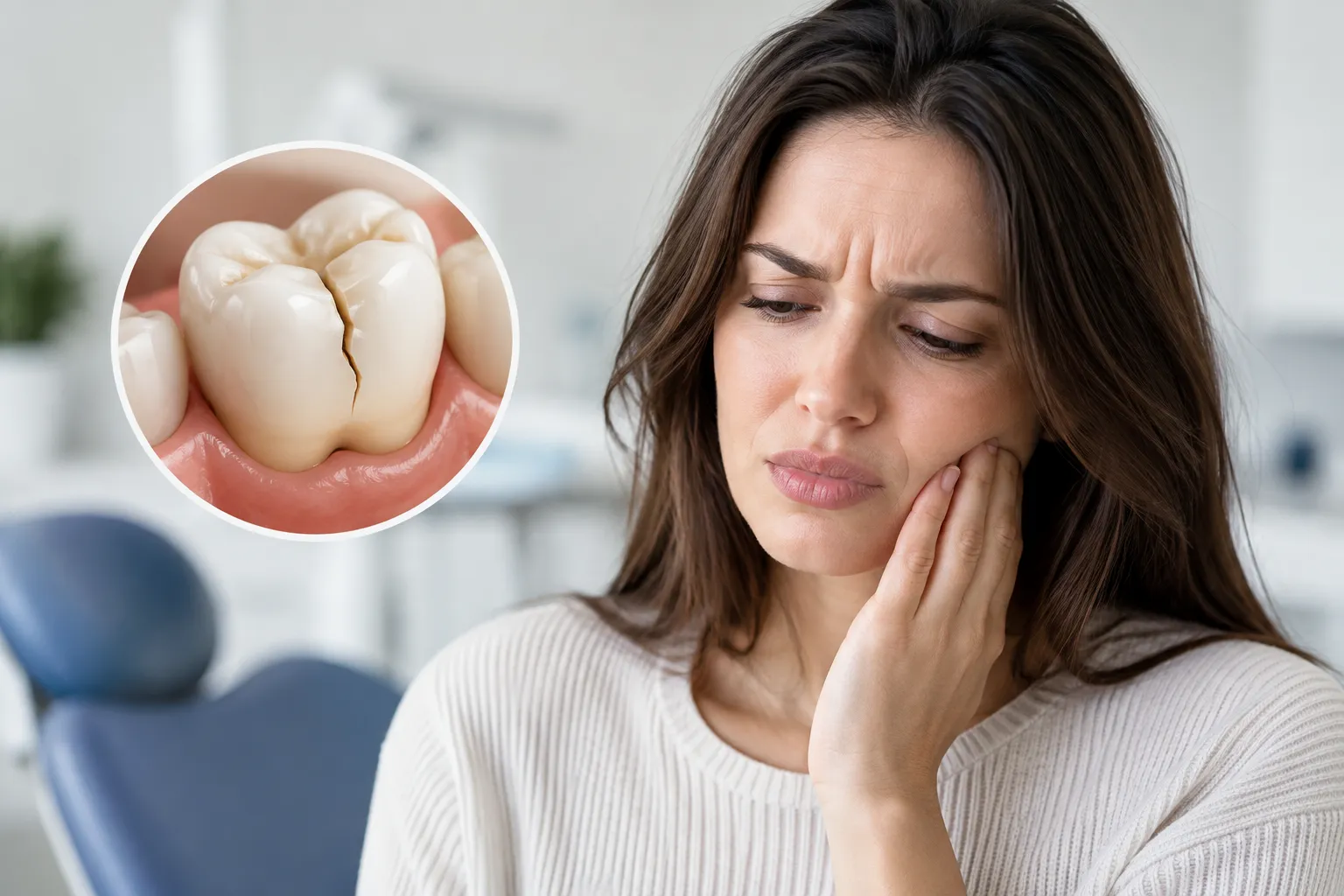

Not every dental problem comes with obvious pain. A tooth can develop a small crack that is difficult to see, yet you may notice an occasional twinge when biting into food or drinking something cold. In some cases, there may be no noticeable symptoms at all.
This can make cracked teeth easy to overlook. Unlike a large chip or a broken tooth, a fine crack may sit beneath the surface and gradually become more troublesome over time.
Understanding the early warning signs can help you recognise a potential problem before the damage becomes more serious.
What Does a Cracked Tooth Look Like?
A cracked tooth may have a visible line, but often it does not. Some cracks are so fine that they cannot be seen easily in a mirror.
Cracks can develop in different parts of a tooth. Some affect only the outer enamel, while others extend deeper into the tooth. A crack may also develop around an existing filling or in a tooth that has already experienced significant wear.
This is why the absence of a visible crack does not necessarily mean the tooth is healthy.
What Are the Signs of a Cracked Tooth?
The symptoms can vary depending on the location and depth of the crack. Some common signs include:
- Sharp pain when biting down or releasing your bite
- Sensitivity to cold or hot drinks
- Pain that comes and goes without an obvious reason
- Discomfort when chewing on one particular side
- Increased sensitivity to sweet foods
- A feeling that something is not quite right with one tooth
- Swelling or tenderness around the affected tooth
One of the more unusual signs is pain that appears when you bite down and then release your bite. This can happen because the crack briefly opens under pressure.
You may also find yourself naturally avoiding one side of your mouth while eating without realising why.
Why Can a Tooth Crack Without You Knowing?
Teeth are remarkably strong, but they are not indestructible. Repeated pressure over many years can eventually create small fractures.
Several factors can increase the risk of a cracked tooth.
Teeth Grinding
Grinding or clenching your teeth places considerable pressure on them. If this happens regularly, particularly while sleeping, the repeated force may contribute to cracks and other forms of tooth wear.
Biting Hard Foods
Hard lollies, ice, nuts and other very firm foods can put sudden pressure on a tooth. Using your teeth to open packaging or bite non-food objects can also increase the risk.
Large Fillings
A tooth with a large filling may have less remaining natural tooth structure. Over time, the surrounding tooth can become more vulnerable to cracking, especially when exposed to strong biting forces.
Age and Everyday Wear
Teeth naturally experience years of chewing and pressure. As we get older, the chance of cracks and other forms of dental wear can increase.
Can a Cracked Tooth Heal by Itself?
Unfortunately, a cracked tooth cannot repair itself in the same way that a broken bone can heal.
Enamel does not regenerate, and once a crack has formed, continued pressure can cause it to extend further. This does not mean every small crack will immediately lead to major problems, but it is worth having unexplained symptoms assessed.
Leaving a potentially cracked tooth untreated may eventually allow bacteria to enter deeper areas of the tooth. In some cases, this can lead to inflammation or infection.
How Is a Cracked Tooth Diagnosed?
Diagnosing a cracked tooth can sometimes be challenging because the crack may be extremely small or hidden beneath the gum line.
A dental examination may involve checking the tooth for sensitivity, examining how it responds to pressure and looking closely at its surface. Dental X-rays may also be used, although very fine cracks do not always show clearly on an X-ray.
Your symptoms and dental history can provide important clues as well. If you regularly experience pain when chewing on one particular tooth, mention exactly when the discomfort occurs and what seems to trigger it.
How Is a Cracked Tooth Treated?
Treatment depends on the location and severity of the crack.
A minor crack that only affects the enamel may simply need to be monitored, while a more significant crack may require restorative treatment. Options can include a filling or crown, depending on how much of the tooth has been affected.
If the crack has reached the pulp, where the tooth's nerves and blood vessels are located, root canal treatment may be required before the tooth is restored.
In severe cases where the tooth cannot be saved, extraction may be considered. The earlier a significant crack is identified, the more opportunity there may be to protect the remaining tooth structure.
When Should You See a Dentist?
You do not need to wait for severe pain before arranging an appointment with a dentist.
Consider getting your tooth checked if you have recurring sensitivity, unexplained pain when chewing, or discomfort that keeps returning in the same area.
If you experience severe dental pain, significant swelling, facial swelling, uncontrolled bleeding or a seriously damaged tooth, it may require urgent attention as a dental emergency.
Protecting Your Teeth From Cracks
You cannot prevent every cracked tooth, but a few simple habits can reduce unnecessary stress on your teeth.
Avoid chewing ice or very hard objects, and do not use your teeth as tools. If you grind or clench your teeth, speak with your dental professional about ways to protect them. Wearing a properly fitted mouthguard during contact sports can also help reduce the risk of dental injuries.
Regular dental check-ups are useful too. Some cracks may be difficult to notice at home, particularly before they start causing obvious symptoms.
Don't Ignore Small Warning Signs
A cracked tooth does not always announce itself with dramatic pain. Sometimes it is simply a brief sharp sensation when you bite into food, sensitivity to a cold drink or discomfort that appears every few days.
These small signs are easy to dismiss, but recurring symptoms deserve attention. Finding the cause early can make it easier to protect the tooth and prevent a minor problem from becoming a much bigger one.























Sign in to leave a comment.