

The Securities and Exchange Board of India (SEBI) has recently proposed changes to the expiry schedule of equity derivatives, which will have a direct impact on the NSE option chain. These changes aim to standardize expiry dates across various segments to streamline trading and reduce market fragmentation. The proposal suggests that all equity derivatives should expire either on a Tuesday or Thursday, significantly influencing how traders interact with the NSE option chain. This blog explores the potential consequences of these changes and their broader implications for market participants.
Understanding SEBI’s Proposal and Its Impact on NSE Option Chain
Currently, different stock exchanges follow varying expiry schedules for derivatives. The National Stock Exchange (NSE) primarily settled index options on Thursdays, while stock options have different expiry patterns. SEBI’s proposed alignment aims to bring uniformity, making it easier for traders to plan their positions within the NSE option chain.
Why SEBI is Proposing Changes to NSE Option Chain Expiry Dates
SEBI has observed that multiple expiry dates across various exchanges cause fragmentation in liquidity. The regulatory body believes that by streamlining expiry dates, overall market efficiency will improve. The NSE option chain, being one of the most actively traded derivatives markets, will experience some significant shifts due to this proposed change.
Impact of Expiry Changes on NSE Option Chain Trading Patterns
- Increased Liquidity in the NSE Option Chain: A standardized expiry date could enhance liquidity by concentrating trading volumes on specific days, reducing market fragmentation within the NSE option chain. Liquidity is a crucial factor in option trading, as it influences bid-ask spreads, slippage, and trade execution.
- Volatility Adjustments in NSE Option Chain: Changes in expiry dates may lead to fluctuations in implied volatility as traders adjust their hedging and speculative strategies within the NSE option chain. Market participants may need to recalibrate their risk management strategies, especially those who rely on volatility-based trading systems.
- Arbitrage Opportunities in NSE Option Chain: Traders who previously engaged in expiry-based arbitrage may need to adjust their approaches as expiry dates become uniform, affecting the NSE option chain. Calendar spread traders, in particular, will need to reassess their strategies as expiry structures change.
Effects of SEBI’s Changes on the NSE Option Chain
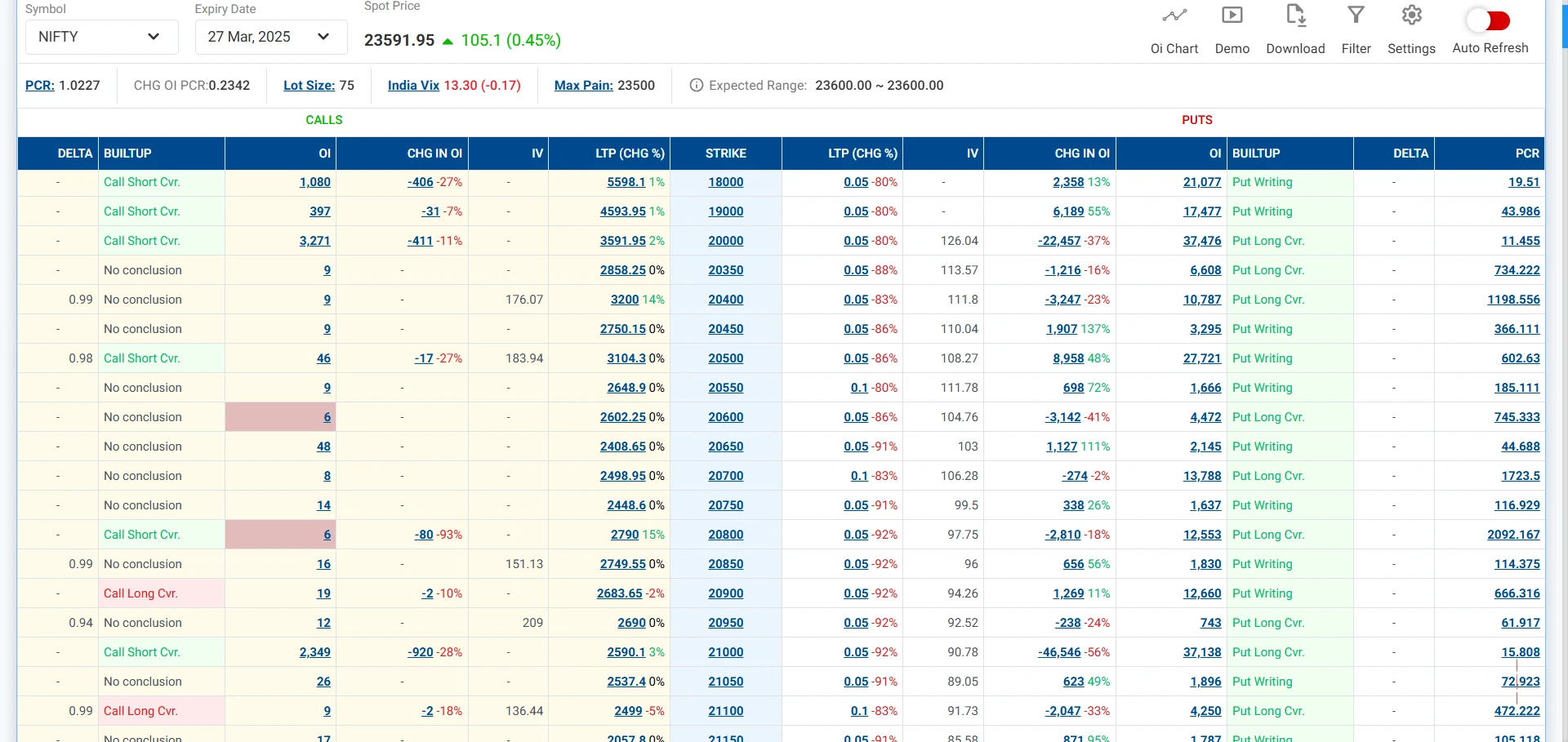
- Shifts in Open Interest in NSE Option Chain: The open interest dynamics within the NSE option chain may shift as traders modify their positions to align with the new expiry framework. Market makers and institutional investors will closely monitor these changes, as open interest is a key indicator of market sentiment.
- Premium and Pricing Changes in NSE Option Chain: Option premiums within the NSE option chain might experience recalibration due to changes in demand and supply around the newly proposed expiry dates. Short-term contracts may witness different pricing structures, leading to new trading opportunities.
- Market Participation in NSE Option Chain: Institutional investors may adapt to these changes by revising their hedging strategies, impacting NSE option chain activity at both retail and institutional levels. The shift in trading behavior will likely be evident in futures and options volume across various strikes and expiries.
How NSE Option Chain Traders Can Adapt to the Changes
Strategy Adjustments for NSE Option Chain Traders
With the expiry changes looming, traders should consider the following adjustments:
- Review Expiry-Based Trading Strategies: If your trading approach revolves around specific expiry dates, you may need to tweak your strategy. This applies particularly to option sellers who take advantage of time decay.
- Monitor Changes in Liquidity in NSE Option Chain: Since liquidity will consolidate on fewer expiry days, traders must identify whether bid-ask spreads are tightening or widening, which can impact trade execution.
- Reevaluate Risk Management in NSE Option Chain: Volatility shifts could lead to increased risks in existing strategies. Adjusting stop-loss levels and using protective options may help mitigate these risks.
Impact on Retail and Institutional Investors in NSE Option Chain
- Retail Traders: Retail investors who frequently trade weekly options may see a shift in the way premiums behave closer to expiry. Increased competition may also require adjustments in their entry and exit points.
- Institutional Traders: Hedge funds and proprietary trading firms will need to adapt their algorithms and models to accommodate new expiry dates. High-frequency trading (HFT) firms might find new opportunities or challenges depending on liquidity shifts.
Potential Challenges and Concerns for NSE Option Chain Traders
Initial Adjustment Period in NSE Option Chain Trading
Traders accustomed to existing expiry structures may face an initial learning curve in adjusting to the new schedule in the NSE option chain. This transition phase may lead to temporary price distortions and unusual trading volumes.
Broader Market Impact on NSE Option Chain
The change might influence strategies used in other asset classes, such as futures and forex trading, which often correlate with NSE option chain derivatives expiry. Traders will need to analyze how price movements in equities, commodities, and currencies may be affected by expiry realignments.
How Brokers and Trading Platforms Are Preparing for the Changes in NSE Option Chain
Major brokerage firms and trading platforms will likely update their systems to reflect the new expiry schedule. Traders should stay informed about these updates to ensure they can seamlessly adapt to the changes in the NSE option chain.




























Sign in to leave a comment.