
In practice, HRM automation can potentially improve how we work and collaborate. Without going too technical, modern technologies paired with online tools and programming methodologies aid in the resolution of tough, prolonged, and exhausting HR procedures.
In this post, we'll look at how human resource management systems (HRMS) work and how they might give your organization a competitive advantage in the struggle for talent.
The Importance of Human Capital Management System
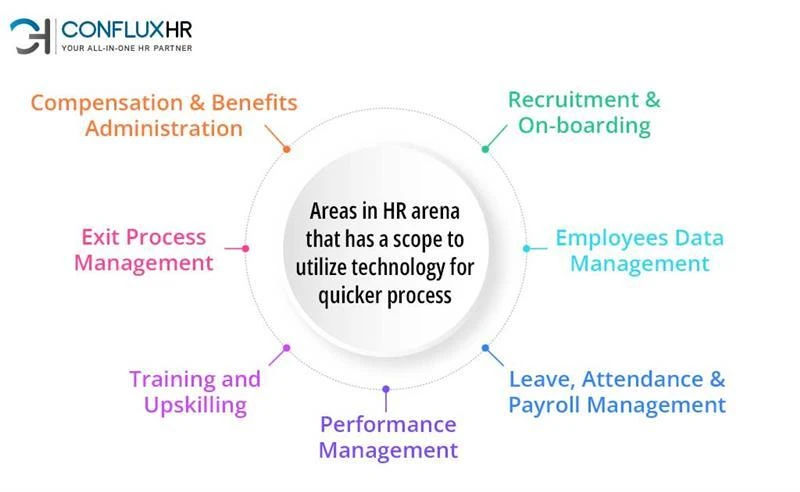
Some of the primary areas that the automation in HRM technology intends to streamline include hiring, onboarding, exit administration, performance assessment, leave and payment supervision, and learning & development. An HRMS simplifies the integration of all core and strategic HR operations into a single system.
The following are the most frequent HRMS modules:
Recruitment, Onboarding, and Exit Management
Locating the right skills can be difficult. However, an inconsistent recruitment procedure can make things more difficult. An efficient recruitment management system adds a touch of modern technology to the time-consuming employee recruitment, onboarding, and exit procedures, allowing you to hire more efficiently and effectively.
It provides a way for SMEs and startup enthusiasts to simplify their fundamental HR operations. HRM Solutions allow users to add and manage new applicants for assessment based on their skill sets. HR may manage key function areas remotely, evaluate their background, remotely organize interviews, and evaluate the prospect.
The HRMS also makes it simple for an employee to quit their job. Because of technological advancements, an employee can apply for resignation in just minutes. When an employee requests to resign, the concerned reporting manager and HR are immediately alerted. Following this, HR will next guide the employee through the leaving procedure.
Management of Attendance, Leave, and Payroll
Managing employee attendance and leave daily can be difficult. However, if you make a tiny error, it can cause you problems throughout payroll processing.
As a result, a well-placed HRMS allows you to monitor staff attendance effortlessly and conveniently.
During payroll processing, it enables small and medium-sized firms and businesses to verify an attendance register, record employee punctuality, and generate the final attendance of each employee.
Employees may check their approved leaves, the number of available leaves, and leave application acceptance with a single click, thanks to automation in payroll management systems.
It also allows upper management to monitor the frequency of leaves their team members/subordinates take. In addition, all new tax regulations are tracked, and all calculations are performed automatically to make employee compensation processes simple and time efficient.
It calculates the tax and generates state taxes. Furthermore, it develops and downloads payroll reports to examine payroll history, tax payments, financial transactions, and more.
Management of Performance
Individual performance management is essential for measuring and rewarding each employee's growth and achievements.
SMEs, SMBs, and start-ups can use HRM solutions to create employee goals and tasks and precisely monitor their performance.
The HRMS makes it simple for upper management to assign critical responsibilities to their team members, which is used to evaluate their performance.
Learning and Development
Continuous learning and development are essential in a business at the departmental and individual levels. HRM solutions can assist SMEs and SMBs in planning, organizing, conducting, monitoring, and measuring your organization’s training sessions in one place.
It assists the HR manager in selecting topics and conducting training for employees. Furthermore, it allows HR to request senior management to suggest a few training sessions that need to be undertaken for their specific team/department, as well as the priority of each training.
The HRMS can plan, schedule, and manage training sessions based on HR recommendations. After a training session, attendees can provide feedback and score the trainer as well on the effectiveness of the session.
The Way Forward
People's opinions on workplace automation are increasingly changing due to these improvements. Workers more at ease with digital technologies are more optimistic about technological advances. Many people believe that by removing tedious tasks, workplace automation will allow them to focus more on their jobs.
Organizations should strive to implement a robust HR platform to help them achieve their specific goals and deal with day-to-day workplace difficulties.
About the Company
ConfluxHR aims to help SMEs, SMBs, and Start-Ups create a streamlined and efficient workplace. We provide HR professionals with advanced HRM technologies and assistance, the two critical elements to improving employee performance and attaining corporate success.
We are confident that our innovative, technologically advanced HRM solutions will assist your company in automating its essential HR functions; and do a little more.
Key Takeaways
In practice, HRM automation has the potential to improve our ability to work and collaborate. Modern technologies, in conjunction with online tools and programming approaches, aid in the resolution of difficult, time-consuming, and demanding HR procedures. Hiring, onboarding, exit administration, performance assessment, leave and payment oversight, and learning and development are some of the major sectors that automation in HRM technology seeks to disrupt. A well-placed recruitment management system incorporates cutting-edge technology into the time-consuming employee recruiting, onboarding, and exit operations, allowing you to hire more efficiently and effectively.Owing to automation in payroll management systems, employees may check their approved leaves, the number of available leaves, and leave application acceptance with a single click. Individual performance management is critical for tracking and rewarding each employee's progress and accomplishments. HRM solutions may help SMEs and SMBs plan, organize, conduct, monitor, and measure their training sessions all in one place. Organizations should try to establish a strong HR platform that will assist them in achieving their specific goals and dealing with day-to-day workplace challenges.























Sign in to leave a comment.