

The mobile application industry has become one of the most competitive digital markets in the world. Every day, thousands of new applications are launched across categories such as finance, gaming, health, education, productivity, and e-commerce. While traditional SEO and app store optimization (ASO) remain important, a new digital shift is transforming how mobile apps gain visibility online: AI-powered search engines.
AI-driven platforms such as ChatGPT, Google Gemini, Perplexity AI, and Claude AI are changing how users discover products, services, and applications. Instead of browsing dozens of websites or app store pages, users increasingly ask AI systems direct questions such as:
- “What is the best budgeting app for students?”
- “Which fitness app has AI coaching?”
- “What are the safest mobile banking apps in Europe?”
- “Best project management apps for remote teams?”
The answers generated by AI search engines significantly influence user decisions. For mobile application companies, this means that visibility inside AI-generated answers is becoming just as important as ranking on Google search results.
The Evolution of Search Behavior
Traditional search engines display lists of websites, advertisements, and snippets. Users manually compare results and decide which links to open. AI search engines work differently. They summarize information instantly and provide direct recommendations.
This creates a major shift in user behavior:
- Fewer clicks to traditional websites
- More reliance on AI-generated summaries
- Faster decision-making
- Greater trust in conversational recommendations
For mobile application companies, being excluded from AI-generated answers can dramatically reduce organic visibility and potential downloads.
A company may rank well on Google but still remain invisible in AI search environments if its content is not optimized for AI understanding.
Why AI Search Visibility Matters for Mobile Apps
Mobile application businesses depend heavily on discoverability. Whether an app is monetized through subscriptions, in-app purchases, advertisements, or enterprise licensing, growth usually depends on acquiring new users consistently.
AI search visibility offers several important advantages.
1. Increased Brand Authority
When AI systems repeatedly recommend a mobile application, users begin to perceive that app as trustworthy and authoritative.
For example, if an AI assistant consistently suggests a specific meditation app for stress management, users associate that application with expertise and reliability.
This creates a branding advantage that goes beyond traditional advertising.
2. Higher Organic User Acquisition
Paid user acquisition costs continue to rise across platforms like Meta Ads and Google Ads. Many app companies now spend enormous budgets just to maintain visibility.
AI search engine visibility can generate sustainable organic traffic and app downloads without depending entirely on paid advertising campaigns.
Companies that appear frequently in AI-generated answers may reduce long-term customer acquisition costs significantly.
3. Better Conversion Quality
Users arriving from AI-generated recommendations often have stronger purchase intent because the AI has already filtered and summarized relevant information for them.
Instead of random traffic, companies receive users who are already searching for solutions related to their app category.
This often leads to:
- Better retention rates
- Higher subscription conversions
- Increased engagement
- Lower uninstall rates
4. Competitive Advantage
Many mobile application companies still focus only on ASO and traditional SEO. Relatively few businesses have developed dedicated AI visibility strategies.
Early adopters can gain a major competitive advantage before AI optimization becomes fully mainstream.
How AI Search Engines Evaluate Mobile App Companies
AI systems analyze vast amounts of information across the web. They evaluate factors such as:
- Website authority
- Brand mentions
- User reviews
- Technical documentation
- Content quality
- Third-party references
- News coverage
- Social proof
- Consistency of business information
Unlike traditional SEO, AI search engines attempt to understand context, trustworthiness, expertise, and overall market relevance.
This means mobile app companies must optimize not only for keywords but also for semantic relevance and authority.
The Importance of Content Strategy
Content plays a central role in AI search visibility.
Mobile application companies should create high-quality educational content related to their niche. For example:
- Finance apps can publish budgeting guides
- Fitness apps can create wellness articles
- Productivity apps can share workflow optimization tips
- Educational apps can produce learning resources
AI systems frequently rely on informative content when generating recommendations.
A strong content strategy helps AI engines understand:
- What the app does
- Which audience it serves
- What problems it solves
- Why it is different from competitors
Structured Data and Technical Optimization
Technical optimization is equally important.
AI systems process structured information more efficiently when websites include:
- Schema markup
- FAQ sections
- Clear metadata
- Semantic HTML
- Fast-loading pages
- Mobile responsiveness
Companies that provide well-structured information make it easier for AI engines to extract accurate details.
This increases the probability of appearing in AI-generated responses.
Role of Reviews and Community Discussions
AI systems often analyze discussions across:
- Forums
- Reddit communities
- Product reviews
- Social media
- Industry blogs
Positive discussions improve perceived authority.
Mobile application companies should actively encourage satisfied users to leave authentic reviews and participate in community engagement.
For example, if users frequently recommend an app on forums discussing productivity tools, AI systems may identify that app as a reliable recommendation source.
Importance of Digital PR
Digital public relations has become increasingly important in the AI era.
Mentions from:
- Industry publications
- Technology blogs
- Startup media
- Business websites
- Influencer reviews
can strengthen AI visibility considerably.
AI engines frequently use third-party validation signals when determining trustworthy recommendations.
A mobile app mentioned by respected publications has a higher probability of appearing in AI-generated responses.
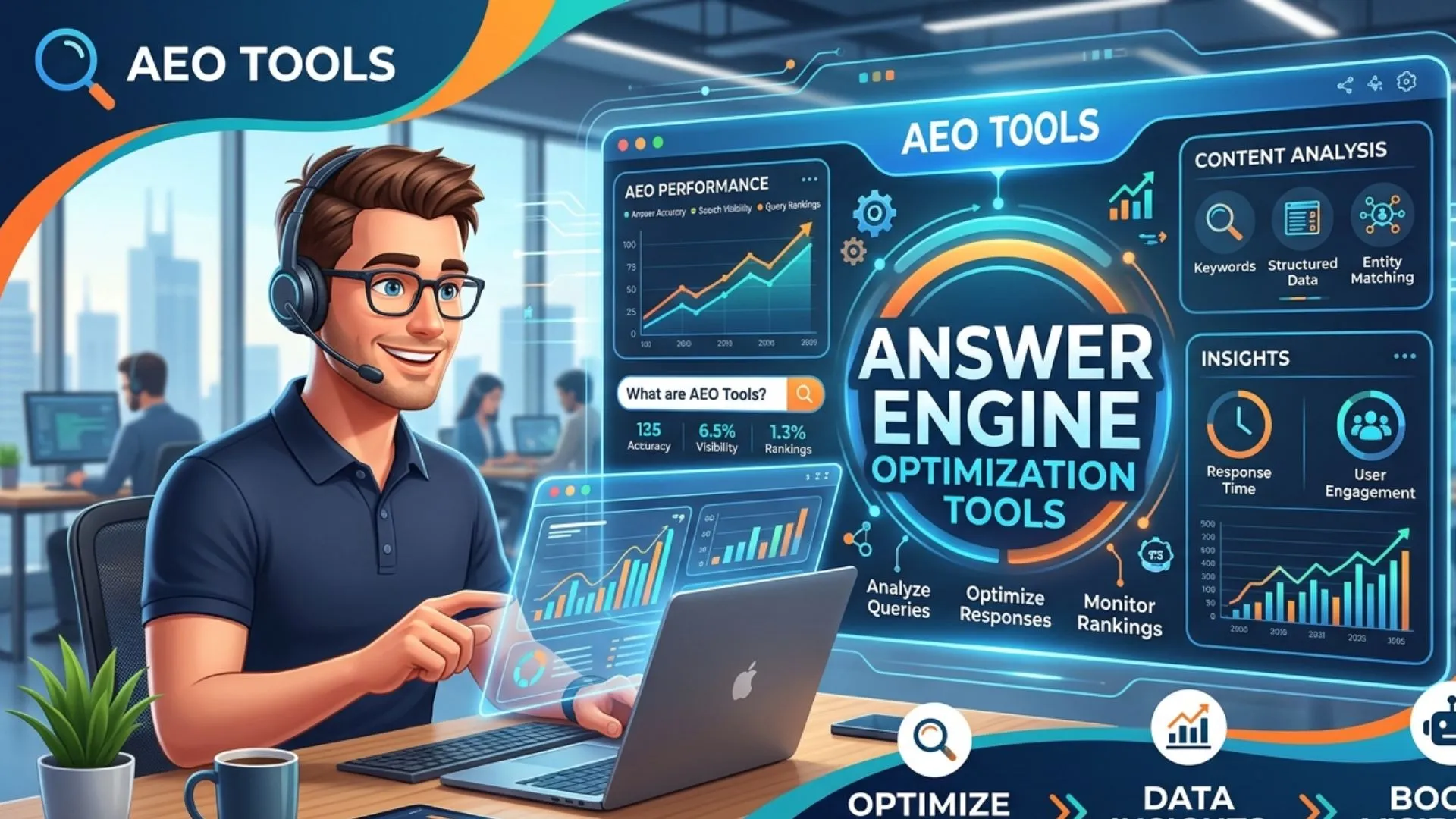
AI Search Engine Performance Optimization Tools
As AI search optimization grows, specialized platforms are emerging to help companies monitor and improve visibility across AI-driven environments.
Some businesses now use AI search engine performance optimization tools to analyze:
- AI visibility rankings
- Brand mentions
- Citation frequency
- Competitive positioning
- Prompt performance
- AI recommendation consistency
These tools help companies understand how AI systems perceive their brands and applications.
For mobile application companies, this data can become extremely valuable because AI search visibility is often difficult to track manually.
Businesses that monitor AI performance early may identify opportunities before competitors recognize them.
Relationship Between ASO and AI Search Optimization
App Store Optimization still remains essential. However, AI search optimization introduces additional layers.
ASO focuses primarily on:
- App titles
- Keywords
- Screenshots
- Ratings
- App descriptions
AI search optimization expands beyond app stores into the broader web ecosystem.
A successful mobile application company should integrate:
- SEO
- ASO
- Content marketing
- AI optimization
- Digital PR
- Brand authority development
into one unified strategy.
The Future of AI Search for Mobile Apps
AI-powered search is likely to become even more dominant in the coming years.
Users increasingly prefer conversational experiences because they save time and simplify decision-making.
Future AI systems may:
- Recommend apps dynamically
- Compare app features automatically
- Analyze user preferences in real time
- Provide personalized app suggestions
- Integrate directly with app stores
This means mobile application companies that fail to adapt may experience declining visibility over time.
Meanwhile, businesses that invest early in AI optimization strategies can establish long-term market leadership.
Building Trust for AI Systems
Trust is becoming one of the most important ranking factors in AI ecosystems.
Mobile application companies should focus on:
- Transparent communication
- Strong security practices
- Clear privacy policies
- Consistent branding
- Accurate documentation
- Reliable customer support
AI engines increasingly prioritize trustworthy businesses because inaccurate recommendations reduce user confidence in the AI system itself.
Companies with strong reputations will likely benefit the most from AI-driven discovery systems.
Importance for Startups
AI visibility is especially valuable for startups and smaller app developers.
Traditional advertising often requires large budgets, making it difficult for smaller businesses to compete with established brands.
AI search engines may create a more merit-based discovery environment where:
- High-quality products
- Strong user satisfaction
- Valuable content
- Technical expertise
matter more than advertising budgets alone.
This creates opportunities for innovative startups to gain visibility rapidly.
Conclusion
AI-powered search engines are fundamentally transforming digital discovery. For mobile application companies, visibility inside AI-generated recommendations is becoming a critical growth factor.
Businesses that optimize for AI search environments can achieve:
- Higher organic visibility
- Better user acquisition
- Stronger brand authority
- Lower marketing costs
- Improved competitive positioning
The future of app discovery will likely depend heavily on how effectively companies communicate relevance, trust, expertise, and value to AI systems.
Mobile application companies that adapt early to AI search optimization strategies will be better positioned to succeed in an increasingly AI-driven digital ecosystem.































Sign in to leave a comment.