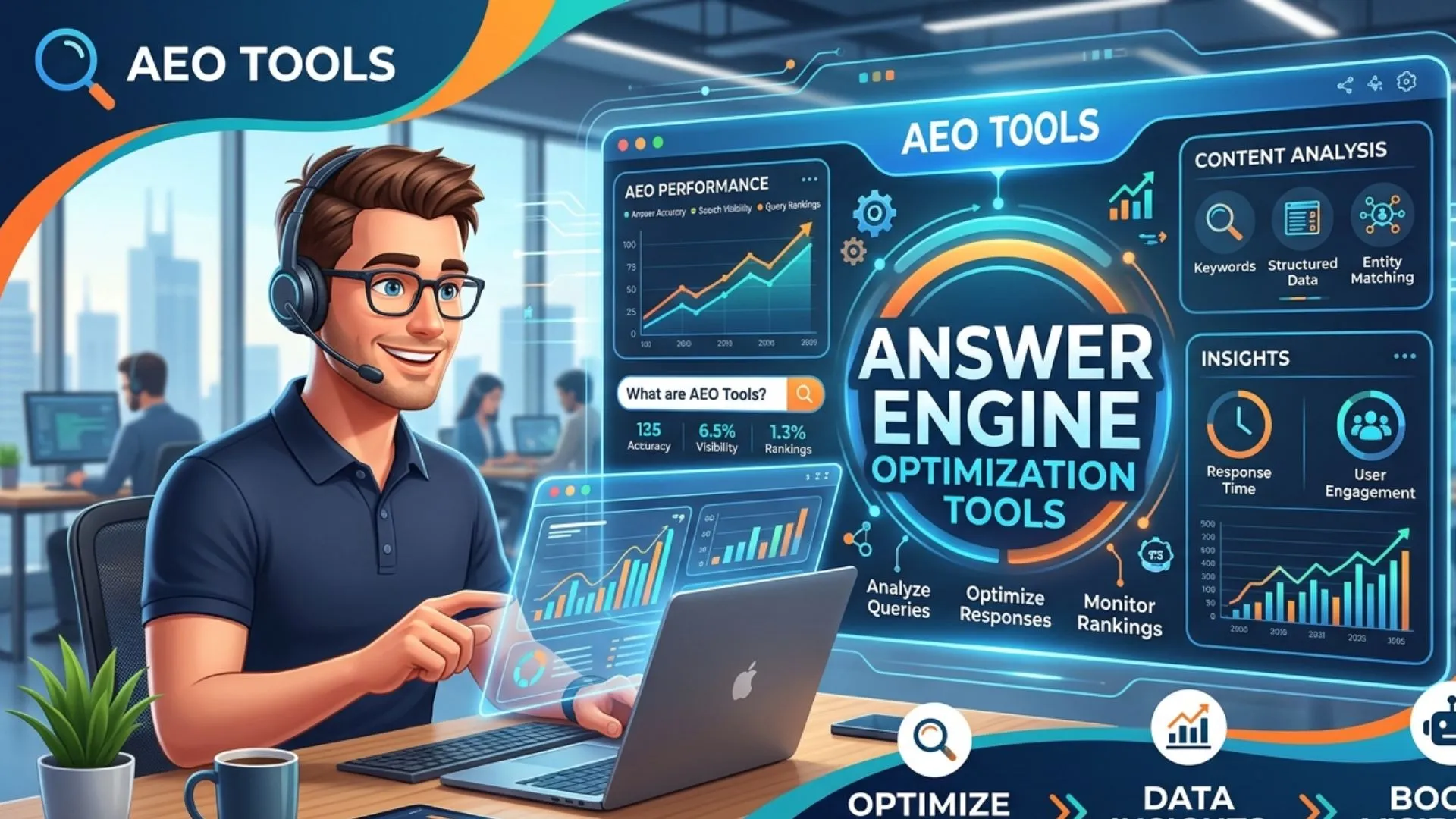

The way businesses search for information is changing rapidly. Traditional search engines are no longer the only source buyers rely on when researching software, IT services, cybersecurity providers, SaaS platforms, cloud solutions, or enterprise technologies. Today, decision-makers increasingly use AI-powered tools such as ChatGPT, Google Gemini, Perplexity AI, and Microsoft Copilot to ask direct questions and receive summarized answers instead of browsing dozens of websites.
This shift has created a new digital marketing discipline known as Answer Engine Optimization (AEO). For tech B2B companies, AEO is becoming as important as SEO once was during the rise of Google search. Answer Engine Optimization Tools are becoming critical as of 2026. Companies that fail to adapt may lose visibility in the environments where future buyers make decisions.
What Is AEO?
Answer Engine Optimization is the process of optimizing digital content so AI-powered search systems and conversational engines can easily understand, trust, and reference a company in their generated answers.
Unlike traditional SEO, which focuses heavily on ranking webpages on search engine results pages, AEO focuses on becoming the actual answer provided by AI systems.
For example, instead of a user searching:
“Best cybersecurity firms in Europe”
and clicking multiple websites, they may now ask:
“Which cybersecurity providers are most trusted for enterprise cloud security in Europe?”
AI systems generate summarized recommendations directly. If a company is not recognized and understood by these systems, it may never appear in the conversation.
For tech B2B companies, this is critical because enterprise buyers increasingly prefer quick, reliable, AI-generated insights during the early research phase.
The Shift in B2B Buyer Behavior
B2B purchasing processes have always involved extensive research. Buyers compare vendors, review technical specifications, evaluate case studies, and seek peer validation before making decisions. However, generative AI is changing how this research is conducted.
Instead of manually searching through websites, buyers now ask AI tools complex questions such as:
- “Which CRM platforms are best for manufacturing companies?”
- “What are the top cloud migration providers for healthcare organizations?”
- “Which AI analytics software integrates with SAP?”
- “What cybersecurity vendors support zero-trust architecture?”
These questions are highly conversational and intent-driven. AI systems summarize information from multiple sources and provide direct recommendations.
This means visibility is no longer limited to search rankings. Companies must now optimize for AI comprehension and AI citation.
Tech firms that invest in AEO gain an advantage because they become discoverable during these high-intent conversational searches.
Why AEO Matters More for Tech Companies
The technology industry is particularly affected by the rise of AI search because technology products are often complex and research-intensive. Buyers need explanations, comparisons, integrations, technical compatibility details, and implementation insights before making decisions.
AI systems thrive in exactly this type of environment.
When a business buyer asks a question about cloud infrastructure, cybersecurity, ERP software, data analytics, or AI automation, AI engines attempt to provide the most authoritative and structured answer available.
This creates major opportunities for tech companies that publish:
- High-quality educational content
- Detailed product documentation
- Industry-specific case studies
- Technical comparisons
- Frequently asked questions
- Research reports
- Integration guides
Well-structured technical content increases the likelihood that AI systems will reference a company when generating answers.
For B2B technology providers, this can directly influence lead generation and brand authority.
AEO Builds Early-Stage Visibility
One of the biggest advantages of AEO is visibility during the early stages of the buyer journey.
Traditional SEO often captures users already searching for a specific company or product category. AEO, however, can position brands earlier in the research process when buyers are still exploring solutions.
For example, a company may not search for a particular SaaS provider by name. Instead, they may ask:
“What software helps automate supply chain analytics for enterprise manufacturing?”
If an AI engine references your company in its response, your brand enters the buyer’s awareness stage immediately.
This is especially important in B2B technology markets where sales cycles are long and trust-building begins months before direct contact.
Being included in AI-generated answers creates familiarity before competitors even enter the conversation.
Authority and Trust Become Critical
AI systems prioritize authoritative and trustworthy information. This means tech B2B companies must focus not only on keywords but also on credibility signals.
Factors that improve AEO performance include:
- Consistent brand mentions across reputable websites
- High-quality backlinks
- Expert-authored content
- Technical depth
- Updated information
- Structured data markup
- Clear website architecture
- Strong online reputation
- Positive industry recognition
AI engines analyze patterns across the internet to determine which companies are reliable enough to mention in generated answers.
This makes thought leadership more valuable than ever.
Companies that consistently publish insightful industry content increase their chances of becoming trusted AI references.
The Role of Structured Content
Structured content is essential for AEO success.
AI systems process information more effectively when content is organized clearly. Tech B2B companies should prioritize:
- Clear headings and subheadings
- FAQ sections
- Bullet-point summaries
- Product comparison tables
- Concise explanations
- Schema markup
- Technical glossaries
- Step-by-step guides
Instead of writing purely promotional content, businesses should focus on directly answering user questions.
For instance, an article titled:
“How Does Zero-Trust Security Work in Enterprise Networks?”
is more valuable for AEO than vague promotional messaging.
AI systems seek content that solves problems and explains concepts clearly.
AEO and Brand Mentions
Many AI engines rely heavily on broader web references rather than just a company’s own website. This means digital PR and brand mentions are increasingly important.
Tech B2B companies should aim to appear in:
- Industry publications
- SaaS directories
- Technology review websites
- Research articles
- Expert roundups
- Podcasts
- LinkedIn discussions
- Conference summaries
- Educational resources
When multiple authoritative sources mention a company consistently, AI systems gain stronger confidence in referencing that brand.
This creates a powerful relationship between public relations, content marketing, and AEO.
Competitive Advantage in Emerging AI Search
AEO is still relatively new. Many technology companies continue focusing only on traditional SEO while ignoring AI visibility.
This creates an opportunity for forward-thinking businesses.
Companies that invest in AEO now can establish strong positioning before the market becomes highly competitive.
Just as early SEO adopters gained enormous search visibility advantages in the 2000s, early AEO adopters may dominate AI-generated discovery channels over the next decade.
For startups and mid-sized tech firms, this is especially valuable because AEO can reduce dependence on expensive advertising campaigns.
If AI engines consistently recommend a company organically, customer acquisition costs may decrease significantly.
The Importance of Entity Recognition
Modern AI systems increasingly operate using entity-based understanding rather than simple keyword matching.
This means AI engines attempt to understand:
- What your company does
- Which industries you serve
- What technologies you specialize in
- Which competitors relate to you
- What products you offer
- Which topics your brand is associated with
Tech B2B companies should ensure consistency across all online platforms, including:
- Website descriptions
- LinkedIn pages
- Press releases
- Product documentation
- Company bios
- Knowledge panels
- Directory listings
Clear and consistent positioning helps AI systems build stronger associations with your expertise.
AEO Supports Long-Term Growth
AEO is not simply a short-term marketing trend. It reflects a fundamental transformation in how information is discovered online.
As AI assistants become integrated into enterprise workflows, conversational search will continue expanding. Businesses will increasingly rely on AI-generated summaries to identify vendors, compare software solutions, and evaluate technologies.
For tech B2B companies, adapting early provides long-term advantages in visibility, authority, and lead generation.
Organizations that optimize for AI-driven discovery today are preparing themselves for the future of digital marketing.
Conclusion
Answer Engine Optimization is rapidly becoming a core strategy for technology-focused B2B companies. As buyers increasingly rely on AI-powered search tools instead of traditional search engines, visibility within AI-generated answers becomes critical.
Tech companies that invest in structured content, thought leadership, digital authority, and AI-friendly optimization strategies position themselves ahead of competitors in this evolving landscape.
AEO is not replacing SEO entirely, but it is reshaping how online visibility works. The companies that understand this shift early will gain stronger brand recognition, improved trust, and greater influence during the most important stages of the B2B buying journey.
In the coming years, being searchable will no longer be enough. Companies will need to become the answer itself.






























Sign in to leave a comment.