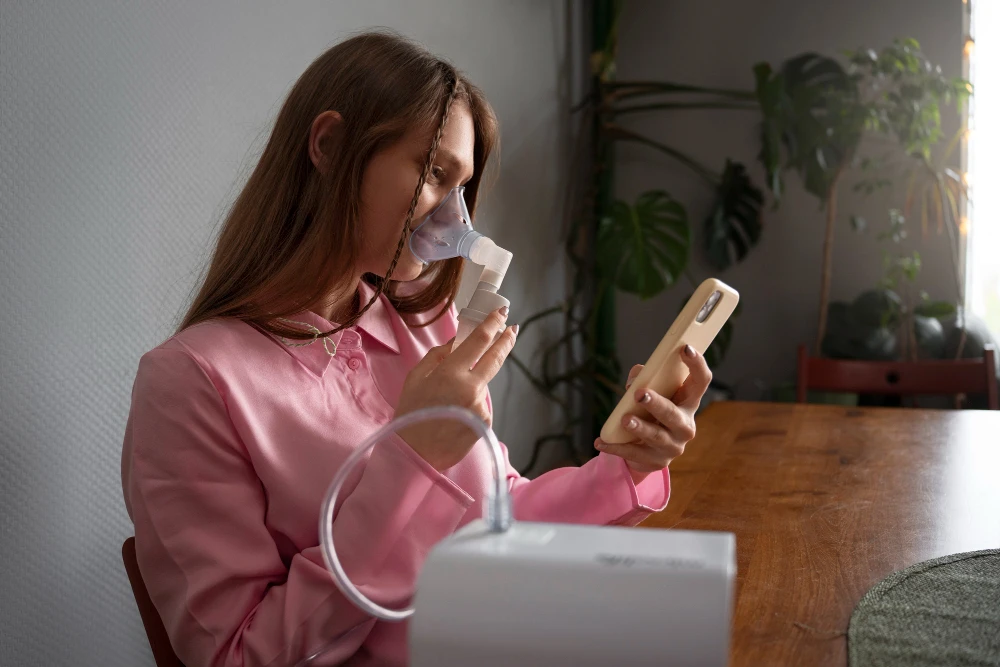

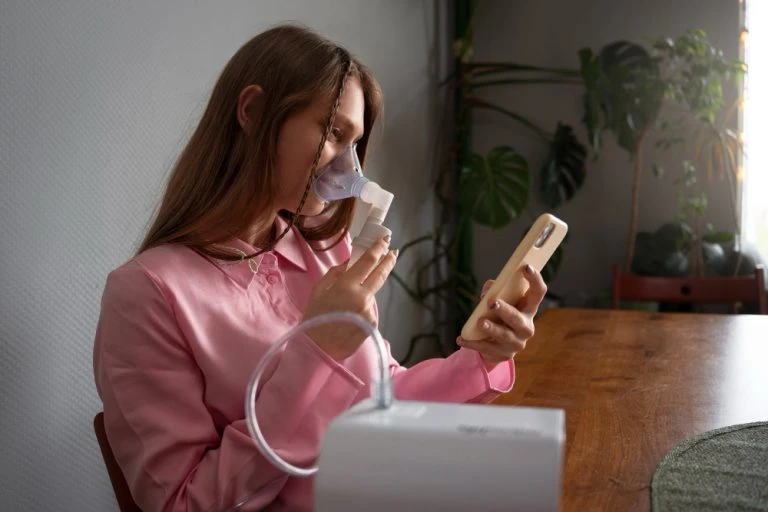
A nebulizer is a device that enables the inhalation of medication as a mist via a facemask or mouthpiece. It helps the medication enter the lungs by inhalation by turning it into a liquid. Compressor nebulizers are the most widely used type. However, because of recent technological advancements, there are now a variety of battery-operated handheld nebulizers on the market.
What Is the Use of Nebulizers?
Nebulizers are a type of inhalation device designed to treat asthma, other obstructive airway diseases, and COPD. For those who are unable to utilize inhalers with spacers, such as newborns, young children, elderly people, and others, home nebulizer therapy is an especially effective way to provide medication.
For asthmatic or COPD patients, utilizing a nebulizer machine to inhale the medication during a lung attack is more pleasant than using a pocket inhaler. However, if a child is too young to use an inhaler, a physician may often advise them to use a nebulizer instead, which makes it easier for the medication to reach the lungs without requiring breath coordination.
Using the Nebulized Therapy
- Close the lips across the mouthpiece after placing it in your mouth.
- Make sure you keep the nebulizer upright. This encourages nebulization and stops spills.
- Be careful to breathe deeply during the procedure. This gives the medication time to settle in the respiratory system.
- The medication can be misted by sometimes touching the side of the nebulizer.
- Follow these instructions until sputtering, or irregular nebulization, begins.
Maintenance and Cleaning of Nebulizer Devices
Carefully clean the nebulizer machine according to the manufacturer\'s recommendations after every use.
Remove the nebulizer. Wash every component with water and liquid dish soap, excluding the tubing and finger valve. Use water to rinse.
Squeeze out extra water from the nebulizer after washing it.
To swiftly dry the nebulizer, attach the tube and nebulizer parts to the air compressor and switch it on. Before storing the nebulizer, ensure that it is totally dry.
Maintaining a clean nebulizer is crucial.
After every session, remember to give the nebulizer a thorough cleaning. Simply follow the directions included, soaking the attachments in cold water and disinfectant if necessary. Although it\'s just a small step, doing this will significantly reduce the likelihood of bacteria and viruses getting near your home nebulizer.
Avoid nebulizing when you\'re asleep.
Would you rather use the nebulizer as you sleep, without even realizing that you\'re using it? That is wrong! Nebulizing when you\'re asleep has very little effect; if your mouth is covered and your breathing is slowing down, it will be difficult for the medication to reach its target.
Maintain the face mask in place.
One common mistake people make while using a nebulizer machine is to put the face mask on too loosely. That will cause the medication or saline solution to spill into your face.
Avoid using "heat" to sterilize the ampoule.
Due to the polycarbonate or plastic composition of the ampoules, do not use heat to sterilize them after your nebulization session. Because they are made of heat-sensitive materials, soaking them in boiling water may result in harm. You might have to replace them, but they will certainly be immaculate.
Conclusion
In general, nebulizers are safe to use when used as prescribed. Don\'t give prescription medications to loved ones or friends. Depending on the needs of each patient, a medical practitioner should choose the appropriate drug to use in the nebulizer. So, read all the instructions regarding how to use a nebulizer with pictures.
If nebulizers aren\'t kept clean, they could cause more damage than good. The machine may serve as an ideal environment for mold growth since it releases fluids. After every use, it\'s critical to clean and dry.





























Sign in to leave a comment.