

Portugal continues to be one of the most attractive destinations for remote workers and location-independent professionals. With its mild climate, high quality of life, modern infrastructure, and strong internet connectivity, the country has positioned itself as a hub for digital entrepreneurs. The Portugal Digital Nomad Visa allows non-EU citizens to legally reside in Portugal while working remotely for foreign employers or running online businesses. However, one of the most important eligibility criteria in 2026 remains meeting the minimum income threshold set by Portuguese immigration authorities.
Understanding the income requirements is essential before applying. Applicants must demonstrate stable and sufficient earnings to support themselves without relying on Portugal’s social system. Income verification ensures that digital nomads can maintain their lifestyle while contributing positively to the local economy. In this article, we will explore the updated 2026 income thresholds, acceptable income sources, documentation requirements, and how these figures compare with other European residency options.
Overview of the Portugal Digital Nomad Visa
The Portugal Digital Nomad Visa, officially part of the D8 visa category, is designed for remote workers employed by foreign companies or self-employed professionals serving international clients. Unlike traditional work visas, it does not require a Portuguese employer. Instead, applicants must prove that their income originates outside Portugal. This makes the visa particularly appealing to freelancers, tech professionals, consultants, and entrepreneurs operating online businesses.
The visa typically offers two pathways: a temporary stay visa (valid for up to one year) and a residency visa leading to a renewable residence permit. The residency route is more attractive for individuals planning long-term settlement and potentially permanent residency. Income requirements play a central role in both pathways. Portuguese authorities calculate the minimum income based on the national minimum wage, which is adjusted periodically. Therefore, applicants in 2026 must review the latest wage standards before submitting their application.
Minimum Income Threshold for 2026
In 2026, the income requirement for the Portugal Digital Nomad Visa is expected to remain tied to a multiple of Portugal’s national minimum wage. In previous years, the threshold was set at approximately four times the monthly minimum wage. Applicants must demonstrate consistent monthly income at or above this level for at least the three months prior to application.
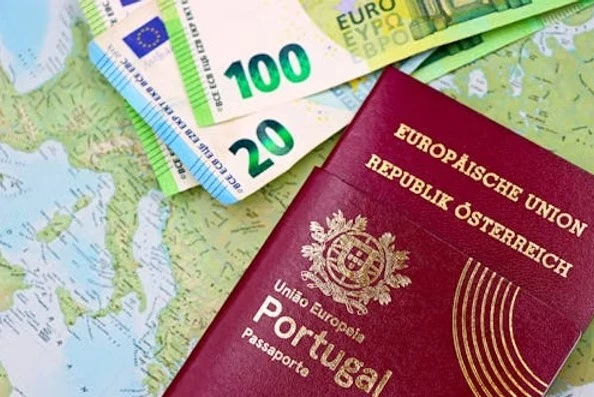
For example, if Portugal’s monthly minimum wage in 2026 is approximately €820–€900 (subject to official updates), the required income may range between €3,280 and €3,600 per month. Immigration authorities require proof through bank statements, employment contracts, or service agreements. It is important to note that this income must be stable and ongoing, not a one-time payment. The objective is to ensure that digital nomads can sustain themselves comfortably while residing in Portugal without engaging in local employment.
Income Requirements for Families
Applicants who plan to relocate with family members must meet higher financial thresholds. Portugal applies additional percentage increases to the base income requirement for dependents. Typically, an additional 50% of the main applicant’s minimum income is required for a spouse, and 30% for each dependent child.
For instance, if the primary applicant must earn €3,500 per month, bringing a spouse would require an additional €1,750 per month, and each child would add approximately €1,050. These figures ensure that families have adequate financial resources to cover housing, healthcare, education, and living expenses. When applying as a family unit, all financial documentation must clearly reflect sufficient income levels to meet the combined requirement. Planning ahead is crucial to avoid delays or rejections due to insufficient proof of funds.
Acceptable Sources of Income
Portugal strictly requires that income originate from outside the country. Acceptable income sources include remote employment salaries, freelance contracts, business ownership profits, dividends, royalties, and long-term consulting agreements. Applicants must demonstrate that their professional activity is location-independent and does not compete directly within the Portuguese labor market.
Proof of income usually includes signed employment contracts, invoices for freelance services, tax returns, and official bank statements. Authorities may request documentation translated into Portuguese and certified according to legal standards. It is also advisable for applicants to maintain consistent deposits in their bank accounts that clearly match declared income. Stability and transparency are key factors in satisfying the financial eligibility criteria.
Financial Stability Beyond Income
In addition to monthly income, applicants may need to show savings in a Portuguese bank account. While not always mandatory, maintaining several months’ worth of living expenses in savings strengthens the application. Portuguese authorities may view this as evidence of financial security and responsible planning.
Applicants must also provide proof of accommodation, whether through a rental contract, property purchase agreement, or host declaration. Healthcare coverage valid in Portugal is another requirement. Although these are not direct income thresholds, they demonstrate the applicant’s ability to reside comfortably in the country. Ensuring all supporting documents align with declared income levels increases approval chances in 2026.
Tax Considerations for Digital Nomads
Once residing in Portugal for more than 183 days per year, individuals may become tax residents. This means they could be subject to Portuguese taxation on worldwide income, depending on double taxation agreements between Portugal and their home country. Applicants should carefully assess their tax obligations before relocating.
Portugal has previously offered favorable tax regimes, such as the Non-Habitual Resident (NHR) program, although tax policies may evolve by 2026. Understanding local tax responsibilities ensures compliance and financial efficiency. Consulting with a qualified tax advisor can help digital nomads optimize their international tax structure while maintaining full legal compliance.
Comparing Income Requirements with Other European Visas
Compared to other European digital nomad programs, Portugal’s income requirement is moderate but competitive. Countries such as Spain and Italy may have similar or slightly lower financial thresholds, depending on visa categories. For example, individuals considering alternatives like the italy elective residence visa or the elective residence visa Italy should note that those visas typically require passive income rather than active remote earnings.
The elective residency visa for Italy and the italian elective residency visa focus on retirees or financially independent individuals who do not intend to work. In contrast, Portugal’s Digital Nomad Visa specifically accommodates remote workers earning active income from abroad. Therefore, professionals seeking to continue active employment often find Portugal’s framework more aligned with their goals. Comparing visa structures helps applicants choose the most suitable European residency option based on income type and lifestyle preferences.
Conclusion
The Portugal Digital Nomad Visa remains an attractive pathway for remote professionals seeking European residency in 2026. Meeting the minimum income threshold is the most critical requirement, with expected figures tied to four times the national minimum wage. Applicants must demonstrate consistent, stable, and foreign-sourced income to qualify.
For families, additional income percentages apply, and supporting documentation must clearly reflect financial capacity. While alternatives such as the elective residence visa Italy cater to passive-income individuals, Portugal’s program is tailored specifically for active remote earners. By understanding financial requirements, tax implications, and documentation standards, digital nomads can confidently prepare for a successful application and enjoy life in Portugal.





























Sign in to leave a comment.