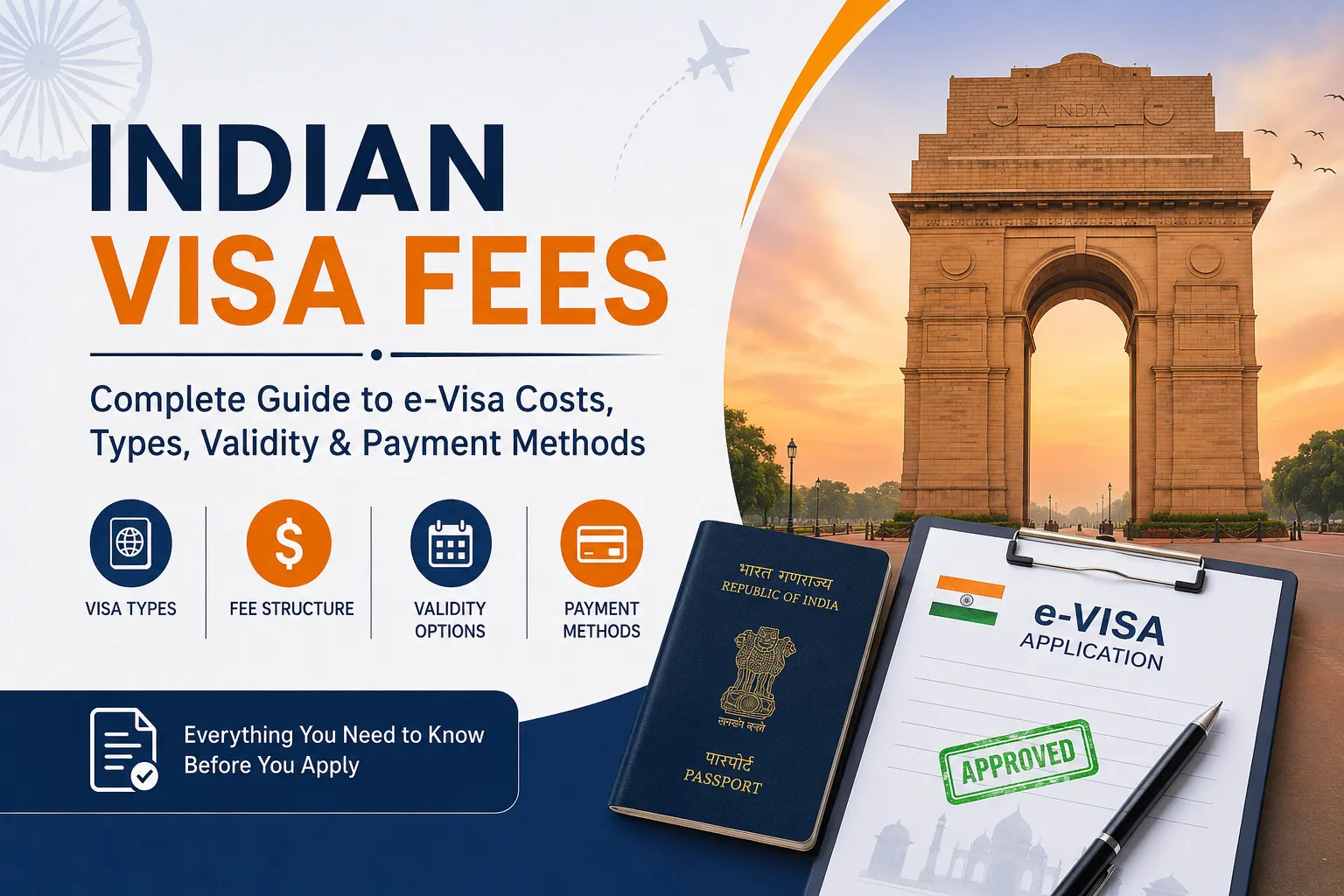

Are you planning a trip to India and are confused about the Indian visa fees? If so, you must understand the fee structure and validity rules of the Indian e-Visa. Foreign nationals must keep in mind both the Indian Government Fee and the visa service fee. This can help you avoid any unnecessary expenses and application mistakes. The total cost of an Indian e-Visa depends on factors such as nationality, visa type and entry method.
Read the blog below to learn more about the different types of Indian visas, their applicable fees and the relevant processing options.

What are the different types of Indian Visa?
There are various types of Indian e-visas. These are listed below.
- Medical Visa
- For medical treatments, foreign nationals can apply for a medical visa through both online and offline methods.
- This is a triple-entry visa and costs around $175.
- An individual can use a medical visa to stay in the country for 60 days.
- Student Visa
- This is given to foreign nationals who are visiting the country for education.
- The applicant can apply for a multiple-entry visa that is valid for 1 or 5 years.
- It costs around $240.
- Tourist Visa
- Applicants can apply for single-entry and multiple-entry visas in both online and offline manners.
- A single-entry visa costs around $155, while a multiple-entry visa costs around $150 to $320.
- Business Visa
- Applicants can apply for a business visa for both professional and commercial activities.
- They can stay up to 180 days and come with a 5-year validity.
- It is a multiple-entry travel document and costs up to $430.
- Journalist Visa
- Both the single-entry and multiple-entry visas are available.
- Single-entry costs $155, and the multiple-entry visa costs around $140 to $390.
- The cost of both visas depends upon the validity period of the visa.
- Entry Visa
- There are 2 types of entry visas, and they are valid for 1 and 5 years, respectively.
- It costs around $300 to #390.
- Conference Visa
- It is a single-entry visa and can be obtained both online and offline.
- The applicant is allowed to stay for 30 days, and it costs around $350.
What is a 30-day Indian e-Visa?
This type of visa is best for budget travellers who are travelling to India only once within a short timeline.
- It is valid for 30 days from the date of entry. Re-entry is permitted.
- You can stay for a total of 30 days.
- It is ideal for:
- Short Vacations
- Business trips for 2-3 weeks
- First-time visitor who is unsure of future travel plans
What is a 1-year Indian e-Visa?
If you have plans to visit India more than once in a single year, you can apply for a 1-year visa. It is more cost-effective than a 30-day visa.
- It is valid for a single year starting from the date of issuance. Multiple entries are allowed.
- You can stay for a total of 90 days per visit. In case of certain nationalities, it is 180 days.
- It is ideal for:
- Frequent business visits
- Visiting family and friends
- Travellers combining multiple trips to India in a single year
What is a 5-year Indian e-Visa?
If you are planning to visit India more than twice over several years (frequent visits), you can apply for a 5-year visa. It also has the lowest cost per trip.
- It is valid for 5 years from the date of issue. Multiple entries are allowed.
- You can stay for up to 90 days per visit.
- It is ideal for:
- NRIs having a foreign passport
- Individuals having family members living in India
- Spiritual retreats or repetitive tourism
- Long-term travel planners
How much does an e-Visa cost?
The fee structure of an e-Visa depends on the type of visa, nationality and duration of stay. The table below outlines the cost for the different types of e-Visa.
| Type | Fees |
| Tourist e-Visa (30 days) | $10 (April-June) $25 (July-March) |
| Tourist e-Visa (1 year) | $40 |
| Tourist e-Visa (5 years) | $80 |
| Business or medical e-Visa | $80 (approx) |
| Regular Visa | Starts from $50 to several hundred (depends on category and country) |
What is the difference between e-Visa and Regular Visa?
The table below outlines the difference between an e-Visa and a Regular Visa.
| e-Visa | Regular Visa |
| Lower base fees | Higher Fees (for processing, courier and embassy charges) |
| Easy online application and quick approval | Requires physical documents and in-person appointments |
| 2-4% online processing surcharge | Slower turnaround time |
What are the payment methods for Indian visas?
The payment method depends on the type of visa and the application method.
- Regular Visa
- The methods include credit/debit cards, bank drafts or cash. (depends on the visa centre)
- Payments are made to the authorised Indian Visa Application Centres or consulates.
- Ensure the payment method supports international transactions to avoid unnecessary declines.
- e-Visa
- Credit or debit cards
- PayPal (if supported)
- Processing fees may also apply.
What is the Indian Visa Fee Refund policy?
Regardless of the application outcome, the Indian Visa fees are non-refundable. Some key points include:
- No refund will be initiated if the visa is rejected, cancelled or withdrawn.
- The fees also cover administrative processing charges
- In case of overpayment, there is a rare chance of partial refunds. This is only possible through an embassy request and must be done within 90 days.
- The applicants must double-check all their details before submitting to avoid errors or rejections.
Conclusion
Understanding the Indian e-Visa Fees is important for planning a smooth and enjoyable trip to India. Since visa charges vary based on nationality, visa type and duration, checking the latest visa fee structure before applying can help you avoid unexpected costs. By staying informed and applying through the official process, travellers can have a convenient and easy e-Visa application experience.



















Sign in to leave a comment.