
If you've been searching for Indian contemporary paintings in Delhi, you've probably noticed that the same handful of prestigious galleries come up again and again — Nature Morte, Gallery Espace, DAG. Don't get us wrong, they're brilliant. But Delhi's art scene runs far deeper than the names printed in glossy fair catalogues.
The truth is, some of the most compelling work in Indian contemporary art today lives outside those white-walled institutions. From studio collectives in South Delhi to independent online platforms and neighbourhood pop-ups, there's a thriving alternative to mainstream galleries that many art lovers simply don't know about — yet.
Whether you're a first-time buyer, a seasoned collector, or just someone who wants a meaningful piece of art on your wall, this guide is for you.
Why Delhi Is the Heart of Indian Contemporary Art
Delhi isn't just India's political capital — it's the creative nerve centre of the country. Home to the India Art Fair, the Lodhi Art District, and institutions like NGMA and KNMA, the city attracts artists, curators, and collectors from across the subcontinent.
But here's what many people miss: the most exciting energy often isn't inside the formal institutions. Walk through Hauz Khas Village, Shahpur Jat, or even parts of Mehrauli, and you'll find studios, small galleries, and community art spaces doing genuinely experimental work — pushing conversations about identity, ecology, urbanisation, and memory that the larger galleries sometimes shy away from.
Indian contemporary paintings in Delhi today span a remarkable range — from large-format abstract oils to intricate mixed-media works rooted in classical Indian aesthetics. Artists like Thota Vaikuntam, Jayasri Burman, and Paresh Maity have long been celebrated. But a younger generation is now producing work that's every bit as compelling, and they're often accessible at a fraction of the price.
 What Makes Indian Contemporary Paintings Distinct
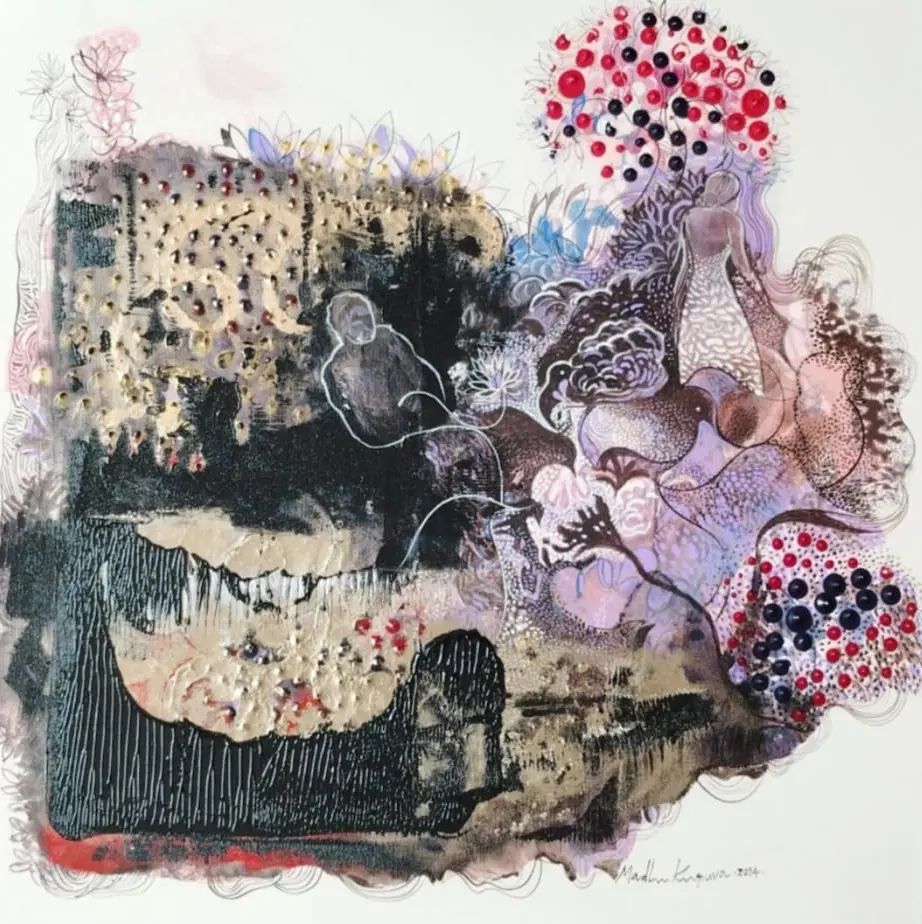
One thing that makes Indian contemporary art so fascinating is how it holds two worlds in tension — the deeply traditional and the sharply modern. You'll find canvases that reference Madhubani patterns or Warli storytelling, yet explore entirely contemporary themes like climate anxiety, digital identity, or social inequality.
This isn't pastiche. It's a genuine artistic vocabulary that has evolved over decades, shaped by post-Independence aspirations, globalisation, and an incredibly diverse cultural landscape. When you buy an Indian contemporary painting, you're not just acquiring an object — you're taking home a conversation.
Materials matter too. Indian contemporary painters often work with unexpected mediums: natural pigments, handmade papers, recycled textiles, even charcoal drawn from sacred sites. These choices are rarely accidental — they carry meaning, and a good artist or gallerist will always be happy to talk you through them.
Finding the Right Work: Beyond the Usual Suspects
So how do you find great Indian contemporary paintings in Delhi without going through the usual commercial route? Here are a few approaches:
1. Follow artist-run platforms — Many working artists now maintain Instagram accounts or personal websites where they sell directly. This cuts out commission layers and means your money goes straight to the creator.
2. Explore curated online spaces — Platforms like OchreArt.org curate carefully, often focusing on mid-career and emerging artists who aren't yet represented by the big commercial galleries. This is a genuine alternative to mainstream galleries, and the curation is just as rigorous.
3. Visit residency open studios — Organisations like Khoj International Artists' Association host periodic open-studio events. These are excellent places to see work in progress, speak directly with artists, and understand their practice in depth.
4. Attend smaller art fairs — Beyond the India Art Fair, Delhi hosts smaller exhibitions across neighbourhoods that showcase local and regional artists at more accessible price points.
Buying Indian Contemporary Art: What to Know
Buying art for the first time can feel intimidating, but it doesn't need to be. Here's what matters:
Provenance and authenticity: Always ask for a certificate of authenticity and, where applicable, a record of where the work has been exhibited or published. Reputable platforms — commercial galleries and alternatives alike — will provide this without hesitation.
Price is not quality: Some of the most powerful Indian contemporary paintings in Delhi today are priced below ₹50,000. The commercial art market sets prices based on artist reputation, auction history, and collector demand — not purely on artistic merit. An emerging artist whose work moves you might be a far better investment, emotionally and financially, than a mid-career name with inflated auction records.
Think about context: Art looks different at home than in a gallery. Before buying, consider the scale, the palette, and the light in the room where it will live. Many platforms now offer digital visualisation tools to help with this.
Frequently Asked Questions
1. What are Indian contemporary paintings?
Indian contemporary paintings refer to works created by Indian artists from roughly the 1990s to the present day. They often blend traditional Indian visual languages — such as miniature painting traditions, folk art motifs, or mythological iconography — with modern and global art movements. The subject matter typically engages with present-day themes: urbanisation, identity, politics, spirituality, or personal memory.
2. Where can I find Indian contemporary paintings in Delhi without visiting a gallery?
Curated online platforms are increasingly popular and offer a genuine alternative to mainstream galleries. Sites like OchreArt.org bring together carefully selected works by established and emerging artists, with full provenance information and direct purchasing options. Social media, particularly Instagram, is also a surprisingly good resource for discovering artists who sell directly from their studios.
3. How do I know if an Indian contemporary painting is authentic?
Always request a certificate of authenticity from the seller or gallery. Reputable platforms will also provide documentation of where the work has been shown or published. If buying from a newer or independent artist directly, a signed statement of authenticity along with high-resolution photographs of the work — including the reverse of the canvas — is standard practice.
4. Are Indian contemporary paintings a good investment?
Some are, but approaching any art purchase purely as a financial investment can be a mistake. The Indian contemporary art market has seen significant growth, and certain artists — particularly those shown internationally or acquired by major institutions — have delivered strong returns. However, the more reliable reason to buy is genuine connection with the work. Art you love living with has a kind of value that indices can't capture.
5. What is the difference between modern and contemporary Indian art?
Indian modern art typically refers to the period from the early 20th century through to the 1980s — encompassing movements like the Bengal School, the Progressive Artists' Group, and Tantra-influenced abstraction. Contemporary Indian art begins roughly from the 1990s and is still being made today. The distinction isn't just chronological; contemporary work tends to engage more directly with current social, political, and technological contexts, and often incorporates new media, installation, and performance alongside traditional painting.
Conclusion
Delhi's contemporary art scene is one of the most dynamic in Asia — but you'd be forgiven for not knowing that if you've only ever looked through the lens of its most prominent institutions. Indian contemporary paintings in Delhi tell stories that are urgent, beautiful, and deeply rooted in a culture that has been in conversation with itself for thousands of years.
The good news is that accessing this world has never been easier. Thanks to a growing number of curated digital platforms and community spaces that serve as a genuine alternative to mainstream galleries, you no longer need to wait for an invitation or know the right people. You just need curiosity — and a willingness to look a little further.
Ready to start exploring? Ochre Art is a good place to begin.



























Sign in to leave a comment.