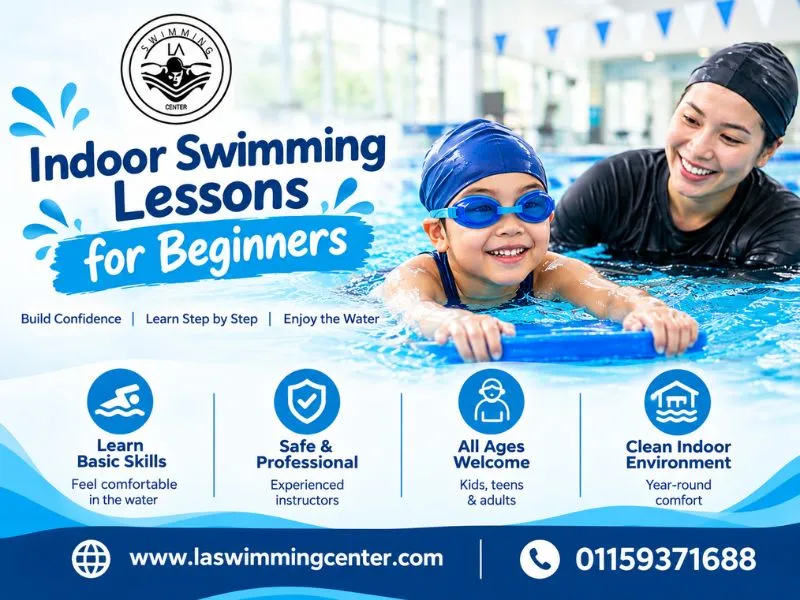

Indoor swimming lessons for beginners typically start with water orientation, basic breathing techniques, and simple floating exercises. The first class focuses on building comfort in the water rather than formal stroke training. Instructors guide students through wall holds, face submersion, and gentle kicks to develop water confidence before advancing to structured swimming skills.
If you've been searching for indoor swimming lessons near me, you're likely wondering what actually happens when you walk through that pool door for the first time. The good news: beginner lessons are designed to meet you exactly where you are — no experience, no pressure, and no expectation that you'll be swimming laps on day one.
What Happens During Your Very First Swimming Lesson?
Your first class is less about swimming and more about becoming comfortable in the water. Most beginner programs in the US follow a structured progression, often aligned with American Red Cross or YMCA swim standards, which break skill development into measurable stages.
Here's a general breakdown of what that first session looks like:
- Pool orientation: You'll get familiar with the shallow end, pool rules, and entry/exit points.
- Water acclimation: Instructors encourage you to splash water on your face and walk through the water to reduce anxiety.
- Breath control basics: You'll practice exhaling underwater through your nose and mouth — a fundamental skill that supports every stroke.
- Floating introduction: Assisted back floats or front floats help you feel the water supporting your body.
- Wall holds and kicks: Holding the pool wall while kicking builds leg strength and introduces propulsion.
Most beginner classes run between 30 and 45 minutes. Indoor pools offer a major advantage here — consistent water temperature (typically between 83°F and 86°F) and no weather disruptions, which makes it easier for new swimmers to focus.
Why Indoor Pools Are Better for Learning to Swim
Learning in an outdoor pool sounds appealing, but indoor environments genuinely accelerate the learning curve. Glare, wind, temperature drops, and crowded conditions can all interfere with a beginner's focus and comfort level.
Indoor swimming facilities offer:
- Controlled water and air temperature year-round
- Reduced distractions for both students and instructors
- Consistent scheduling without weather cancellations
- Better acoustics for instructor communication
- Safer, monitored environments with professional lifeguards
For children especially, a warm, calm indoor pool reduces the initial fear response. According to the CDC, drowning is a leading cause of unintentional injury death for children aged 1–14 in the United States, making early, quality swim instruction a genuine safety investment — not just a recreational one.
Beginner Swimming Lessons: Skill Progression From Week to Week
One session won't turn you into a swimmer. But a well-structured program builds skills sequentially, so each class builds directly on the last. Here's what a typical 6–8 week beginner curriculum looks like:
| Week | Focus Area | Key Skills Introduced
|
|---|---|---|
| 1–2 | Water comfort and breath control | Face submersion, bubble blowing, assisted float |
| 3–4 | Independent floating and kicking | Back float, front float, flutter kick |
| 5–6 | Arm movement and coordination | Freestyle arm pull, side breathing intro |
| 7–8 | Short distance swimming | Freestyle across width, basic backstroke |
This progression applies to both adults and children, though the pace may vary. Adult beginners often progress faster cognitively but may need extra time to overcome ingrained fear responses. Children tend to adapt physically faster once comfort is established.
Swimming Classes for Beginners: What to Wear and Bring
Preparation matters more than most beginners realize. Showing up with the right gear removes unnecessary friction from your first session.
Recommended Gear for Your First Lesson
- Swimwear: A well-fitted one-piece or athletic swimsuit for women; fitted swim trunks (not board shorts) for men. Loose fabric creates drag and makes movement harder.
- Goggles: Essential. They protect your eyes and allow you to see underwater, which directly reduces anxiety during submersion exercises.
- Swim cap: Optional but recommended for longer hair. Many indoor pools require it.
- Towel and flip-flops: For pool deck safety and post-class comfort.
- Water bottle: You sweat in the pool even if you don't feel it. Hydration matters.
Leave jewelry at home. Avoid applying heavy lotion before class. Arrive 10–15 minutes early so you can shower, get oriented, and enter the water calmly rather than rushing.
How to Build Water Confidence Before and Between Classes
Progress in swimming isn't just physical — it's largely psychological. Water anxiety is extremely common, even in adults who have been near water their entire lives. Instructors in quality beginner programs address this directly.
Between sessions, these habits reinforce what you're learning:
- Visualize the movements you practiced before going to bed the night before class
- Practice breath control exercises (controlled exhale, breath holds) outside the pool
- Talk to your instructor about specific fears — they've heard them all and can adjust techniques
- Open pool or recreational swim times at your facility let you practice independently at low pressure
Fear of water is not a barrier to learning — it's a starting point. Many adult swimmers who completed beginner programs report that water confidence was the single biggest transformation, even beyond the physical skill of swimming itself.
Learn to Swim: Adults vs. Children — Are the Approaches Different?
Yes, and understanding the difference helps set realistic expectations.
Children (Ages 3–12)
Young children learn swimming primarily through play-based methods. Instructors use games, songs, and props like kickboards and pool noodles to make skills feel fun rather than technical. Children typically show less inhibition in the water and adapt to floating and submersion faster than most adults.
Adult Beginners
Adults come to beginner swimming lessons with stronger analytical thinking, which can be both an asset and a challenge. Understanding the "why" behind each technique helps adult learners apply corrections quickly. However, overthinking and self-consciousness can slow progress. Adult beginner classes are specifically structured to be judgment-free and paced appropriately.
Both groups benefit enormously from small class sizes. The ideal beginner class has no more than 6 students per instructor — a standard that quality programs consistently maintain.
What to Look for in a Beginner Swim Program
Not all beginner swimming classes are created equal. Before enrolling, ask these questions:
- What is the student-to-instructor ratio?
- Are instructors certified (Red Cross, YMCA, or USA Swimming credentials)?
- Is the curriculum structured with clear skill milestones?
- Does the facility offer make-up classes for missed sessions?
- Is there a progression path from beginner to intermediate levels?
A program that can clearly answer all five of these questions is one that takes instruction seriously. Red Cross-aligned programs, in particular, use nationally recognized skill benchmarks that ensure consistent quality across sessions.
Your First Class Is Just the Beginning
Walking out after your first lesson, you may not feel like a swimmer — and that's completely normal. What you should feel is slightly more comfortable in the water than when you walked in. That shift, however small, is real progress.
Swimming is a skill that compounds. Each class builds on the last, and within a few weeks, movements that felt foreign become instinctive. The goal of beginner instruction isn't perfection — it's momentum.
If you're ready to take that first step, LA Swimming Center offers structured indoor swimming programs for adults, children, and first-time swimmers in a welcoming, professionally managed environment. Whether you're building foundational water safety skills or simply want to feel at home in the water, the right program makes all the difference.
Frequently Asked Questions
How long does it take to learn to swim as a beginner?
Most beginners develop basic water safety skills and can swim short distances within 6–8 weeks of consistent lessons. Adults and children progress at different rates, but regular attendance and practice between classes significantly accelerate the timeline.
What age can children start beginner swimming lessons?
The American Academy of Pediatrics recommends swim lessons can begin as early as age 1 for most children. Formal beginner swimming classes with structured skill development are typically most effective starting around ages 3–4.
Do I need to know how to float before my first swimming class?
No prior skills are needed. Beginner swimming lessons start from zero — floating is one of the first skills taught in class. Instructors use assisted techniques to help students experience buoyancy safely before any independent floating is attempted.
Is it harder to learn to swim as an adult?
Adults can absolutely learn to swim, though water anxiety can be a factor. Adult beginner classes are specifically designed for this, with patient pacing and a judgment-free environment. Most adult beginners are swimming independently within two months of starting lessons.
What should I expect to pay for beginner swimming lessons?
In the United States, beginner group swim lessons typically range from $15 to $40 per session, depending on location, facility, and class size. Private lessons cost more but offer faster one-on-one skill progression for learners with specific needs or significant water anxiety.
Are indoor swimming lessons better than outdoor lessons for beginners?
Indoor lessons offer controlled temperature, no weather cancellations, and fewer distractions — all of which directly support faster skill development for beginners. The stable environment helps new swimmers focus on technique and comfort rather than adapting to variable outdoor conditions.


















Sign in to leave a comment.