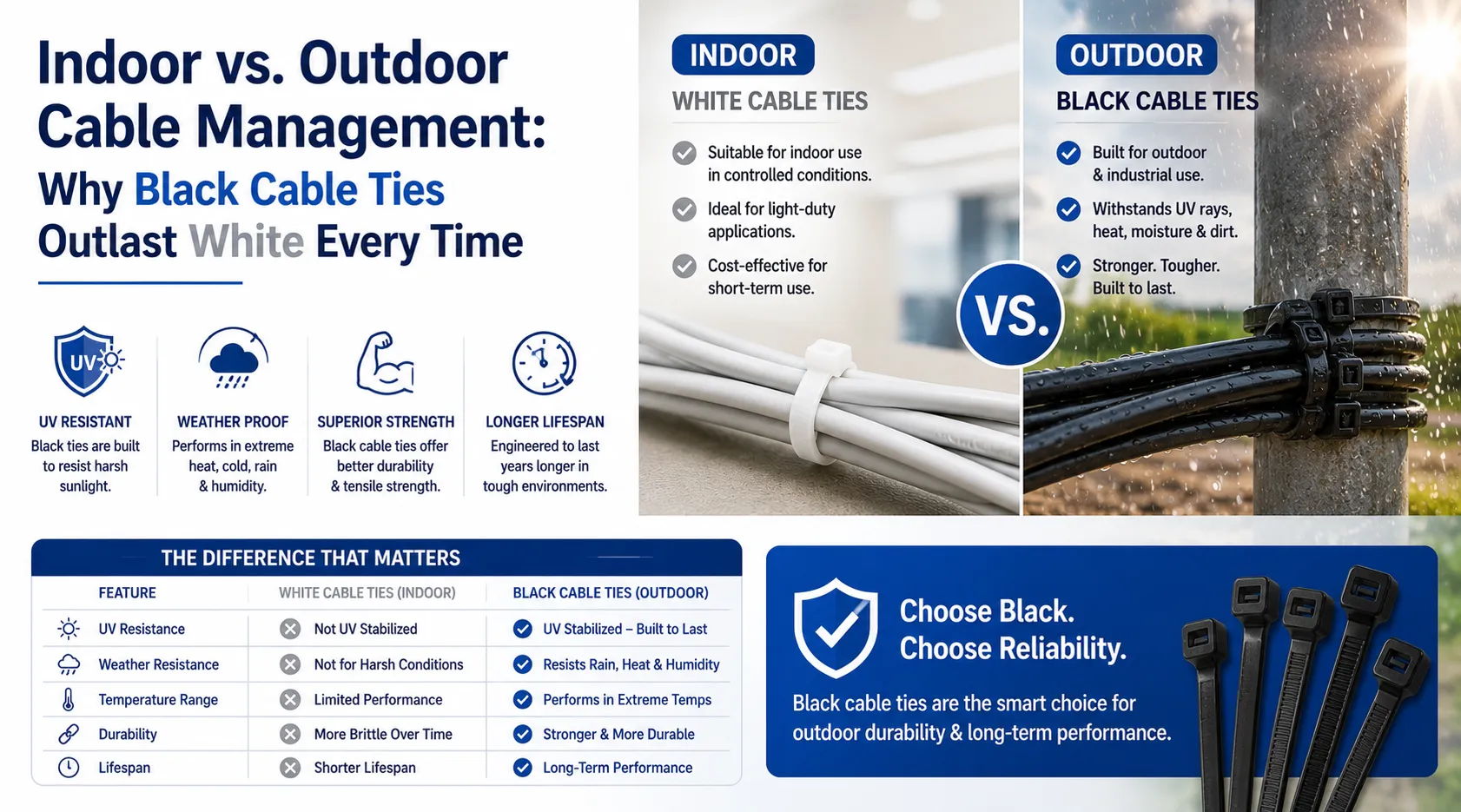

Introduction: The Mystery of the Snapping Zip Tie
Somebody bundles a run of conduit or wiring outside with whatever cable ties are sitting in the bin, usually the cheap natural white ones, and six months later half of them are lying on the ground in pieces. Nobody touched them. Nothing stressed them. They just gave up.
That's not bad luck or a defective batch. It's chemistry. Standard nylon cable ties have zero natural defense against ultraviolet light, and outdoor sun exposure turns them brittle from the inside out long before anyone notices a problem. Indoors, that same tie could last for a decade without issue. Outdoors, it's on borrowed time from day one.
The fix isn't a stronger tie. It's the right tie, and understanding why color and additive package matter more than most installers realize is the difference between a cable run that holds for years and one you're redoing every spring.
Why Should You Use Black Cable Ties Outdoors Instead of Natural White?
Black cable ties last far longer outdoors than natural white ties because they contain carbon black, a UV-stabilizing additive that absorbs and disperses sunlight before it can break down the nylon's molecular structure. Natural white ties have no equivalent protection, so UV rays attack the polymer directly, causing the material to yellow, stiffen, and eventually crack under normal tension.
This is why nearly every outdoor-rated cable tie on the market is black, regardless of manufacturer. It's not a styling choice, it's the only additive package that reliably holds up to years of direct sun, and it's the single highest-leverage change you can make in any outdoor cable management plan.
Material Science Simplified: Carbon Black Additives vs. Standard Nylon
Most cable ties, black or white, start as the same base polymer: nylon 6/6. What separates an indoor tie from an outdoor-rated one isn't the nylon itself, it's what gets blended into it before extrusion.
Carbon black works by physically absorbing UV radiation and converting it to heat rather than letting it degrade the polymer chain. Standard natural or colored nylon has no such shield, so sunlight breaks down its molecular bonds directly through a process called photodegradation.
| Factor | Standard / Natural Nylon | Carbon Black (UV-Stabilized) Nylon |
|---|---|---|
| UV Protection | None | Absorbs and disperses UV radiation |
| Outdoor Lifespan | Months before brittleness | Multiple years of sustained exposure |
| Color Stability | Yellows and fades | Holds color long-term |
| Best Use Case | Indoor, temperature-controlled | Outdoor, direct sun, harsh weather |
Quick gut-check for your next order:
- Running cable inside a panel, ceiling, or climate-controlled space? Standard nylon is fine.
- Running cable on a rooftop, outdoor rack, or anywhere sunlight hits it directly? Black, UV-stabilized only.
- Somewhere in between, like a shaded outdoor enclosure? Default to black, the cost difference is negligible next to a callback.
WP Supplies stocks both, but for anything leaving the building envelope, we don't recommend natural nylon at all. The failure mode is too predictable to risk it.
Choosing the Right Spec: Tensile Strengths and Extreme Climates
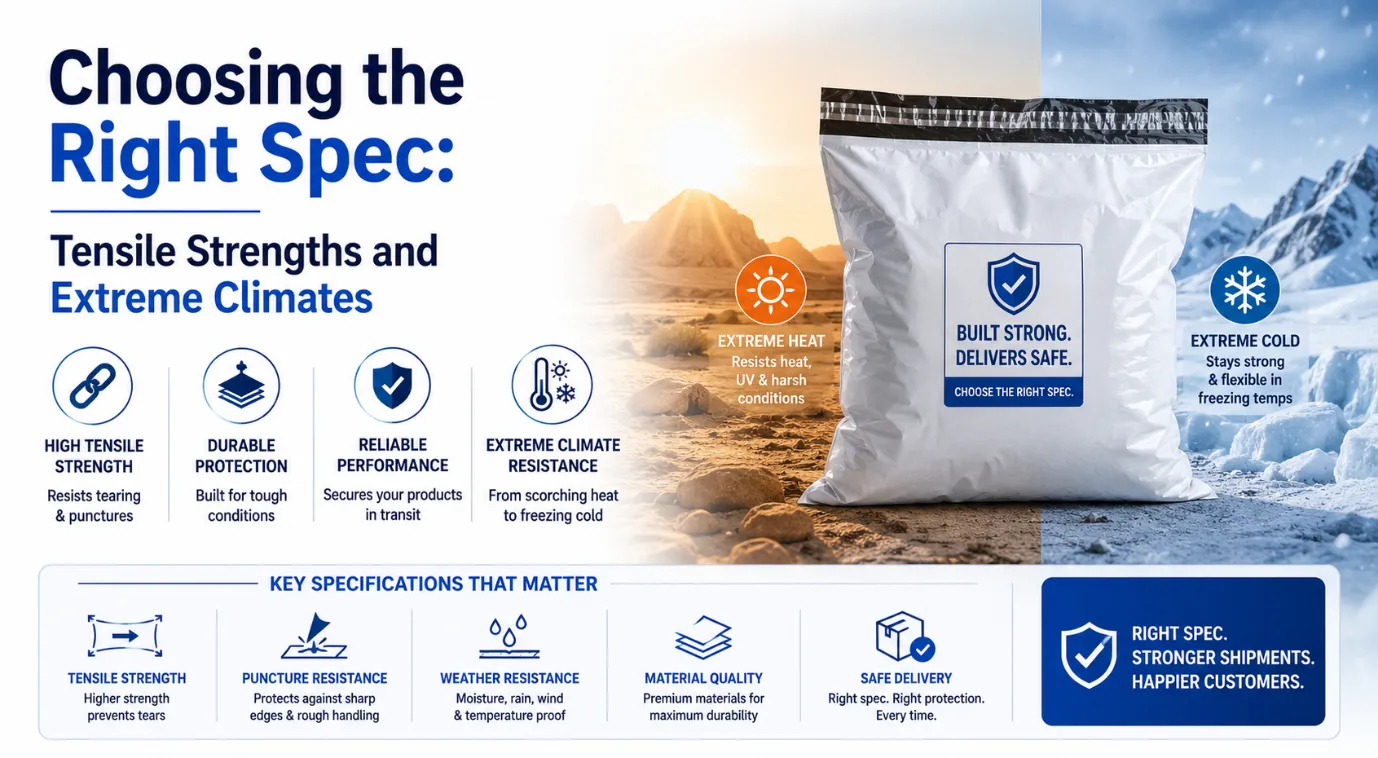 |
Color solves the UV problem, but it doesn't solve strength or temperature, and those specs deserve just as much attention as the additive package.
Tensile strength ratings tell you how much pulling force a tie can hold before failing, and they should scale with the job, not the location. A light data cable bundle might only need an 18-lb tie, while heavy conduit runs, outdoor signage, or agricultural bundling often call for 50-lb, 75-lb, or higher-rated ties. Undersizing here is the second most common outdoor failure after UV neglect, since wind load and thermal expansion put real cyclical stress on a bundle that a static indoor run never experiences.
Temperature extremes matter just as much. Standard nylon ties handle a fairly wide operating band, but in sustained desert heat, deep sub-zero cold, or high-UV alpine environments, it's worth confirming the specific tie's rated range rather than assuming "black" alone covers every climate. Coastal and high-humidity environments add another variable too, since moisture uptake in nylon can gradually affect flexibility.
Indoor runs flip the priority list entirely. UV resistance stops mattering the moment cable moves inside, but depending on the space, flame rating often takes its place as the deciding factor: ties used inside plenum ceilings, data centers, or other code-regulated interior spaces frequently need a flame-retardant or low-smoke rating rather than a weatherproof one. It's worth checking local code and facility requirements before defaulting to whatever's cheapest in the bin, since the failure mode indoors usually isn't a snapped tie, it's a flagged item during a compliance walkthrough.
Before you order, match the spec to the environment:
- Bundle weight and count → tensile strength
- Direct sun exposure → carbon black / UV-stabilized only
- Temperature swings or coastal humidity → confirm the manufacturer's rated range
- Permanent vs. serviceable install → consider releasable ties where re-access is likely
FAQ
Do black cable ties really last longer than white ones outside?
Yes. Black cable ties contain carbon black, which blocks UV degradation, while white or natural ties have no UV protection and typically turn brittle within months of direct sun exposure.
Can you use black cable ties indoors too?
Absolutely. Black, UV-stabilized ties work fine indoors, there's no real downside besides a marginally higher cost. The reverse isn't true, natural nylon ties aren't built for outdoor sun.
What tensile strength cable tie do I need for outdoor use?
It depends on bundle weight and wind exposure, but most outdoor conduit and cable runs are safer with 50-lb or higher-rated ties rather than the 18-lb ties common in light indoor use.
How long do UV-resistant black cable ties last outdoors?
Well-formulated black, UV-stabilized ties are generally built for multi-year outdoor exposure, though exact lifespan depends on local sun intensity, climate, and the specific manufacturer's formulation.
Are black cable ties more expensive than white ones?
Slightly, but the price gap is small next to the cost of redoing a failed outdoor cable run. For anything exposed to sunlight, that small premium is really just insurance.

























Sign in to leave a comment.