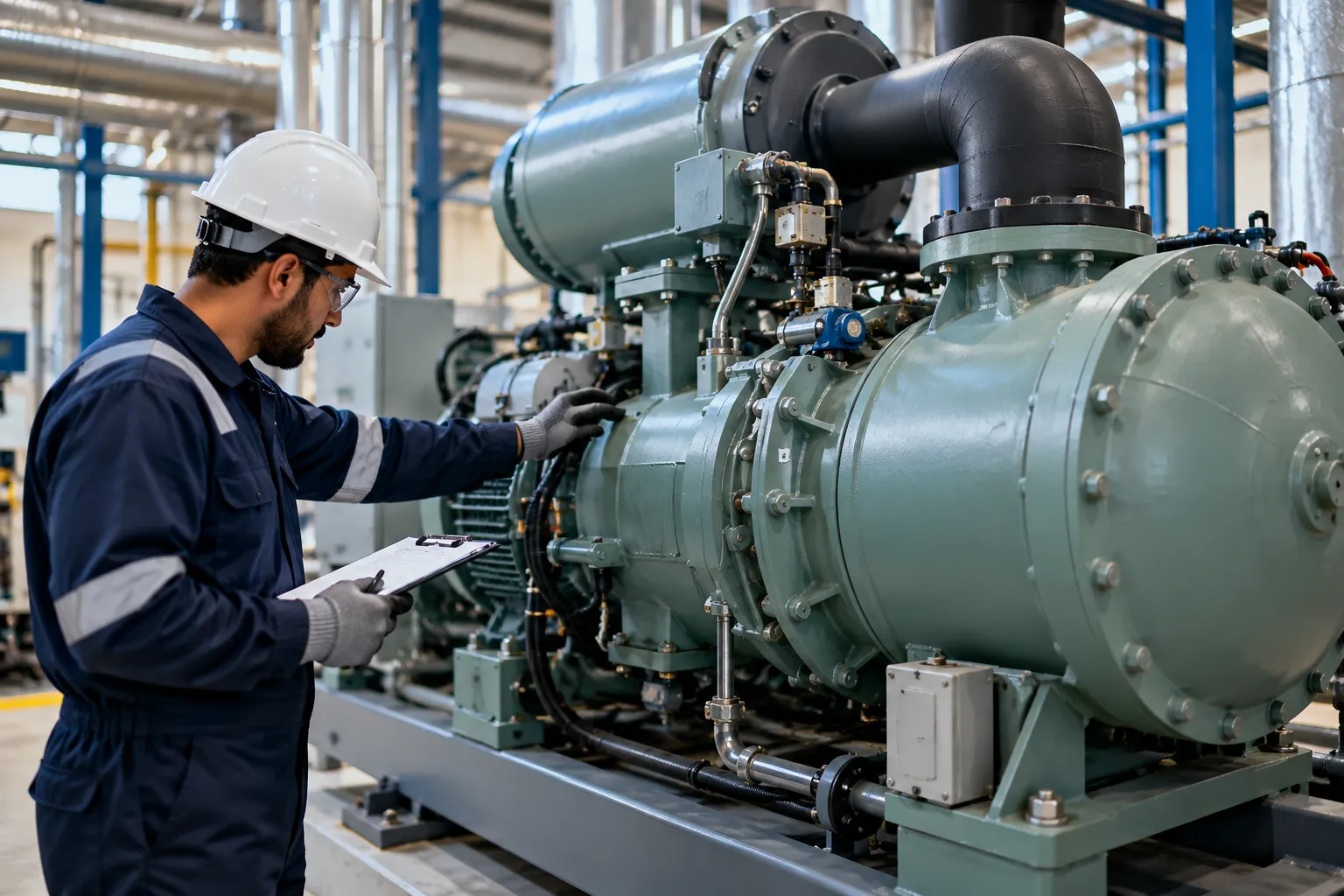

Industrial compressors are built to operate for long hours, often under demanding conditions. However, even a well-maintained compressor can develop internal wear over time. When performance starts to change, ignoring the early warning signs can lead to higher energy consumption, production interruptions and expensive breakdowns.
For industrial facilities in the UAE, where compressors may operate in high ambient temperatures and demanding working environments, identifying these signs early is particularly important.
But how do you know when routine maintenance is no longer enough and an overhaul may be required?
Here are the key signs to watch for.
1. Reduced Compressor Performance
One of the clearest signs of compressor deterioration is a noticeable drop in performance.
You may find that the compressor takes longer to reach the required pressure, struggles to maintain stable pressure or cannot deliver the same output it previously achieved.
Performance loss can have several causes, including:
- Internal component wear
- Valve problems
- Air or refrigerant leakage
- Restricted filters
- Worn seals
- Bearing deterioration
- Cooling problems
If basic maintenance does not restore the original performance, a detailed inspection may be necessary to determine whether internal components require repair or replacement.
2. Unusual Noise During Operation
A change in the normal operating sound of an industrial compressor should not be ignored.
Rattling, knocking, grinding, squealing or other unfamiliar sounds can indicate mechanical problems. Depending on the compressor type, the cause may include worn bearings, loose components, alignment problems or internal damage.
A sudden change in noise is especially important when it occurs together with vibration or temperature increases.
Instead of waiting for the noise to become severe, have the compressor inspected to identify the source.
3. Increased Vibration
Industrial compressors naturally produce some level of vibration, but a noticeable increase can indicate developing mechanical problems.
Excessive vibration may be associated with:
- Bearing wear
- Shaft or coupling problems
- Rotor imbalance
- Misalignment
- Loose mounting components
- Internal mechanical wear
Vibration should be compared with the compressor's normal operating condition and manufacturer recommendations. A rising vibration trend can provide an early indication that an internal inspection may be needed.
4. Rising Operating Temperature
If your compressor consistently operates at a higher temperature than normal, it needs attention.
High operating temperature may result from restricted airflow, dirty heat exchangers, cooling system problems, lubricant issues, excessive load or component wear. In the UAE, high ambient temperatures can add further stress to compressor cooling systems.
Repeated high-temperature alarms or shutdowns should not simply be reset without finding the underlying cause.
If cleaning and routine servicing do not solve the problem, a more detailed assessment may be required.
5. Increasing Oil Consumption or Oil Problems
Changes in oil consumption can provide useful information about the internal condition of a compressor.
If the compressor begins using significantly more oil than usual, possible causes may include leakage, seal deterioration, lubrication problems or internal component wear.
Oil contamination is another warning sign. Changes in oil appearance or condition can indicate contamination or other operating problems that need investigation.
Regular oil checks and appropriate oil analysis can help maintenance teams identify developing issues before they cause serious internal damage.
6. Frequent Pressure Drops
An industrial compressor should provide consistent pressure according to its intended operating conditions.
If pressure repeatedly drops or fluctuates without a corresponding change in demand, the cause needs to be investigated.
Possible causes include:
- Air or refrigerant leaks
- Restricted filters
- Valve problems
- Worn seals
- Control system faults
- Internal compressor wear
If external causes have been eliminated and pressure performance continues to deteriorate, internal inspection may be necessary.
7. Frequent Breakdown or Repeated Repairs
Repeated repairs can be a strong indication that a compressor is approaching the point where a larger maintenance intervention makes more sense.
Replacing individual components may temporarily restore operation, but if the same compressor continues to experience different mechanical problems, the overall condition of the machine should be assessed.
A detailed inspection can help determine whether another individual repair is appropriate or whether a complete overhaul would provide a more reliable solution.
8. Higher Energy Consumption
A compressor that consumes more energy while delivering the same output may not be operating efficiently.
Mechanical wear, restricted airflow, cooling problems, pressure losses and other system issues can force the compressor to work harder.
Before deciding that the compressor itself needs an overhaul, the entire system should be checked. Leaks, blocked filters, poor cooling and incorrect operating conditions can also increase energy consumption.
If these issues have been addressed but efficiency continues to decline, internal compressor condition should be investigated.
9. Oil, Air or Refrigerant Leaks
Visible leaks should never be treated as a minor issue in an industrial environment.
Depending on the equipment, leaks can occur around seals, connections, valves, gaskets and other components. A leak may initially appear small but can indicate deterioration of a component or sealing surface.
Repeated leaks after basic repairs may indicate that more extensive inspection and component replacement are required.
10. The Compressor Has High Operating Hours
Even when a compressor appears to be working normally, operating hours should be considered when planning major maintenance.
Continuous industrial operation places repeated mechanical and thermal stress on components. The appropriate overhaul interval depends on the compressor model, operating conditions, manufacturer recommendations, maintenance history and actual component condition.
A planned inspection before major deterioration occurs can help maintenance teams identify worn components and schedule the work during a suitable production period.
When Is an Overhaul Better Than a Routine Repair?
Not every compressor problem requires an overhaul.
A filter, belt, seal, sensor or other individual component may sometimes be replaced without opening the main compressor assembly. However, an overhaul becomes worth considering when there is evidence of significant internal wear, repeated failures, declining performance or multiple components approaching the end of their useful service life.
The decision should be based on inspection findings rather than a single symptom.
Factors such as operating hours, maintenance history, vibration readings, temperature trends, oil condition, pressure performance and the cost of continued repairs should all be considered.
For a detailed look at what is involved, see this guide to compressor overhauling.
Why Early Detection Matters in UAE Industrial Facilities
A compressor problem rarely becomes serious overnight. In many cases, changes in temperature, vibration, pressure, noise or oil consumption appear before a major failure.
Early investigation gives maintenance teams more control over the situation. It allows repairs or an overhaul to be planned rather than waiting for an unexpected shutdown.
This is particularly important for facilities where compressor downtime can affect production, refrigeration, process equipment or other critical operations.
Regular inspection, accurate maintenance records and monitoring of operating parameters can help identify changes early.
How to Decide If Your Compressor Needs an Overhaul
If your compressor is showing several warning signs, consider arranging a professional assessment rather than immediately replacing the entire unit.
A qualified technician can evaluate:
- Operating pressure and temperature
- Vibration levels
- Oil condition
- Compressor running hours
- Noise and mechanical condition
- Leakage
- Component wear
- Maintenance and repair history
- Overall operating efficiency
The assessment can then help determine whether the right option is routine servicing, component repair, a complete overhaul or eventual replacement.
For facilities that depend on reliable cooling and compressor operation, working with an expert chiller service provider can help identify problems before they become costly breakdowns.
Final Thoughts
An industrial compressor often gives several warning signs before a major failure occurs. Reduced performance, unusual noise, increased vibration, rising temperature, oil problems, pressure fluctuations, repeated repairs and higher energy consumption should all receive proper attention.
The appearance of one symptom does not automatically mean that an overhaul is required. However, when several signs occur together or continue despite routine maintenance, a detailed compressor assessment is advisable.
Timely action can help reduce unexpected downtime, protect expensive equipment and support more reliable industrial operations.
Frequently Asked Questions
1. How do I know if my industrial compressor needs an overhaul?
Common indicators include reduced performance, unusual noise, excessive vibration, rising operating temperature, increasing oil consumption, pressure fluctuations and repeated breakdowns. A professional inspection is required to confirm whether an overhaul is necessary.
2. Can a compressor be repaired instead of overhauled?
Yes. If the problem is limited to an individual component, a repair may be sufficient. An overhaul is generally considered when there is significant internal wear, multiple component issues or repeated failures.
3. Does high compressor temperature mean an overhaul is required?
Not necessarily. High temperature can result from cooling problems, restricted airflow, dirty heat exchangers, lubrication issues or high ambient temperatures. These causes should be checked before deciding on an overhaul.
4. Why does compressor vibration increase over time?
Increased vibration can be associated with bearing wear, misalignment, imbalance, loose components or other mechanical problems. Vibration should be assessed against the compressor's normal operating condition and manufacturer specifications.
5. How can compressor maintenance reduce unexpected downtime?
Regular inspections can identify changes in pressure, temperature, vibration, oil condition and other operating parameters before they develop into major failures. Planned maintenance also allows repair work to be scheduled around production requirements.
6. How often should an industrial compressor be overhauled?
There is no single interval suitable for every compressor. The appropriate timing depends on the compressor type, manufacturer recommendations, operating hours, load, environmental conditions, maintenance history and actual equipment condition.
7. Is compressor replacement always better than an overhaul?
No. An overhaul can be a practical option when the compressor has a sound overall structure but its internal components have developed wear. The decision should consider equipment condition, repair costs, expected service life, efficiency and replacement costs.




















Sign in to leave a comment.