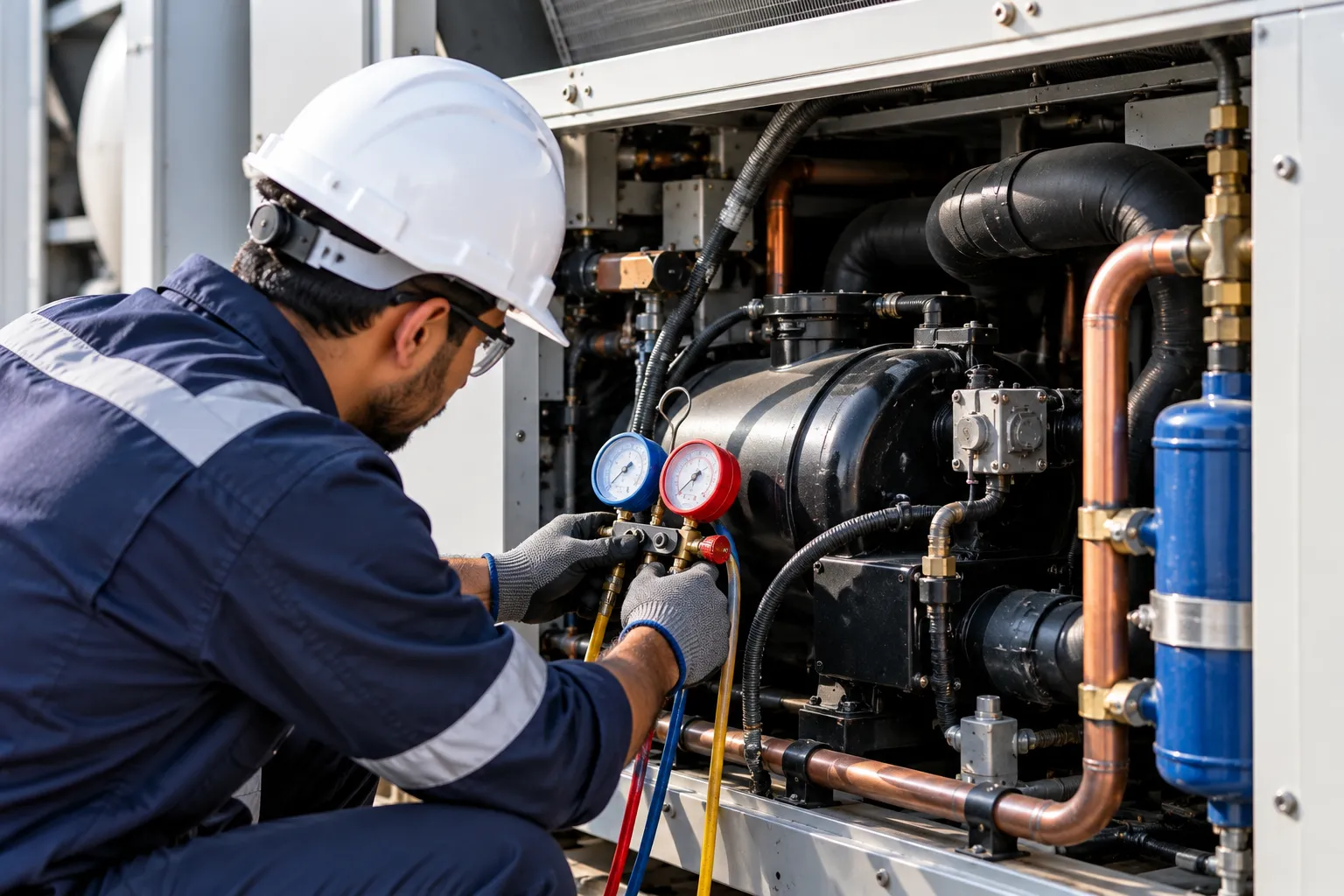

Walking into your facility only to realize the temperature is creeping up is a facility manager's worst nightmare. You check the system, and the compressor is humming away, the fans are spinning, yet the air or water coming out is lukewarm at best.
When a chiller runs continuously without achieving the desired temperature, it creates a massive strain on the equipment, spikes energy bills, and puts critical operations or comfort cooling at risk. Diagnosing the root cause quickly prevents minor issues from snowballing into catastrophic equipment failure.
1. Low Refrigerant Levels or Leaks
Refrigerant is the lifeblood of any cooling system. If your unit has a slow leak, the remaining refrigerant may be insufficient to absorb and transfer heat effectively. While the system will still run trying to reach the setpoint, it lacks the thermal capacity to cool down.
Signs of low refrigerant include bubbling sounds in the lines, frost buildup on the evaporator coils, or an automatic low-pressure lockout. Finding and sealing leaks followed by a proper recharge requires certified technicians.
2. Dirty or Fouled Condenser Coils
Condenser coils are responsible for rejecting heat absorbed from your building or process. Over time, dust, debris, scale, and environmental grime build up on these coils.
When insulation layers of dirt block heat transfer, the chiller traps heat inside the system. The compressor has to work overtime, resulting in high head pressure and minimal cooling output. Regular coil cleaning is vital to maintain heat rejection efficiency.
3. Restricted or Low Water Flow
For water-cooled or air-cooled chillers relying on secondary loops, proper flow rate is non-negotiable. If water flow through the evaporator or condenser drops below design specifications-often caused by failing pumps, closed valves, or clogged strainer baskets-the heat exchange process breaks down.
When water moves too slowly, it absorbs too much heat too quickly, leading to poor supply temperatures and potential freeze-ups.
4. Defective Expansion Valve (TXV)
The Thermal Expansion Valve regulates the flow of liquid refrigerant into the evaporator. If the TXV gets stuck closed, starved evaporator coils receive too little refrigerant, causing low cooling capacity and freezing.
Conversely, if it stays stuck open, it floods the evaporator, risking liquid slugging in the compressor. Diagnosing valve calibration issues requires precise pressure and temperature measurements.
5. Ambient Temperature Extremes
Chillers are engineered to operate within specific outdoor ambient temperature ranges. If your unit sits outdoors under direct, intense sun or in a poorly ventilated mechanical room, extreme heat can overwhelm the condenser's ability to reject heat.
When ambient temperatures exceed the design threshold, head pressure skyrockets, causing safety controls to trip or the chiller to underperform drastically.
6. Electrical and Control Calibration Errors
Modern chillers rely heavily on sensors, thermostats, and programmable logic controllers to dictate operating cycles. If a temperature sensor drifts out of calibration, it might feed false data to the control board, telling the system it is colder than it actually is.
Additionally, worn contactors, voltage imbalances, or failing compressor windings can prevent the system from drawing the full power needed for optimal cooling performance.
7. Air Pockets in the Water Circuit
Air trapped inside closed-loop piping systems disrupts fluid dynamics and reduces heat transfer efficiency. Air pockets act as thermal insulators, preventing water from making proper contact with heat exchanger surfaces.
Bleeding air from high points in the piping network and maintaining correct expansion tank pressure restores proper flow and thermal exchange.
8. Undersized System or Increased Heat Load
Sometimes, the equipment itself isn't broken-it has simply been outgrown. If you have added heavy machinery, expanded facility square footage, or brought in more personnel without upgrading your cooling infrastructure, the existing unit will run constantly without keeping up.
An evaluation by a professional helps determine if your current tonnage matches your actual thermal load requirements.
Conclusion
A chiller that runs non-stop without delivering cold air or water is sending a clear distress signal. Ignoring these symptoms leads to premature compressor burnout and expensive emergency shutdowns. Addressing minor airflow restrictions, checking fluid levels, and maintaining clean coils keep your system running reliably. When troubleshooting moves past basic maintenance, partnering with a trusted specialist ensures your equipment gets back to peak performance safely.
Frequently Asked Questions (FAQs)
Why is my chiller running constantly?
A chiller runs continuously when it cannot achieve the target temperature due to heat loads, restricted airflow, low refrigerant, or reduced water flow, forcing it to work without interruption.
Can a dirty air filter cause a chiller to stop cooling?
Yes, restricted airflow across coils or filters hinders heat exchange, forcing the system to run inefficiently and reducing overall cooling output.
How often should chiller maintenance be performed?
Commercial and industrial chillers typically require comprehensive professional maintenance at least twice a year-ideally before the peak cooling and heating seasons begin-to handle tasks like professional chiller repair and preventive tune-ups. When complex system overhauls are needed, consulting a qualified chiller expert ensures long-term operational reliability.




















Sign in to leave a comment.