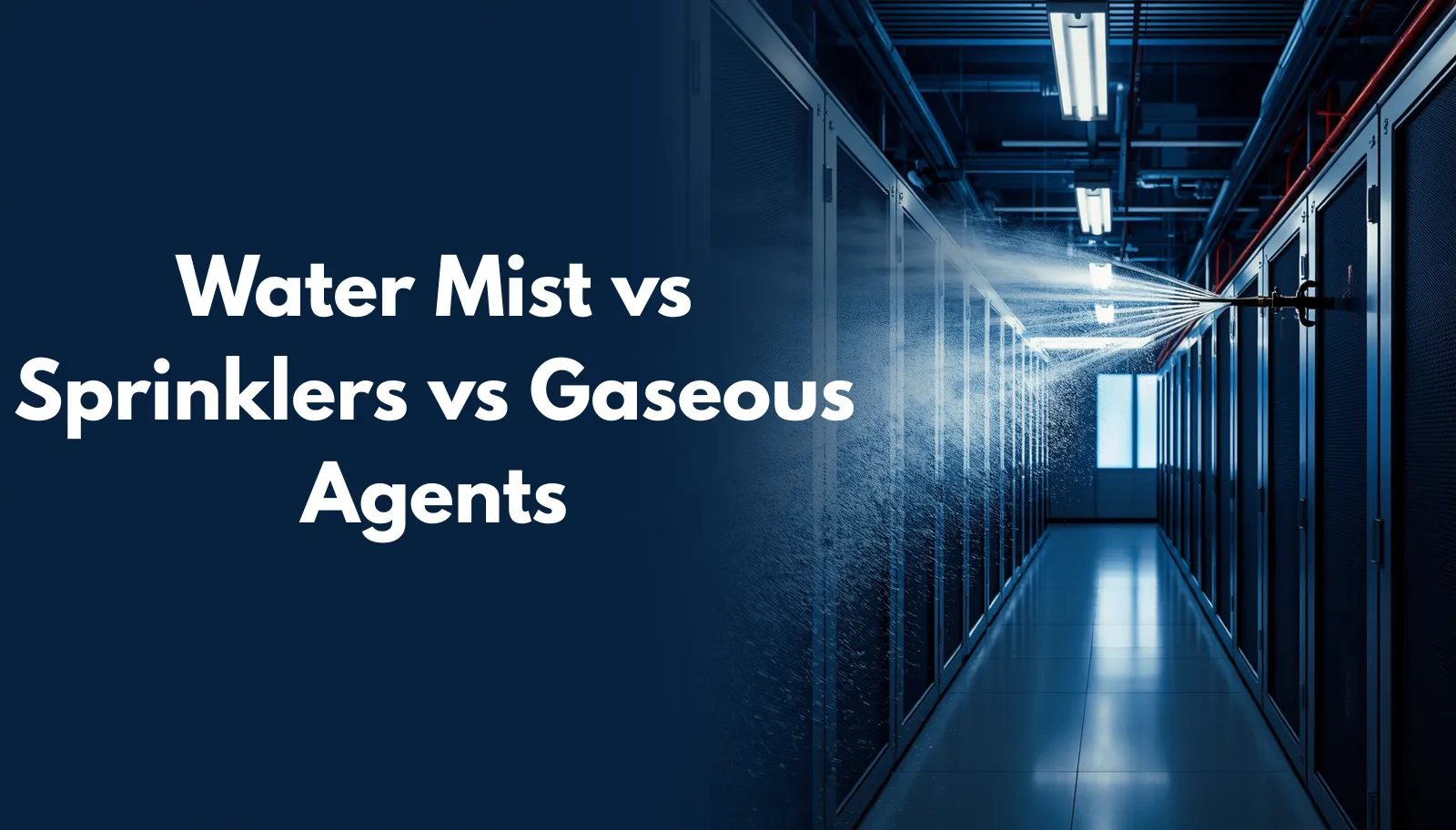

Choosing a fire suppression system isn't simply about putting out a fire. The real challenge is
finding a solution that protects your people, equipment, operations, and investment without creating additional damage in the process.
A warehouse filled with inventory has very different fire protection needs than a data center housing critical servers. Similarly, a hospital cannot use the same fire protection strategy as a museum or electrical control room.
With multiple fire suppression technologies available today, many facility owners find themselves asking the same question: Should I choose sprinklers, water mist, or a gaseous fire suppression system? The answer depends on your facility, the assets you're protecting, and the risks you face every day.
Why One Fire Suppression System Doesn't Fit Every Facility
Many businesses assume that any fire suppression system will provide the same level of protection. In reality, each technology is designed to solve different challenges.
When selecting a fire protection solution, facility managers must consider several factors:
- What type of fire hazards exist?
- Are people regularly present in the protected area?
- How valuable are the assets being protected?
- How much downtime can the business tolerate?
- What do local fire regulations require?
A system that works perfectly in a logistics warehouse may be completely unsuitable for a server room or archive facility.
The Three Most Common Fire Suppression Systems
Before deciding which system fits your facility, it's important to understand the basics of each option.
Traditional Sprinkler Systems
Sprinkler systems remain the most widely used fire protection solution worldwide. They release water when heat activates a sprinkler head, helping control and contain the fire.
They are highly reliable, cost-effective, and accepted by virtually every fire safety authority.
Water Mist Fire Suppression Systems
A water mist fire suppression system uses high-pressure technology to create extremely fine water droplets.
These tiny droplets absorb heat rapidly, cool the fire, reduce oxygen levels around the flames, and help prevent fire spread while using significantly less water than conventional sprinklers.
Many organizations choose water mist systems when they need both fire protection and reduced water damage.
Gaseous Fire Suppression Systems
Gaseous suppression systems use clean agents or inert gases instead of water.
Once activated, the gas fills the protected area and suppresses the fire without leaving residue or exposing equipment to water.
These systems are commonly used in environments containing sensitive electronics or mission-critical infrastructure.
| Feature | Sprinklers | Water Mist | Gaseous Agents |
|---|---|---|---|
| Water Usage | High | Low | None |
| Equipment Protection | Moderate | High | Very High |
| Cleanup Required | High | Low | Minimal |
| Data Centers | Good | Excellent | Excellent |
| Warehouses | Excellent | Good | Poor |
| Hospitals | Good | Excellent | Good |
Which Fire Suppression System Is Best for Different Facilities?
Rather than asking which system is best overall, a better question is: which system is best for your facility?
Data Centers
Modern data centers contain valuable servers, networking equipment, and storage infrastructure. While traditional sprinklers provide protection, water discharge can damage equipment and increase recovery time.
Many data centers use gaseous suppression systems because they leave no residue and do not expose hardware to water. Water mist systems are also becoming increasingly popular because they provide effective fire suppression with minimal water discharge. For many data centers, water mist or gaseous suppression systems are often preferred over conventional sprinklers.
Hospitals and Healthcare Facilities
Hospitals operate around the clock and contain sensitive medical equipment that supports patient care. Fire suppression systems in healthcare environments must balance safety, equipment protection, and operational continuity.
Water mist systems are often attractive because they use less water while remaining safe for occupied spaces.
Warehouses and Distribution Centers
Warehouses present a very different challenge. These facilities often contain large storage areas, palletized goods, and high ceilings.
Traditional sprinkler systems remain the preferred solution for many warehouses because they provide dependable protection at a relatively low cost and are well-suited to large-scale storage environments.
Manufacturing Facilities
Manufacturing plants can contain a wide variety of fire hazards, including machinery, combustible materials, chemicals, and electrical equipment. The ideal system often depends on the specific processes involved. Many facilities use a combination of suppression technologies to address different risk areas within the same building.
Museums, Archives, and Heritage Buildings
In museums and archives, preserving valuable assets is often just as important as suppressing the fire itself. Historical documents, artwork, and rare collections can suffer permanent damage from large volumes of water.
For these environments, water mist and gaseous systems often provide a better balance between fire protection and asset preservation.
Marine and Offshore Facilities
Ships and offshore platforms operate in confined environments where fire can spread quickly. Water mist technology has become widely adopted in marine applications because it provides effective suppression while using limited water resources and minimizing secondary damage.
What Happens After the System Activates?
Many facility owners focus only on extinguishing the fire. However, what happens after activation can significantly affect recovery costs and downtime.
Traditional Sprinklers
After sprinkler activation, facilities often face:
- Water cleanup
- Damaged inventory
- Wet flooring and furnishings
- Potential equipment replacement
Although the fire may be controlled, recovery can take days or even weeks depending on the extent of water exposure.
Water Mist Systems
Because water mist systems use much less water, cleanup is generally faster.
Businesses often experience:
- Reduced water damage
- Lower restoration costs
- Faster return to operation
This can be particularly important for facilities where downtime directly impacts revenue.
Gaseous Systems
Gaseous suppression systems leave virtually no residue. Once the area is inspected and declared safe, operations can often resume quickly without extensive cleanup procedures.
Installation Requirements and Building Considerations
The installation process varies significantly between suppression technologies. Traditional sprinkler systems require extensive piping networks and a reliable water supply.
A water mist fire suppression system installation typically involves specialized nozzles, high-pressure pumps, and engineered distribution systems designed to create the correct droplet size.
Gaseous systems require storage cylinders, detection systems, and room integrity testing to ensure the gas remains within the protected area during discharge. Understanding these requirements early in the planning process helps avoid unexpected costs and project delays.
Looking Beyond Installation Costs
One of the biggest mistakes facility owners make is comparing systems based solely on upfront installation costs. While traditional sprinklers are often the least expensive option initially, long-term costs should also be considered.
Questions worth asking include:
- How much downtime could a fire cause?
- What is the value of the equipment being protected?
- How expensive would water damage be?
- How quickly must operations resume after an incident?
In some facilities, spending more on an advanced suppression system may significantly reduce future business interruption costs.
Common Mistakes When Choosing a Fire Suppression System
Many organizations make decisions based on assumptions rather than risk assessments.
Common mistakes include:
- Choosing the lowest-cost system without considering asset value.
- Ignoring the impact of downtime after a fire event.
- Assuming all fire suppression systems perform the same way.
- Failing to account for future facility expansion.
- Not consulting experienced fire protection professionals during system selection.
- A proper fire risk assessment can help avoid these costly errors.
A Simple Way to Decide
If your primary concern is protecting a large commercial or industrial space at a reasonable cost, traditional sprinklers may be the best option. If minimizing water damage is important while maintaining strong fire protection, water mist fire suppression can offer an excellent balance. If your facility contains highly sensitive electronics where water exposure is unacceptable, gaseous suppression systems are often the preferred choice.
Conclusion
The best fire suppression system is not necessarily the most advanced or the most expensive. It's the system that aligns with your facility's risks, operational requirements, and asset protection goals.
Traditional sprinklers continue to protect millions of buildings worldwide. Water mist systems offer reduced water usage and improved asset protection. Gaseous agents provide residue-free suppression for mission-critical environments.
Before investing in a water mist fire suppression system installation or any other fire protection solution, consult qualified fire safety professionals who can assess your facility and recommend the most effective long-term strategy.













Sign in to leave a comment.