

Industries consume a massive amount of electricity every day for manufacturing, processing, machinery operation, cooling systems, lighting, and other industrial activities. Rising electricity costs and increasing energy demand are creating financial pressure on industrial businesses. To reduce operational expenses and improve sustainability, many industries are now adopting solar energy solutions.
Industrial solar solutions help factories, manufacturing units, warehouses, and large industrial facilities generate clean electricity using solar power. These systems reduce dependence on conventional electricity sources while providing long-term energy savings and environmental benefits.
In Raipur and across India, industrial solar adoption is growing rapidly because industries are recognizing the advantages of renewable energy and sustainable operations.
What Are Industrial Solar Solutions?
Industrial solar solutions refer to solar power systems designed specifically for industrial operations and large-scale energy consumption. These systems use solar panels to generate electricity for industrial facilities.
Industrial solar systems typically include:
- Solar panels
- Solar inverter
- Mounting structures
- Electrical protection systems
- Monitoring systems
- Battery backup (optional)
These systems can power:
- Heavy machinery
- Manufacturing equipment
- Lighting systems
- Cooling and ventilation systems
- Industrial automation equipment
Solar energy helps industries reduce electricity dependency and operating costs.
How Industrial Solar Systems Work
The working process of an industrial solar system is simple and efficient.
Working Process
- Solar panels absorb sunlight and generate DC electricity
- Solar inverters convert DC power into AC electricity
- The generated electricity powers industrial equipment
- Excess energy may be exported to the electricity grid
- Battery-supported systems store additional energy for backup use
This process helps industries generate their own electricity and reduce energy expenses.
Why Industries Are Adopting Solar Energy
Industries are switching to solar power because of:
- Increasing electricity prices
- High operational costs
- Demand for sustainable operations
- Government support for renewable energy
- Need for energy independence
Solar systems provide reliable and cost-effective energy solutions for industrial operations.
Benefits of Industrial Solar Solutions
1. Reduced Electricity Bills
Solar energy significantly lowers monthly electricity expenses.
2. Lower Operational Costs
Industries can reduce production and operational costs.
3. Long-Term Financial Savings
Solar systems provide cost savings for many years.
4. Eco-Friendly Energy
Solar power reduces pollution and carbon emissions.
5. Reliable Power Supply
Hybrid systems provide backup during power interruptions.
6. Better Energy Management
Industries can optimize power consumption efficiently.
7. Enhanced Corporate Image
Using renewable energy improves sustainability and brand reputation.
Applications of Industrial Solar Solutions
Industrial solar systems are widely used in:
- Manufacturing plants
- Textile industries
- Food processing units
- Steel and metal industries
- Chemical industries
- Warehouses and logistics centers
- Automobile industries
- Pharmaceutical companies
These systems are suitable for almost every industrial sector.
Industrial Rooftop Solar Systems
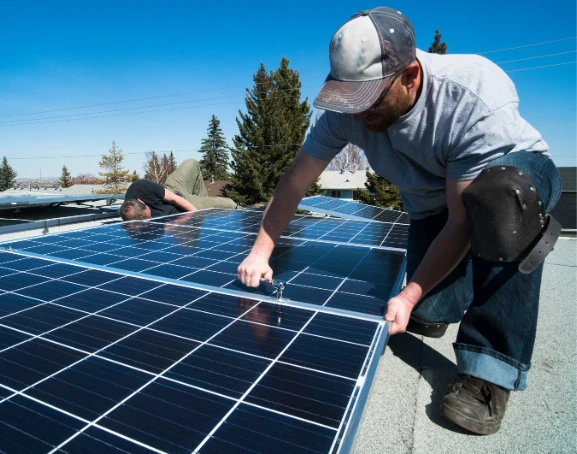
Many industries install solar panels on factory rooftops to utilize unused space efficiently.
Benefits include:
- Reduced land requirement
- Better utilization of rooftop area
- Lower electricity costs
- Improved return on investment
Large industrial rooftops are ideal for solar power generation.
Ground-Mounted Industrial Solar Plants
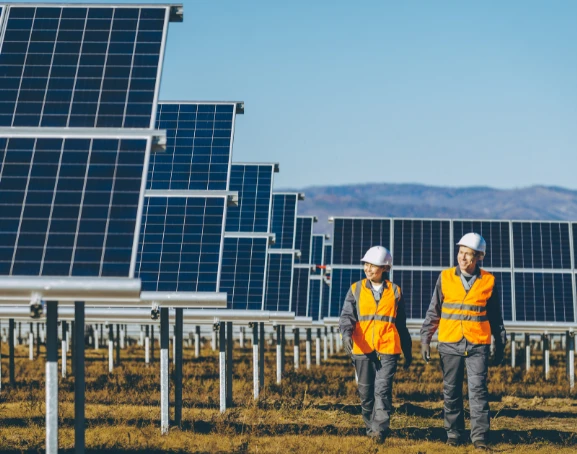
Ground-mounted solar systems are installed on open land within industrial premises.
Advantages include:
- Large-scale power generation
- Easy maintenance access
- Flexible system expansion
These systems are suitable for industries with large energy requirements.
Types of Industrial Solar Systems
1. On-Grid Industrial Solar System
Connected directly to the electricity grid.
Advantages:
- Lower installation cost
- Net metering benefits
- Reduced electricity bills
This is the most commonly used industrial solar system.
2. Off-Grid Industrial Solar System
Operates independently with battery storage.
Advantages:
- Suitable for remote industrial sites
- Reliable during power outages
- Energy independence
3. Hybrid Industrial Solar System
Combines grid connectivity with battery backup.
Advantages:
- Continuous power supply
- Better energy management
- Maximum solar energy utilization
These systems are ideal for industries requiring uninterrupted operations.
Main Components of Industrial Solar Systems
Solar Panels
Capture sunlight and generate electricity.
Industrial Solar Inverter
Converts solar power into usable AC electricity.
Mounting Structures
Securely support solar panels.
Monitoring Systems
Track energy generation and system performance.
Battery Storage (Optional)
Stores excess energy for backup use.
Electrical Safety Equipment
Ensures safe and reliable operation.
Cost of Industrial Solar Solutions
The cost depends on:
- System size and capacity
- Solar panel type
- Installation area
- Inverter quality
- Battery backup requirements
Approximate pricing:
- Small industrial systems: ₹5 lakh – ₹15 lakh
- Medium-scale systems: ₹15 lakh – ₹50 lakh
- Large industrial plants: Higher depending on capacity
Although the initial investment is significant, industries benefit from substantial long-term savings.
Government Support for Industrial Solar Projects
The Indian government promotes industrial solar adoption through renewable energy policies and incentive programs.
Benefits may include:
- Accelerated depreciation benefits
- Net metering support
- Renewable energy incentives
- Tax advantages for businesses
These initiatives help industries reduce solar investment costs.
How to Choose the Right Industrial Solar System
Electricity Consumption
Analyze industrial energy requirements carefully.
Available Installation Area
Choose rooftop or ground-mounted systems accordingly.
Power Backup Needs
Determine whether battery storage is required.
System Efficiency
High-efficiency solar panels improve power generation.
Future Expansion
Select scalable systems for future energy requirements.
Professional Installation
Proper installation ensures better safety and performance.
Maintenance of Industrial Solar Systems
Industrial solar systems require regular but minimal maintenance.
Recommended maintenance includes:
- Cleaning solar panels regularly
- Inspecting electrical connections
- Monitoring inverter performance
- Checking mounting structures
Routine maintenance improves efficiency and extends system lifespan.
Future of Industrial Solar Energy in India
India is rapidly moving toward renewable energy adoption. Innovations in:
- High-efficiency solar technology
- Smart energy management systems
- AI-based monitoring
- Advanced battery storage solutions
are making industrial solar systems more efficient and affordable.
Why Choose a Professional Solar Company?
Professional installation ensures long-term reliability and maximum energy generation. A trusted provider like Techno Sun Energy offers:
- Customized industrial solar solutions
- High-quality solar equipment
- Professional installation services
- Maintenance and technical support
Their expertise helps industries maximize operational efficiency and energy savings.
Conclusion
Industrial solar solutions are transforming the manufacturing and industrial sectors by providing clean, reliable, and cost-effective energy. These systems help industries reduce electricity costs, improve sustainability, and achieve long-term financial benefits.
In Raipur and across India, solar energy is becoming a smart investment for industries seeking energy independence and environmentally responsible operations.
Partner with experts like Techno Sun Energy to install a reliable industrial solar system and move toward a cleaner, greener, and more energy-efficient future https://technosunenergy.com/industrial-solar/





















Sign in to leave a comment.