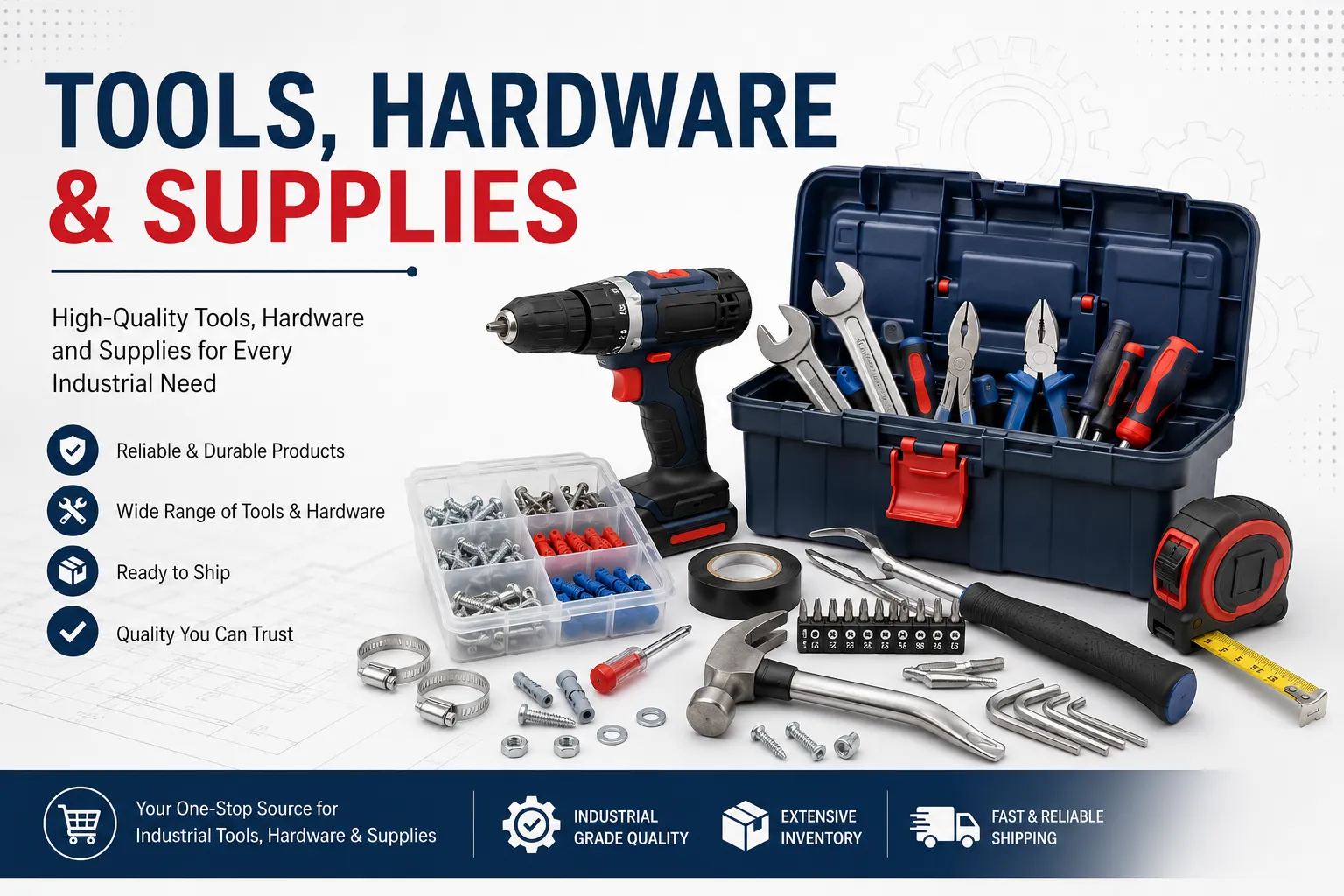

Industrial operations depend on the right tools, hardware, and supplies to keep assembly, maintenance, repair, and production activities running efficiently. From hand tools and power tools to hardware components and maintenance supplies, these products support a wide range of industrial and commercial applications.
Choosing suitable equipment requires attention to specifications, application requirements, material compatibility, and operating conditions. This Industrial Tools, Hardware & Supplies Guide explains the major categories and factors to consider when sourcing these essential products.
What Are Industrial Tools, Hardware & Supplies?
Industrial tools, hardware, and supplies include a broad range of products used for manufacturing, installation, maintenance, repair, and assembly tasks. These products can range from basic hand tools to specialized hardware and workshop supplies.
Common examples include:
- Hand tools
- Power tools
- Cutting tools
- Measuring instruments
- Hardware components
- Fastening products
- Maintenance supplies
- Workshop equipment
- Abrasive products
- Material handling accessories
Each category serves a specific purpose, making proper product selection important for operational efficiency and workplace safety.
Common Types of Industrial Tools
Industrial environments require different tools depending on the task being performed.
Hand Tools
Wrenches, pliers, screwdrivers, hammers, sockets, and other hand tools are commonly used for assembly, adjustment, installation, and maintenance work. Selecting the correct size and design can help technicians perform tasks more efficiently.
Power Tools
Drills, grinders, saws, impact tools, and other powered equipment can support repetitive or demanding applications. Specifications such as power rating, operating speed, size, and compatibility should be reviewed before selecting a product.
Cutting and Abrasive Tools
Cutting wheels, grinding products, blades, and related tools are frequently used for machining, fabrication, finishing, and material preparation. The tool should be matched to the material and application to achieve the desired results.
Measuring Tools
Precision measuring tools help technicians and engineers verify dimensions and tolerances. Calipers, micrometers, gauges, and measuring accessories can be important in manufacturing and maintenance environments.
Why Hardware and Supplies Matter
Hardware components may appear small, but they play an important role in industrial assemblies. Fasteners, brackets, fittings, clamps, washers, and other hardware can help secure components and maintain the integrity of an assembly.
Industrial supplies also support routine maintenance and production activities. Having the appropriate supplies available can reduce delays and help maintenance teams complete scheduled work more efficiently.
How to Select the Right Industrial Products
Before sourcing industrial tools, hardware, or supplies, buyers should evaluate several factors.
Application: Determine exactly how the product will be used and what operating conditions it must withstand.
Specifications: Review dimensions, material, capacity, compatibility, performance ratings, and other technical details.
Quantity: Estimate current and future requirements to support efficient procurement planning.
Environment: Consider exposure to heat, moisture, chemicals, vibration, or other environmental conditions.
Compatibility: Ensure the selected product is compatible with existing equipment, machinery, or assembly requirements.
Quality Requirements: For critical applications, verify applicable specifications, certifications, and manufacturer information.
Supporting Maintenance and Manufacturing Operations
Reliable industrial tools and hardware can support maintenance teams, production facilities, engineering departments, and procurement organizations. The right components can help technicians perform installation and repair activities while helping manufacturing operations maintain consistent workflows.
For this reason, procurement teams often need access to accurate product information when identifying replacement components or sourcing tools and supplies for specific applications.
Sourcing Industrial Tools, Hardware & Supplies
Sourcing the correct product can become challenging when requirements include specific part numbers, dimensions, manufacturers, materials, or technical specifications. Providing detailed information during the procurement process can make it easier to identify an appropriate product.
The Tools, Hardware & Supplies category from Electromechanical Parts Purchasing provides a convenient starting point for businesses looking for products that support industrial maintenance, manufacturing, assembly, and repair requirements.
When submitting an RFQ, include details such as the required part number, manufacturer, quantity, specifications, and application requirements. Complete information can help streamline the sourcing process and improve the accuracy of the response.
Final Thoughts
Industrial tools, hardware, and supplies are essential across manufacturing, maintenance, repair, construction, engineering, and other technical environments. From everyday hand tools to specialized hardware components, each product should be selected according to its intended application and technical requirements.
By reviewing specifications carefully and providing accurate part information during procurement, businesses can make more informed sourcing decisions and identify products that align with their operational needs.





















Sign in to leave a comment.