
Infertility is a condition characterized by the inability to conceive after one year of regular, unprotected sexual intercourse. It can affect both men and women and can be caused by various factors. Below is an overview of infertility in men and women, including types, causes, symptoms, risks, diagnosis, and treatment options.
Working with a holistic practitioner alongside medical experts can provide a more balanced approach to infertility care, addressing not only the physical but also the emotional and lifestyle aspects that influence reproductive health.
Infertility in Women
Types of Female Infertility
- Primary infertility: A woman has never been able to conceive despite trying for at least a year.
- Secondary infertility: A woman has already become pregnant but is now having difficulty getting pregnant again.
Causes of Female Infertility
- Ovulation disorders: Irregular or absent ovulation is a common cause of infertility. Polycystic ovary syndrome (PCOS) is a well-known example.
- Blocked fallopian tubes: Blockage in the fallopian tubes can prevent an egg from meeting sperm.
- Endometriosis: A condition in which tissue similar to the lining of the uterus grows outside the uterus, which may affect fertility.
- Uterine problems: Conditions such as fibroids or abnormalities in the uterus can interfere with implantation.
- Age: Fertility declines with age, especially after age 35.
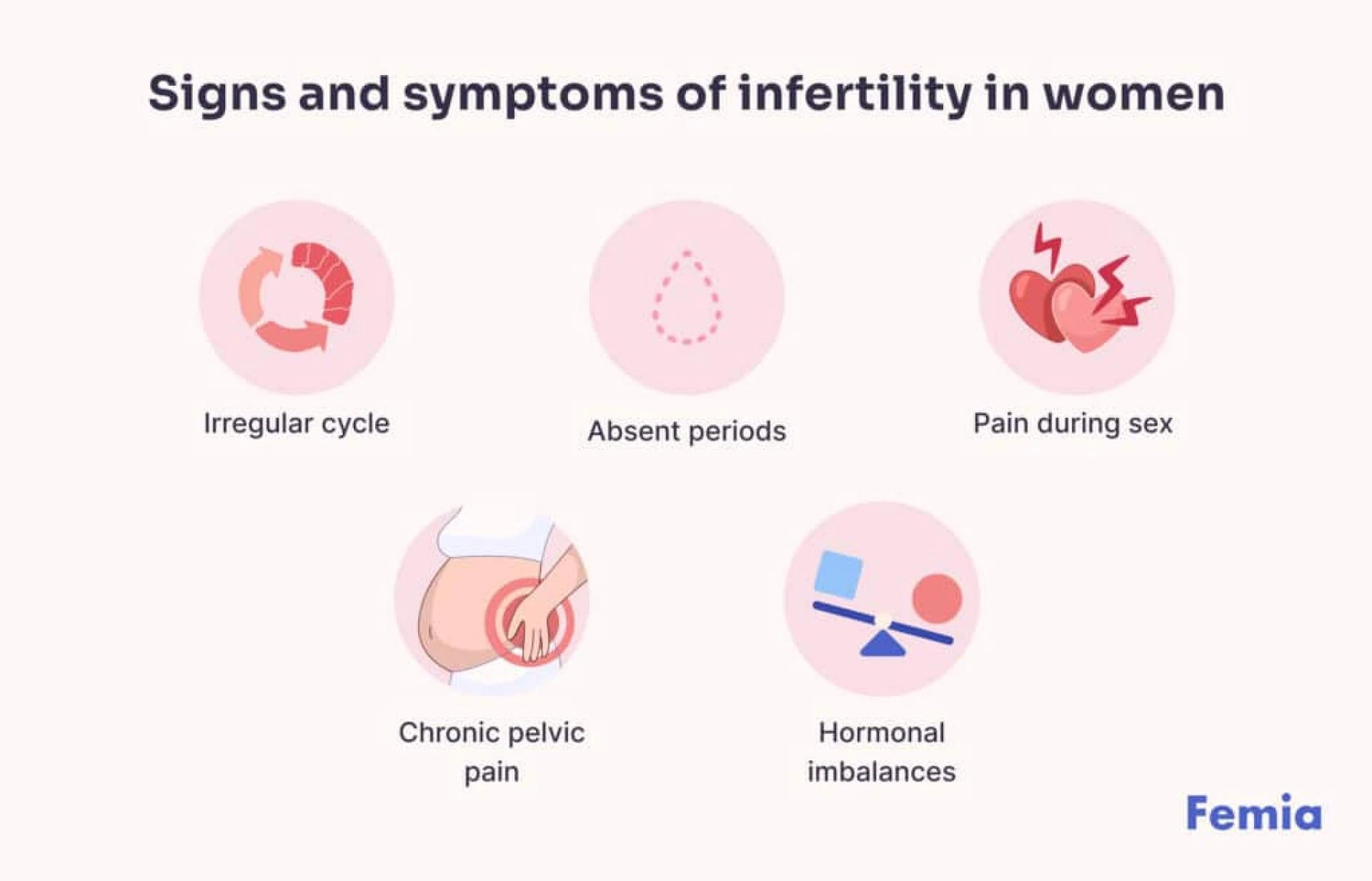
Symptoms of Female Infertility
- The main symptom is the inability to get pregnant after a year of trying.
- Irregular menstrual cycles may suggest ovulation problems.
If you or your partner are experiencing these symptoms, consulting both a fertility specialist and exploring holistic wellness practices may provide additional support in managing reproductive health.
Risks of Female Infertility
- Age is an important risk factor, and fertility declines after age 35.
- Smoking, excessive alcohol consumption, and obesity can also increase the risk.
Diagnosis of Female Infertility
- Medical History & Physical Examination: Assessment of overall health and reproductive history.
- Ovulation Test: Monitoring menstrual cycles and hormone levels.
- Imaging: Ultrasound, hysterosalpingography (HSG), or laparoscopy to examine reproductive organs.
- Blood Tests: Checking hormone levels such as FSH, LH, and AMH.
Treatment of Female Infertility
Treatments may include fertility drugs to stimulate ovulation, surgical procedures to correct anatomical problems, or assisted reproductive technologies (ART) such as in vitro fertilization (IVF). Complementary holistic services such as stress management, nutrition guidance, and lifestyle coaching may also support overall fertility.
Infertility in Men
Types of Male Infertility
- Primary male infertility: The inability to conceive a child after trying for at least a year.
- Secondary male infertility: A man has already fathered a child but is unable to conceive again.
Causes of Male Infertility
- Sperm disorders: Low sperm count, poor sperm motility, or abnormal sperm morphology.
- Blockage or dysfunction: Problems with the tubes that carry sperm from the testicles.
- Hormonal imbalances: Problems with hormones like testosterone can affect sperm production.
- Genetic factors: Some genetic conditions can cause infertility.
Symptoms of Male Infertility
- The inability to conceive a child after a year of trying is the main symptom.
- Some men may experience sexual dysfunction or pain in the testicles.
Risks of Male Infertility
- Lifestyle factors such as smoking, excessive alcohol consumption, and drug use can contribute to infertility.
- Exposure to environmental toxins and certain medications can also be risk factors.
Diagnosis of Male Infertility
- Semen Analysis: Examination of sperm count, motility, and morphology.
- Hormone Testing: Checking hormone levels, especially testosterone.
- Imaging: Ultrasound or other imaging tests to evaluate the reproductive organs.
Treatment of Male Infertility
Treatment options may include lifestyle changes, medications, surgery to correct blockages or anatomical problems, or assisted reproductive techniques such as intrauterine insemination (IUI) or IVF with intracytoplasmic sperm injection (ICSI).
In addition, holistic wellness strategies like diet optimization, stress reduction, and detoxification can help improve sperm health naturally.
Facts About Infertility
- Infertility affects men and women equally: approximately one-third of cases are attributed to female factors, one-third to male factors, and one-third to a combination of both or unexplained causes.
- It is essential for couples struggling with infertility to seek help from a fertility specialist, as many underlying causes can be addressed through medical interventions.
- Advances in reproductive medicine have provided a variety of options for couples, including assisted reproductive technology (ART), which can significantly increase the chances of achieving pregnancy.
- Infertility can be an emotional and psychological challenge for couples. Seeking counseling, joining support groups, or turning to holistic services for stress management and emotional balance can be very beneficial.
Conclusion
Infertility is a complex problem with multiple potential causes, and treatment plans are often tailored to each individual’s specific circumstances. Consulting with a fertility specialist is the first step in understanding and addressing infertility. At the same time, incorporating support from a holistic practitioner and exploring holistic wellness approaches can empower couples to improve their reproductive health and emotional well-being, offering a more complete path toward parenthood.





























Sign in to leave a comment.