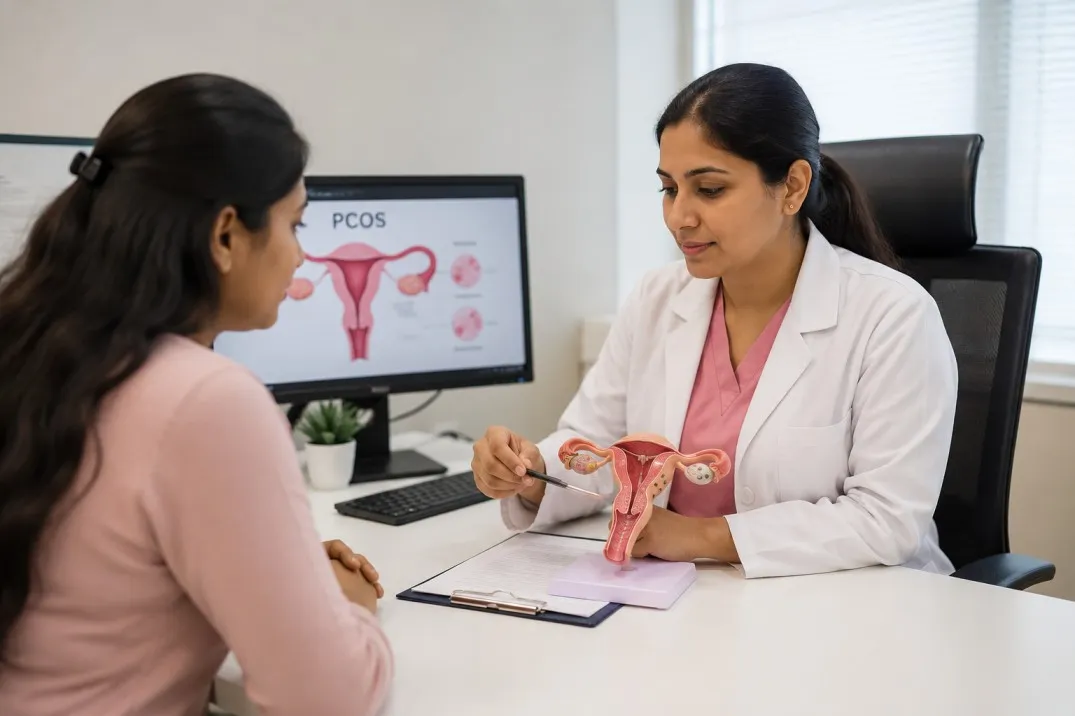

Polycystic ovary syndrome is a condition that can make it hard for women to conceive due to the fact that it might affect regular ovulation. Nevertheless, even if someone suffers from polycystic ovary syndrome, this doesn't necessarily mean that she cannot get pregnant. A thorough evaluation and tailored approach will reveal why someone has trouble conceiving. An infertility specialist Greater Noida West will examine ovulation, hormones, overall reproductive health, and other issues related to fertility.
How PCOS Can Affect Fertility
PCOS may result in either an irregular period or amenorrhea as ovulation may not take place in regular intervals. Delayed or absent ovulation makes it hard to pinpoint the days when the woman will be most fertile.
Other symptoms associated with PCOS include higher levels of androgens, insulin resistance, and obesity. These signs differ greatly from one woman to another, making it important for every woman to be evaluated individually rather than having a general treatment plan.
It is crucial not to assume that irregular periods are just “another symptom of PCOS.” Thyroid dysfunction and other hormonal imbalances should be taken into account when evaluating the problem of ovulation.
Infertility Specialist Approach to PCOS and Difficulty Conceiving
Fertility consultations are likely to start with a comprehensive discussion of the menstrual history, pregnancy history, past medical conditions, lifestyle and length of time attempting conception.
Based on the clinical presentation, testing may consist of:
- Testing for ovulation and menstrual function
- Appropriate hormone or metabolic testing
- Pelvic ultrasound, when indicated
- Evaluation of uterus and fallopian tubes, if indicated
- Male semen testing
An assessment of fertility will require evaluation of both partners since infertility is related to female problems, male problems, or both.
Treatment Is Based on the Actual Cause
Fertility treatment in women with PCOS will depend on whether the underlying problem is irregular ovulation and presence of other fertility factors.
While for some women improvement of general metabolic condition, good nutrition, physical activity and weight loss can improve their reproductive system, others can think about medical ovulation induction.
In the case when pregnancy is not attained after the first treatment, further discussion on other options for fertility treatment should take place depending on the woman’s age, state of ovaries, fallopian tubes, sperm characteristics and reaction to previous treatment.
This gradual treatment is very significant since PCOS is not the cause of infertility in all cases.
When Should You Seek Fertility Advice?
Women with very irregular or absent periods may benefit from fertility evaluation earlier rather than simply waiting. In general, infertility evaluation is recommended after 12 months of trying for women under 35 and after 6 months for women aged 35 or older. Earlier assessment may be appropriate when there is a known fertility-related condition such as significant menstrual irregularity.
A qualified gynaecologist in Greater Noida can also help women manage PCOS symptoms, menstrual concerns and pre-pregnancy health while deciding whether specialist fertility care is needed.
Conclusion
PCOS can make conception more challenging, but it is a manageable fertility condition for many women. The right approach is not to focus only on the diagnosis but to understand the individual's ovulation, reproductive health and both partners' fertility factors. An infertility specialist Greater Noida West can help create a personalised plan based on the underlying cause, age, medical history and treatment needs.
FAQs
Can women with PCOS conceive naturally?
Yes. Many women with PCOS conceive naturally, while others may need help with ovulation or other fertility treatment.
Does every woman with PCOS need IVF?
No. IVF is not automatically required. Treatment depends on ovulation, age, tubal health, sperm factors and previous treatment response.
When should a woman with PCOS see a fertility specialist?
Earlier evaluation may be appropriate when periods are very irregular or absent. Otherwise, the timing depends on age and how long pregnancy has been attempted.

























Sign in to leave a comment.