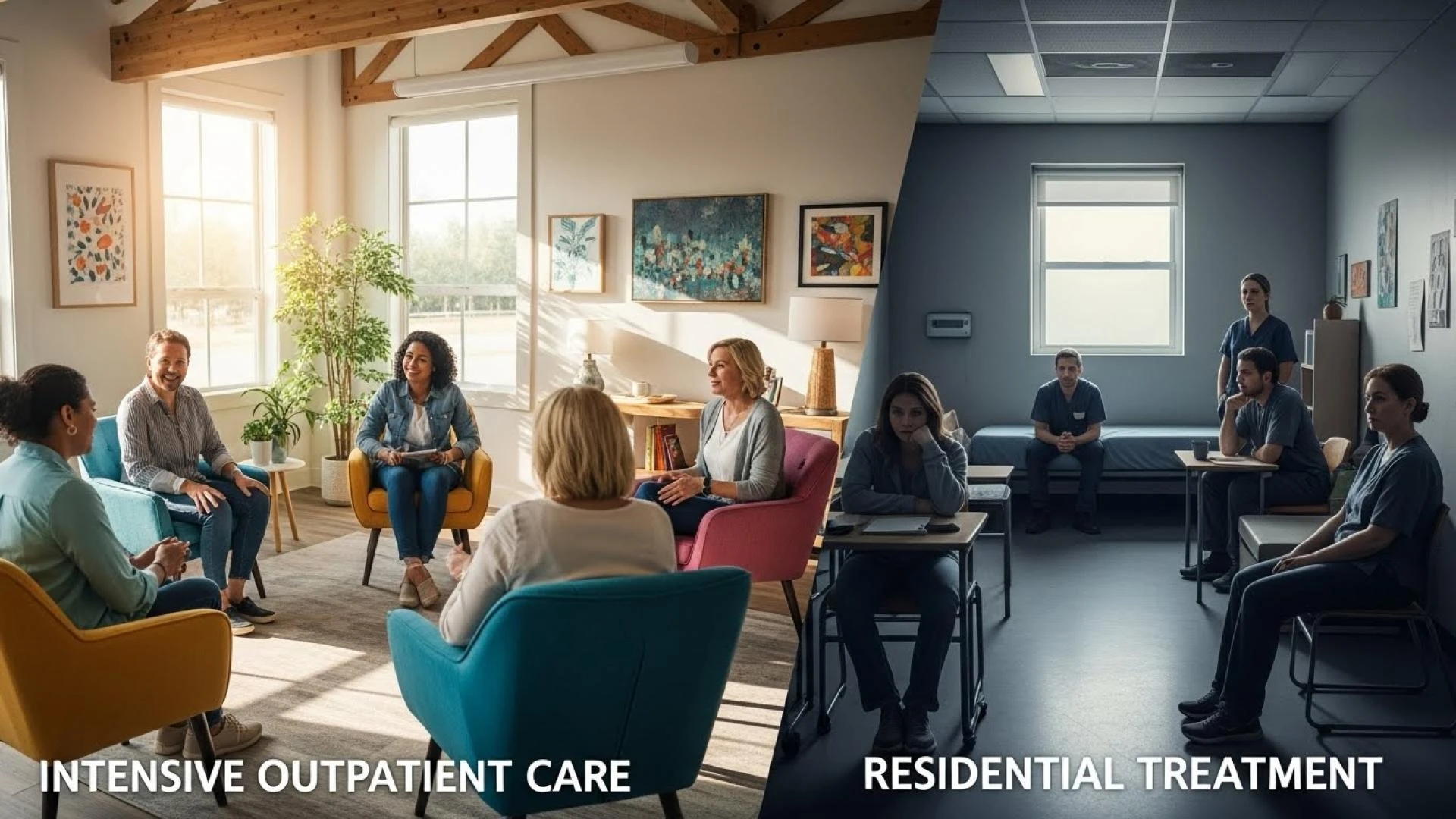

When seeking treatment for substance use or mental health challenges, individuals are often presented with multiple care options. Residential treatment has long been viewed as the standard for intensive recovery support, but it is not the right fit for everyone. In recent years, intensive outpatient care has become an increasingly popular alternative.
Many people choose intensive outpatient care because it offers structured, professional treatment without requiring them to step away from their daily lives. This level of care balances flexibility and accountability, making it a practical and effective option for long term recovery. Understanding why intensive outpatient care is often preferred can help individuals make informed decisions about their treatment path.
Understanding the Difference Between Intensive Outpatient and Residential Care
Residential treatment requires individuals to live at a treatment facility for a designated period of time. This model provides round the clock supervision and is appropriate for individuals with severe or medically complex needs.
Intensive outpatient care, on the other hand, allows individuals to live at home while attending scheduled therapy sessions multiple days per week. Participants receive structured treatment and clinical support without overnight stays.
Both models serve important roles in recovery. The choice depends on personal needs, stability, and the level of care required.
Flexibility Without Sacrificing Structure
One of the main reasons people choose intensive outpatient care is the ability to maintain daily responsibilities while receiving treatment. Work schedules, family obligations, and educational commitments often make residential care impractical.
Intensive outpatient care offers consistent structure through scheduled sessions while allowing individuals to remain engaged in everyday life. This balance helps people build recovery skills without putting their lives on hold.
Structured schedules provide accountability, while flexibility supports independence and real world integration.
Staying Connected to Family and Support Systems
Recovery is often stronger when individuals remain connected to their support systems. Intensive outpatient care allows people to continue living at home, where they can maintain relationships with family and friends.
Staying connected to loved ones can provide emotional support, encouragement, and accountability throughout the recovery process. Family involvement may also be incorporated into treatment through counseling or educational sessions.
Maintaining these connections helps reinforce healthy routines and reduces feelings of isolation that can sometimes occur in residential settings.
Real World Application of Recovery Skills
One of the most practical advantages of intensive outpatient care is the ability to apply recovery skills immediately. Participants learn coping strategies, emotional regulation techniques, and relapse prevention tools during therapy sessions and then practice them in real life.
This immediate application strengthens learning and builds confidence. Individuals face real world challenges while still receiving professional guidance, allowing them to adjust strategies as needed.
Many people searching for iop programs near me value this approach because it prepares them for long term success beyond structured treatment.
Personalized Treatment Without Residential Restrictions
Intensive outpatient care is highly adaptable and tailored to individual needs. Treatment plans are created based on personal history, substance use patterns, mental health concerns, and recovery goals.
Programs typically include:
- Individual therapy focused on personal challenges
- Group therapy for peer support and accountability
- Skill building sessions for stress and emotional management
- Ongoing progress monitoring and treatment adjustments
This personalized approach allows individuals to receive targeted care without the limitations of a residential environment.
Lower Disruption and Greater Accessibility
Residential treatment can be disruptive, requiring individuals to step away from work, parenting, or other responsibilities. Intensive outpatient care minimizes this disruption while still providing professional support.
Because participants live at home, intensive outpatient care is often more accessible and easier to commit to long term. This increased accessibility can improve engagement and consistency, which are critical for recovery success.
For many individuals, the ability to balance treatment with everyday life makes intensive outpatient care a more realistic option.
Support for Co Occurring Mental Health Conditions
Many people seeking substance use treatment also experience mental health challenges such as anxiety, depression, or trauma. Intensive outpatient care often includes integrated treatment for these co occurring conditions.
Programs may offer mental health assessments, therapeutic support, and medication management when appropriate. Addressing both substance use and mental health together improves emotional stability and reduces relapse risk.
This comprehensive approach allows individuals to heal without the intensity of residential confinement.
Cost Considerations and Long Term Engagement
Cost is another factor that influences treatment decisions. Residential treatment often requires significant financial investment due to housing, meals, and round the clock staffing.
Intensive outpatient care typically costs less while still delivering evidence based therapy and clinical oversight. This affordability allows individuals to remain engaged in treatment for longer periods if needed.
People exploring iop programs near me often find that intensive outpatient care offers a more sustainable option for ongoing recovery support.
Continuity of Care Supports Sustainable Recovery
Intensive outpatient care fits seamlessly into a continuum of treatment. It can serve as a step down from residential care or as a primary treatment option for those who do not require hospitalization.
This flexibility allows individuals to adjust levels of care as their needs change. Continuity reduces gaps in treatment and supports steady progress toward long term recovery goals.
Rather than viewing recovery as a short term event, intensive outpatient care encourages a gradual and sustainable healing process.
Final Thoughts
Many people choose intensive outpatient care over residential treatment because it offers structured support without removing them from their daily lives. This approach promotes independence, real world skill development, and long term engagement in recovery.
By balancing professional care with flexibility, intensive outpatient treatment empowers individuals to heal while staying connected to work, family, and community. For those who are medically stable and motivated for change, intensive outpatient care can be a powerful and effective path to lasting recovery.
Frequently Asked Questions
1. Who is a good candidate for intensive outpatient care?
Individuals who are medically stable and need structured therapy without residential treatment often benefit from intensive outpatient care.
2. Is intensive outpatient care as effective as residential treatment?
For many individuals, yes. Effectiveness depends on personal needs, stability, and engagement in treatment.
3. How often are sessions held in intensive outpatient care?
Most programs include multiple sessions per week, with schedules tailored to individual needs.
4. What happens after completing intensive outpatient care?
Many individuals transition to outpatient therapy, support groups, and aftercare services to maintain recovery.




Sign in to leave a comment.