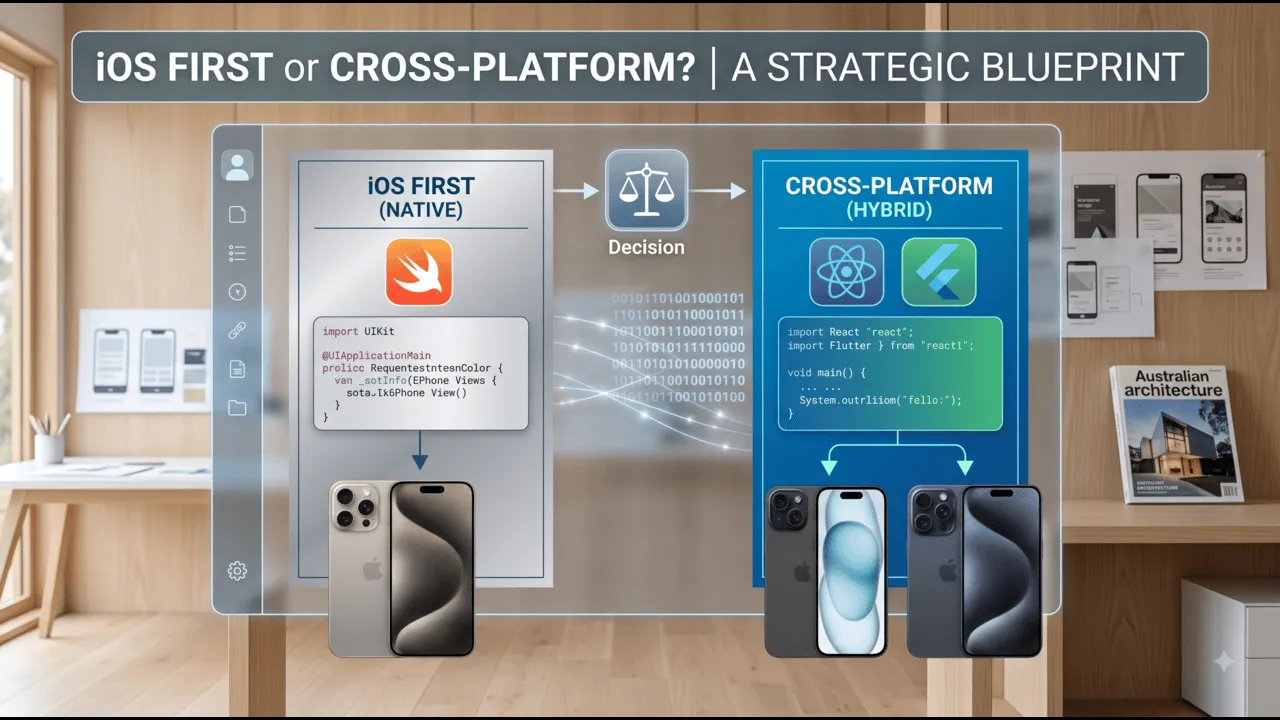

The decision to build a mobile application is just the first step in a long journey. The second, and arguably most impactful decision a business will make, is choosing the right technology stack. Should you build natively for Apple, opt for Android, or try to cover both bases simultaneously with cross platform frameworks like React Native or Flutter?
For Australian businesses, particularly those operating in high stakes industries like digital health and finance, this technical decision must be driven by market data, user expectations, and long term scalability.
Understanding the Australian Mobile Landscape
To make an informed decision, you have to look at the numbers. The Australian smartphone market is heavily skewed toward Apple. With iOS capturing a commanding ~63% of the market, Australian businesses simply cannot afford to deliver a subpar experience to iPhone users.
Because of this, iOS mobile app development is often treated as the default starting point for MVP (Minimum Viable Product) launches in Australia. By targeting iOS first, businesses can capture the majority of the market, gather valuable user feedback, and generate revenue before scaling their operations to include Android users.
The Importance of High-Quality Mobile App Design
Regardless of the operating system, the success of your application hinges on its usability. Superior mobile app design goes far beyond aesthetics; it is the science of user retention.
Consider the onboarding process. If a user downloads your app and is immediately met with five different permission requests (camera, microphone, location, push notifications) without any context, they are likely to delete the app instantly. A well designed user experience introduces these requests gradually, explaining why the app needs access. In the Australian market, where data privacy concerns are at an all-time high, this transparent approach to UI/UX builds immediate trust.
Transforming Industries: The Telehealth Example
To see the impact of strategic tech choices, look no further than the telehealth sector. A virtual clinic app requires complex features: high definition video conferencing, secure messaging, calendar synchronization, and encrypted document sharing for medical certificates and prescriptions.
If a healthcare provider attempts to build this using a cheap, templated cross platform solution, they often run into performance issues video lag, rapid battery drain, and poor native integration. However, by investing in native iOS development (and subsequently native Android), developers can tap directly into the device’s hardware, ensuring smooth video rendering and secure data encryption that complies with Australian healthcare standards.
Merging Mobile App Design and Development
The debate between native and cross platform often overshadows a more critical dynamic: the relationship between the UI team and the engineering team. True digital innovation occurs when mobile app design and development are treated as a singular, iterative process.
Designers must understand the technical constraints of the iOS and Android platforms, while developers need to appreciate the psychological impact of micro-animations and color theory. When these two disciplines are harmonized, the result is an app that doesn't just work well, but feels exceptional in the hands of the user.
Choosing the Right Local Partner
Executing this level of quality requires a highly skilled team. While Sydney and Melbourne have historically been the default choices for enterprise tech projects, savvy businesses are increasingly looking north. Partnering with a firm specializing in mobile app development Brisbane has become a strategic growth hack for Australian companies.
Brisbane offers a mature, innovative tech ecosystem that produces top tier digital products without the inflated agency fees of its southern counterparts. By choosing a localized team, you ensure your developers operate in your time zone, understand the local regulatory environment (such as MBS billing codes or the Privacy Act), and can sit down with you face-to-face to map out your digital future.



























Sign in to leave a comment.