
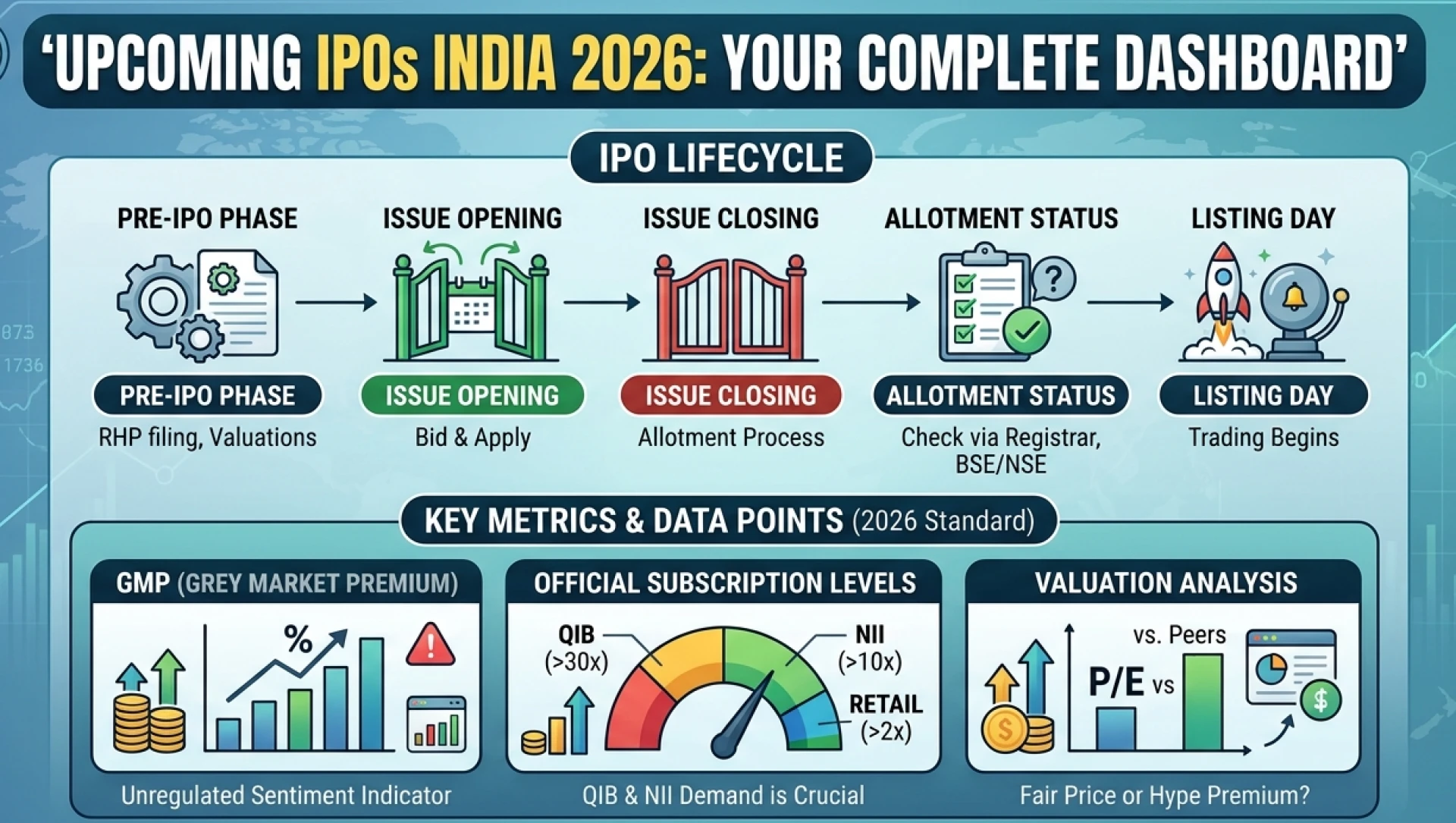
The allotment process is handled by a registrar appointed by the company. Once the registrar finalises the distribution of shares, they make the allotment status of IPO publicly available on their website and the stock exchanges' websites (BSE and NSE).
There are typically two main places where you can check the status:
Method 1: The IPO Registrar’s Website (Most Reliable)
The registrar is the official entity responsible for processing applications and finalising the share allotment. This is often the quickest and most reliable place to check your status. The three major registrars in India are generally KFin Technologies, Link Intime India, and Bigshare Services.
Here’s the simple step-by-step process:
1. Identify the Registrar: You need to know which registrar is handling your specific IPO. This information is always mentioned in the IPO Red Herring Prospectus (RHP) and is often displayed on the IPO details page of your broker or financial news websites.
2. Visit the Registrar's Website: Navigate to the dedicated IPO allotment status page of the relevant registrar.
3. Select the IPO: On the page, you'll find a dropdown menu. Select the name of the company whose IPO you applied for. Wait for the company name to appear; it will only show up once the allotment process is complete.
4. Choose Your Search Option: The system will ask for one of the following details to verify your application:
PAN Card Number: Your 10-digit Permanent Account Number (most common and easiest).
Application Number: The unique number generated when you applied for the IPO via your broker/bank.
DP ID / Client ID: Your Demat Account details (a combination of your Depository Participant ID and Client ID).
1. Enter Details and Submit: Enter your chosen detail accurately and click the 'Search' or 'Submit' button.
2. View Your Status: The screen will immediately display your allotment result! It will show either:
Shares Allotted: The total number of shares you have successfully received.
No Allotment: Unfortunately, you did not receive any shares this time.
Method 2: The Stock Exchange Website
The stock exchanges (BSE and NSE) also offer a service for checking the allotment status, which is a great backup.
Checking the BSE IPO Allotment Status
Go to the Official BSE Allotment Page.
1. Select 'Equity': Under 'Issue Type', make sure 'Equity' is selected (for most mainboard IPOs).
2. Choose the Issue Name: From the dropdown menu, select the name of the IPO you applied for.
3. Enter Application Details: Enter your 'Application Number' OR your 'PAN Number'.
4. Click 'Search': Your allotment details will be displayed.
Checking the NSE Allotment Status
The NSE usually requires a one-time registration on their investor portal to check the status, or you can verify your bid details on their 'Verify IPO Bids' page.
Visit the NSE investor portal.
Select 'Verify IPO Bids'.
Enter your Login details (if registered) or PAN/Application details.
View the Allotment Status which confirms the allocation against your application.
What Happens Next? Your Post-Allotment Timeline
So you've performed your allotment status of IPO check. What's the final schedule?
Event
What it Means for You
Shares Allotted
The shares will be credited to your Demat account, usually one working day before the listing date. You can see them in your holdings.
No Allotment
The blocked funds in your bank account will be unblocked (released). This happens automatically, typically on or before the listing date.
Listing Day
The shares debut on the stock exchange! You can now trade (buy/sell) the shares.
Pro Tip: Don't panic if the funds aren't released immediately. Banks have a fixed timeline to unblock the funds, so give it at least one full working day after the allotment date.
Common Reasons for 'No Allotment'
If you were unsuccessful, it can be frustrating, but it's important to understand why.
Heavy Oversubscription: This is the most common reason. If an IPO is subscribed 50x in the retail category, it means only 1 out of 50 applicants will get a single lot. Allotment is decided by a transparent, computerised lottery system mandated by SEBI.
Application Errors: Mistakes like entering an incorrect PAN, a wrong Demat ID, or failing to accept the UPI mandate on time can lead to rejection before the allotment process even begins. Always double-check your application form!
By understanding the process and knowing exactly where and how to conduct your IPO Allotment Status Check, you can wait a little easier and be ready to trade the moment the shares hit your Demat account! Happy Investing!

























Sign in to leave a comment.