
Organizations worldwide are competing for growth, yet still struggling to win the top spot. And, what could be the reason? Well, a McKinsey report cites "lack of talent" as one of them.
For decades, companies have operated under the same basic hiring principles: manual hiring, subjective evaluations, and reactive decision-making. But they aren't enough now, with the growing demand for skilled IT staff.
Here comes AI in talent acquisition, where decisions are shaped by data, predictive analytics, and automation.
Why traditional hiring approaches no longer work today?
As the demand for skilled IT staff grows, traditional hiring methods often fall short. Here’s why:
- Slow processes: Manual resume screening and interview scheduling can drag the hiring process out for weeks, delaying recruitment.
- Biased decisions: Despite efforts to minimize bias, manual decisions can unintentionally favor certain candidates over others, leading to less diverse hires.
- High expense: Relying on recruitment agencies, conducting multiple interview rounds, and handling administrative tasks manually adds up, increasing recruitment costs.
- Inconsistent hiring: Without objective, data-driven evaluation methods, brands often end up hiring people who don’t fit the job or the company culture, leading to higher turnover.
How is the AI-driven recruitment process making sense?
Most businesses face the above challenges when planning to hire candidates manually, and the AI-driven approach to talent acquisition can help. Here’s how:
- Faster process: AI streamlines resume screening. What used to take weeks now happens in days, meaning your team can get top candidates in front of hiring managers faster.
- Cost reduction: You can save on recruitment agency fees and internal resources with AI by automating the overall recruitment process.
- Better-quality hires: With AI, you aren’t just looking at resumes. You get a deeper look at whether someone truly fits the role and your company culture, which means fewer bad hires.
- Large volumes of data: AI can process large numbers of candidates, making it easier for businesses to scale their hiring efforts as needed.
How are AI tools redefining the enterprise IT hiring pipelines?
AI is rapidly revolutionizing how global businesses hire IT talent with faster, more data-driven, and more efficient methods. Here’s how AI is redefining tech recruitment:
1. Automated resume screening:
- Scanning and filtering resumes in seconds, AI helps identify the most qualified candidates quickly.
- Automation removes the manual workload from HR teams, allowing them to focus on other onboarding tasks.
2. Bias reduction:
- AI eliminates human bias by evaluating candidates based on objective data points such as their skills, experience, and qualifications.
- AI tools provide transparency, offering clear reasons for candidate selection or rejection, ensuring fair evaluation.
3. Faster candidate shortlisting:
- With AI, companies rank candidates based on data, making shortlisting faster and more accurate.
- AI tools quickly identify top talent, reducing time spent on sorting through unqualified candidates.
4. Improved candidate matching:
- AI considers both hard skills (technical expertise) and soft skills (cultural fit) when matching candidates to roles.
- AI provides deeper insights into a candidate’s potential success in a role with predictive analytics, reducing the risk of bad hires.
5. Enhanced candidate experience:
- AI improves the candidate experience by offering personalized job recommendations and streamlining the application process with real-time feedback.
- Automation ensures that candidates are kept informed throughout the process, reducing frustration.
Top AI-driven screening tools businesses can consider in 2026
Although there are tons of AI-powered applications you can use, the following stand out as the top ones:
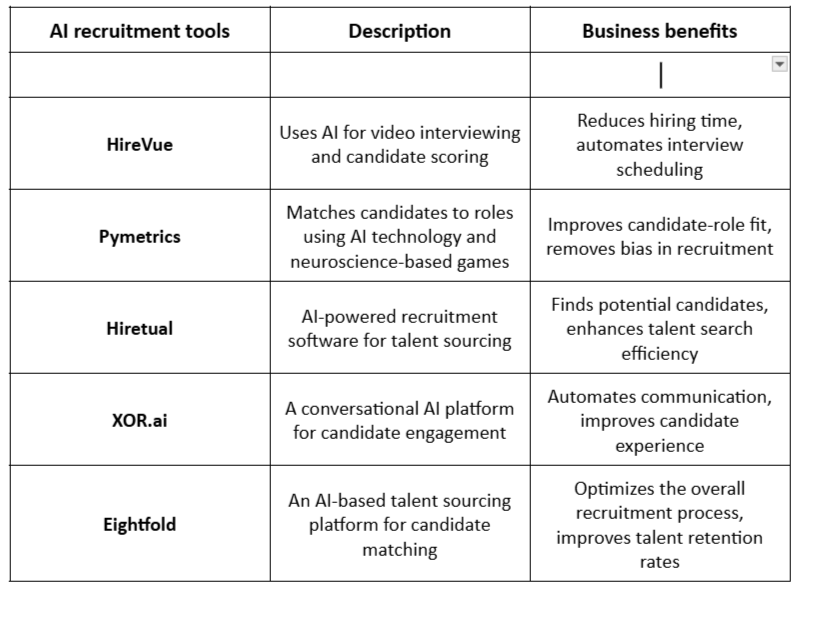
One truth comes out from this: AI-driven tools transform the recruitment process. However, the advantages of AI screening only make sense when the technology is incorporated correctly.
Potential challenges when incorporating AI into IT recruitment pipelines
Despite the benefits, integrating AI into your recruitment pipelines presents certain challenges. The following are some of the common challenges businesses face:
1. Resistance to change:
Some HR teams resist adopting AI, worried it might take over their jobs or that they won’t know how to use it.
Solutions:
- Offer comprehensive training on applications of AI in HR operations to ensure your team understands how AI enhances their work.
- Set up workshops to demonstrate how AI can reduce workload and streamline the recruitment process.
2. Data privacy and security:
Storing and processing sensitive candidate data can raise concerns about security and privacy.
Solutions:
- Use AI tools that comply with data protection regulations like GDPR.
- Ensure candidate data is encrypted, securely stored, and used transparently.
3. Concerns around AI biases:
If not properly trained, AI systems can inadvertently perpetuate biases in the hiring process.
Solutions:
- Audit AI tools regularly to identify and address any potential bias in the hiring algorithms.
- Update your AI recruitment models continually to ensure they remain inclusive and fair.
4. High initial investment:
The upfront costs of AI tools can be significant, potentially deterring businesses with budget constraints. However, these tools can save money over time by reducing recruitment costs and improving the efficiency of the hiring process.
Solutions:
- View AI as a long-term investment and consider substantial ROI over time.
- Understand how AI can reduce costs, save time, and improve the quality of hires.
5. Integration with existing systems:
Integrating AI-powered tools into existing recruitment platforms or systems often becomes complex for businesses.
Solutions:
- Choose AI tools that easily integrate with your existing Applicant Tracking System (ATS) and HR software.
- Work with AI vendors that provide strong support throughout the integration process to ensure a smooth transition.
Addressing these challenges is the first step to integrating AI-driven solutions in your IT hiring pipelines. However, you can also consider partnering with a professional IT staff augmentation service provider like Unified Infotech. With an in-depth understanding of AI and IT staffing, they can provide you with highly skilled tech professionals on a temporary or project basis, addressing immediate talent gaps and ensuring the right expertise is available when needed.
Ending note on the AI-driven approach to talent acquisition
So, what’s the future of talent acquisition? It’s clear: AI is changing the game. But the real question is: how can you take advantage of these tools to stay ahead of the competition?
AI is transforming the recruitment process from an administrative cost center to a strategic, intelligent procedure. With AI taking care of the tedious stuff, like sorting resumes and scheduling interviews, teams get more time to focus on what really matters: finding the right talent.
For business leaders and CTOs, the question is no longer about whether to integrate AI in talent acquisition, but how to orchestrate it strategically and responsibly. As AI technologies continue to evolve, staying ahead of the trends will be crucial to ensure a competitive advantage in the talent marketplace.




























Sign in to leave a comment.