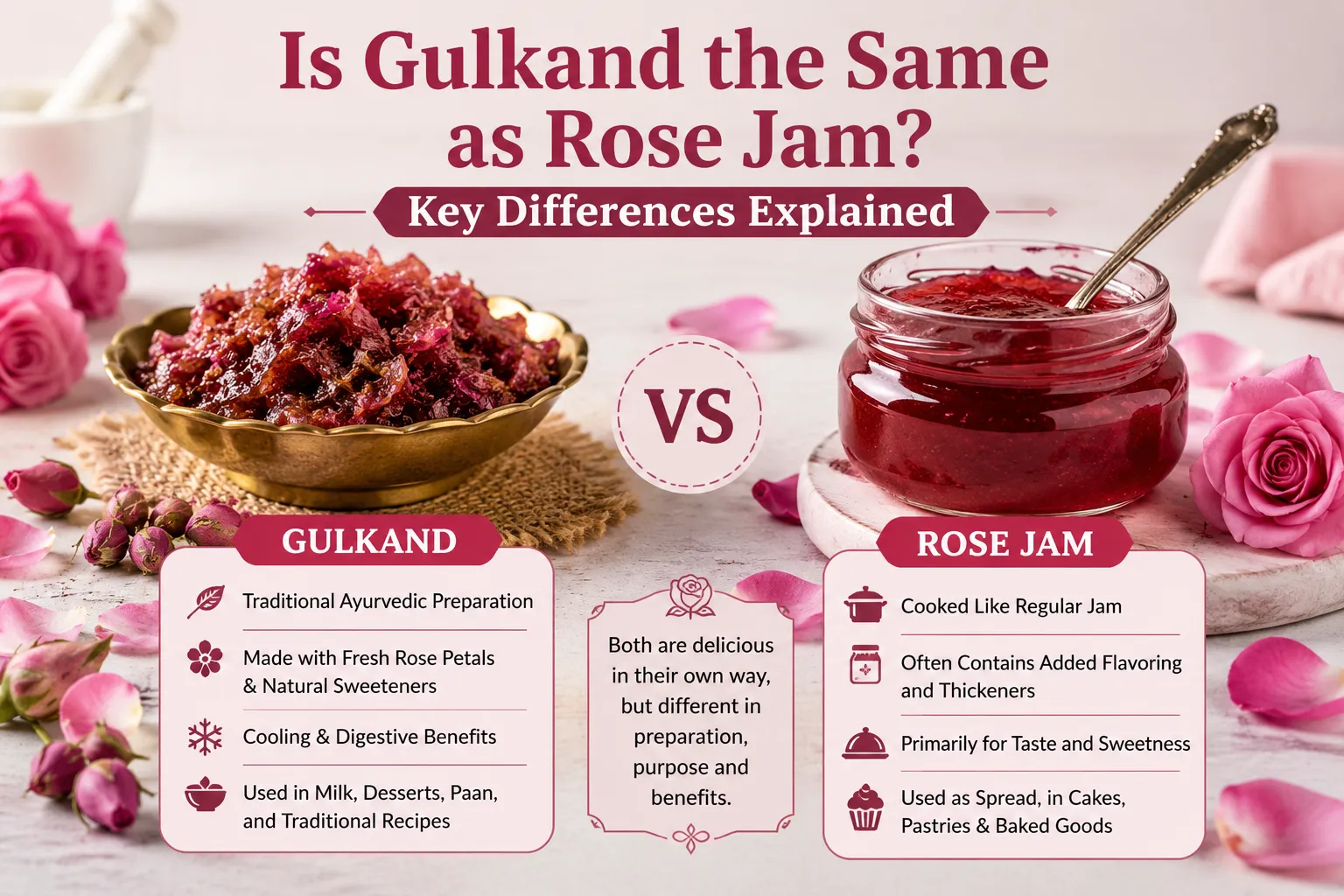

Many people often assume that gulkand and rose jam are the same because both are made using rose petals and have a sweet taste. While they may appear similar at first glance, there are several important differences between the two in terms of preparation, texture, usage, and traditional significance.
If you’ve ever wondered whether gulkand is simply another type of rose jam, this guide explains the key differences clearly.
What Is Gulkand?
Gulkand is a traditional Indian preparation made by preserving fresh rose petals with sugar or natural sweeteners. It is commonly associated with Ayurveda and is valued not just for its taste, but also for its cooling and digestive properties.
Traditionally, gulkand is prepared slowly by layering rose petals and sugar and allowing them to mature naturally over time, often under sunlight. This process helps retain the natural aroma and beneficial properties of roses.
Common Uses of Gulkand:
- Consumed after meals
- Added to milk and falooda
- Used in paan fillings
- Included in desserts and beverages
What Is Rose Jam?
Rose jam is generally considered a sweet spread or preserve made from rose petals, sugar, and sometimes added flavorings or pectin. Unlike gulkand, rose jam is usually prepared more like a conventional fruit jam through cooking and thickening.
Its primary purpose is flavor and sweetness rather than traditional wellness use.
Common Uses of Rose Jam:
- Spread on bread or toast
- Used in pastries and desserts
- Added to cakes and baked items
Key Differences Between Gulkand and Rose Jam
1. Preparation Method
The biggest difference lies in how they are prepared.
- Gulkand is traditionally slow-cured using rose petals and sugar
- Rose jam is typically cooked at higher temperatures like regular jam
This traditional preparation gives gulkand its unique texture and properties.
2. Texture and Consistency
Gulkand usually has a soft, petal-rich texture with visible rose petals, while rose jam tends to have a smoother, thicker consistency similar to fruit preserves.
Because of this, gulkand feels more natural and floral in texture.
3. Traditional and Ayurvedic Importance
One major reason gulkand stands apart is its long-standing role in Ayurveda and traditional wellness practices. It is commonly consumed for its cooling and digestive benefits.
Rose jam, on the other hand, is primarily treated as a sweet condiment or dessert ingredient.
4. Taste Profile
Although both are sweet, their flavor profiles differ slightly:
- Gulkand has a richer floral taste and natural rose aroma
- Rose jam may taste sweeter and more processed depending on preparation methods
The slow-curing process of gulkand helps preserve the authentic flavor of roses.
5. Usage in Daily Diets
Gulkand is often consumed directly or mixed into drinks and desserts for wellness purposes. Rose jam is more commonly used as a spread or bakery ingredient.
This difference makes gulkand more versatile in traditional Indian recipes.
Which One Should You Choose?
Choosing between gulkand and rose jam depends on your preferences and intended use.
Choose gulkand if you:
- Prefer traditional preparations
- Want a cooling and digestive ingredient
- Enjoy floral flavors in beverages and desserts
You May Also Like: Top 10 Health Benefits of Gulkand for Digestion & Cooling
Choose rose jam if you:
- Need a sweet spread for bread or pastries
- Prefer a smoother jam-like consistency
- Want a dessert-focused ingredient
Final Thoughts
While gulkand and rose jam may share rose petals as a common ingredient, they are not exactly the same. Gulkand is deeply rooted in traditional wellness and is valued for its cooling and digestive properties, whereas rose jam is primarily used as a sweet preserve.
Understanding these differences can help you choose the right option based on your taste preferences and lifestyle needs. Whether enjoyed traditionally or creatively in recipes, both offer a unique way to enjoy the natural flavor and aroma of roses.




























Sign in to leave a comment.