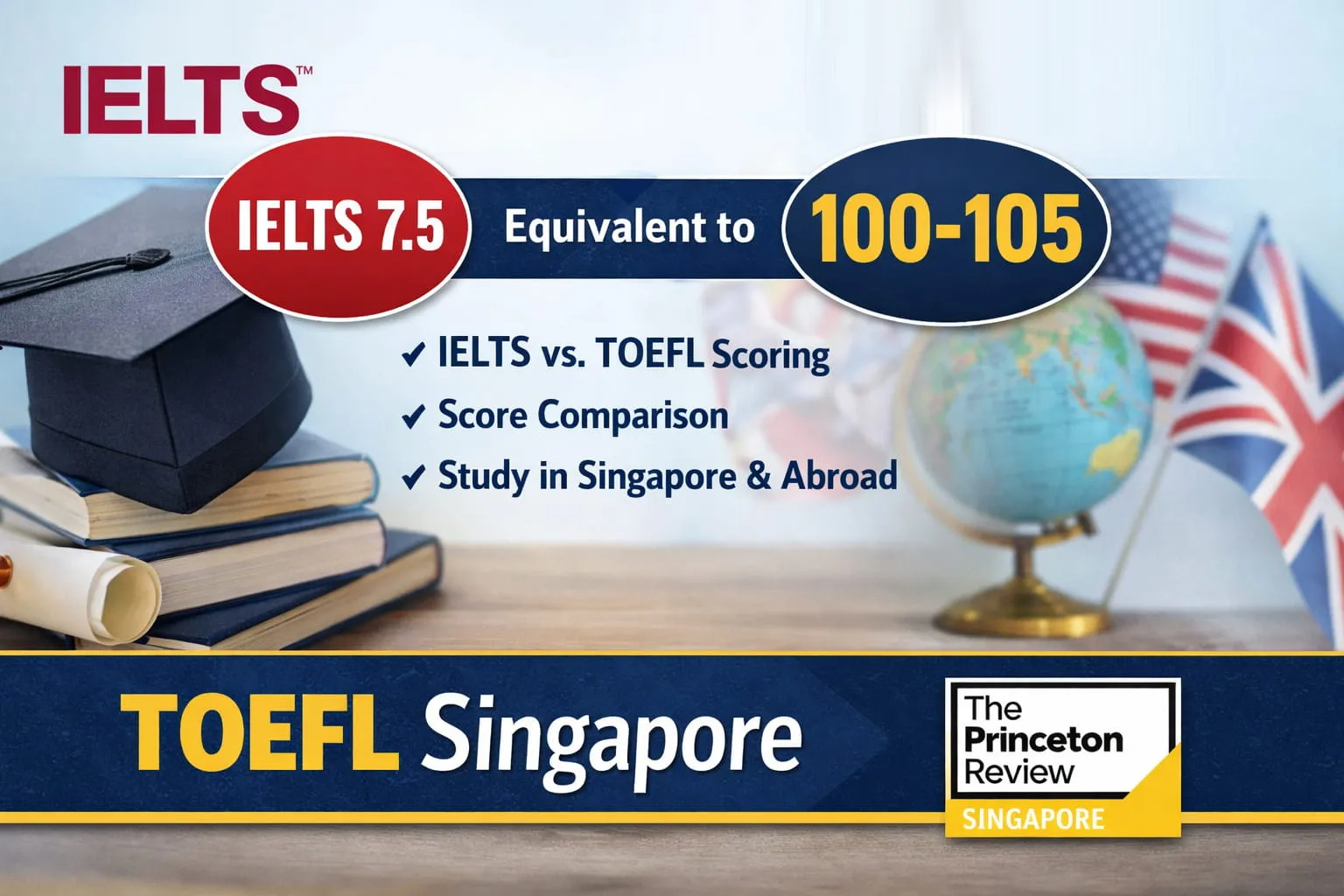

Students planning to study abroad often face a common question: Is IELTS harder than TOEFL? Both exams are widely accepted by universities, colleges, and immigration authorities worldwide, but they differ significantly in format, scoring, and testing style.
The answer depends largely on your strengths, learning preferences, and familiarity with English. Some students find IELTS easier because of its face-to-face speaking test, while others prefer the computer-based format of the TOEFL iBT.
If you're considering TOEFL Singapore preparation, understanding the differences between these exams can help you choose the right test and develop an effective study plan.
What Is TOEFL?
Before comparing the exams, let's answer an important question: What is TOEFL?
The TOEFL (Test of English as a Foreign Language) is an English proficiency exam designed to assess the academic English skills of non-native speakers. It is accepted by thousands of universities and institutions worldwide.
The most common version today is the TOEFL iBT (Internet-Based Test), which evaluates four language skills:
- Reading
- Listening
- Speaking
- Writing
Many international students choose the TOEFL test when applying to universities in the United States, Canada, Australia, and other English-speaking countries.
IELTS vs TOEFL: Key Differences
1. Speaking Section
One of the biggest differences between IELTS and TOEFL is the speaking test.
IELTS Speaking
- Face-to-face interview with an examiner
- Real conversation format
- 11–14 minutes long
TOEFL Speaking
- Responses recorded on a computer
- Students speak into a microphone
- Integrated tasks requiring reading and listening
Some students feel more comfortable speaking directly with a person, while others prefer recording answers privately.
If public speaking causes anxiety, the TOEFL format may feel less intimidating.
2. Writing Section
Both exams assess writing skills, but the structure differs.
IELTS Writing
Includes:
- Task 1 (report or letter)
- Task 2 (essay)
TOEFL Writing
Includes:
- Integrated writing task
- Academic discussion task
Students preparing for the TOEFL test often spend significant time on TOEFL writing practice because integrated tasks require reading, listening, and writing simultaneously.
3. Listening Section
IELTS Listening
- Various accents including British, Australian, and Canadian
- Multiple question formats
TOEFL Listening
- Primarily North American accents
- Academic lectures and classroom discussions
Students accustomed to university-style lectures may find TOEFL listening more manageable.
4. Reading Section
Both exams test reading comprehension skills.
IELTS Reading
Contains:
- Multiple question types
- Matching exercises
- True/False/Not Given questions
TOEFL Reading
Focuses mainly on:
- Academic passages
- Multiple-choice questions
Many students consider TOEFL reading more straightforward because of its consistent question format.
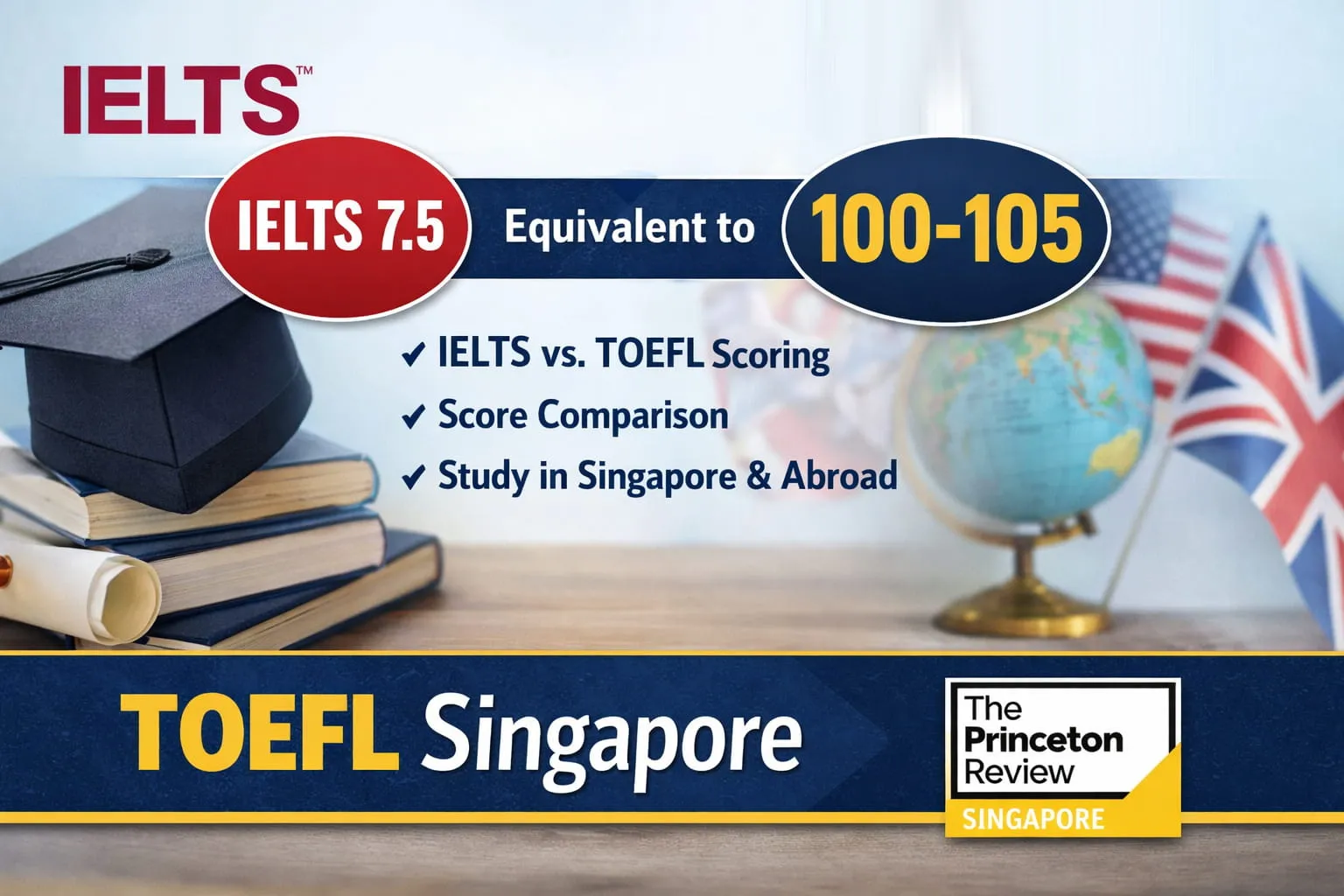
Is IELTS Harder Than TOEFL?
The truth is that neither exam is universally harder.
IELTS May Feel Harder If:
- You struggle with face-to-face interviews
- You find multiple question formats confusing
- You are uncomfortable with British English spelling and vocabulary
TOEFL May Feel Harder If:
- You struggle with typing essays quickly
- You find integrated tasks challenging
- You dislike speaking into a microphone
Your personal strengths play a major role in determining which exam feels easier.
Why Students Choose TOEFL Singapore
Many students preparing in Singapore choose the TOEFL because:
1. University Acceptance
The TOEFL test is accepted by thousands of institutions worldwide, especially in North America.
2. Computer-Based Format
Students comfortable with technology often prefer the fully digital TOEFL iBT experience.
3. Academic Focus
The exam closely resembles university coursework and classroom environments.
This makes TOEFL Singapore preparation particularly attractive for students planning to pursue higher education abroad.
Also Read: TOEFL 2026 New Format Explained: What Singapore Students Must Know Before Registering
How to Prepare for TOEFL Effectively
Practice Reading Academic Content
Read:
- Research articles
- Academic journals
- Educational websites
This improves vocabulary and reading comprehension.
Improve Listening Skills
Listen to:
- University lectures
- Educational podcasts
- Academic discussions
These resources closely match TOEFL listening content.
Focus on TOEFL Writing Practice
Writing is often one of the most challenging sections.
Practice:
- Integrated writing tasks
- Timed essays
- Academic discussion responses
Consistent TOEFL writing practice helps improve organization, clarity, and time management.
Take Mock Tests
Practice exams help students:
- Understand the format
- Improve timing
- Build confidence
- Identify weak areas
Mock tests are essential for achieving strong TOEFL scores.
Finding a Singapore TOEFL Test Center
Students planning to take the exam should register early for their preferred Singapore TOEFL test date.
When choosing a test center, consider:
- Location
- Available dates
- Testing environment
- Accessibility
Booking early increases the chances of securing your preferred schedule.
IELTS or TOEFL: Which Should You Choose?
Choose IELTS if:
- You prefer speaking with a person
- You are comfortable with varied question types
- Your target institution specifically prefers IELTS
Choose TOEFL if:
- You are comfortable using computers
- You prefer academic-style tasks
- You want a fully digital testing experience
Both exams are respected internationally and can help you achieve your academic goals.
Final Thoughts
So, is IELTS harder than TOEFL? Not necessarily. The difficulty depends on your individual strengths, learning style, and comfort with the exam format.
Students preparing for TOEFL Singapore often appreciate the computer-based structure, academic focus, and global acceptance of the TOEFL iBT. Meanwhile, IELTS remains an excellent choice for candidates who prefer a more conversational speaking test.
The key to success in either exam is consistent preparation, regular practice, and familiarity with the test format.
The Princeton Review Singapore, provided online TOEFL course options that help students strengthen reading, listening, speaking, and writing skills through expert guidance, mock tests, and comprehensive preparation strategies for TOEFL success.

























Sign in to leave a comment.