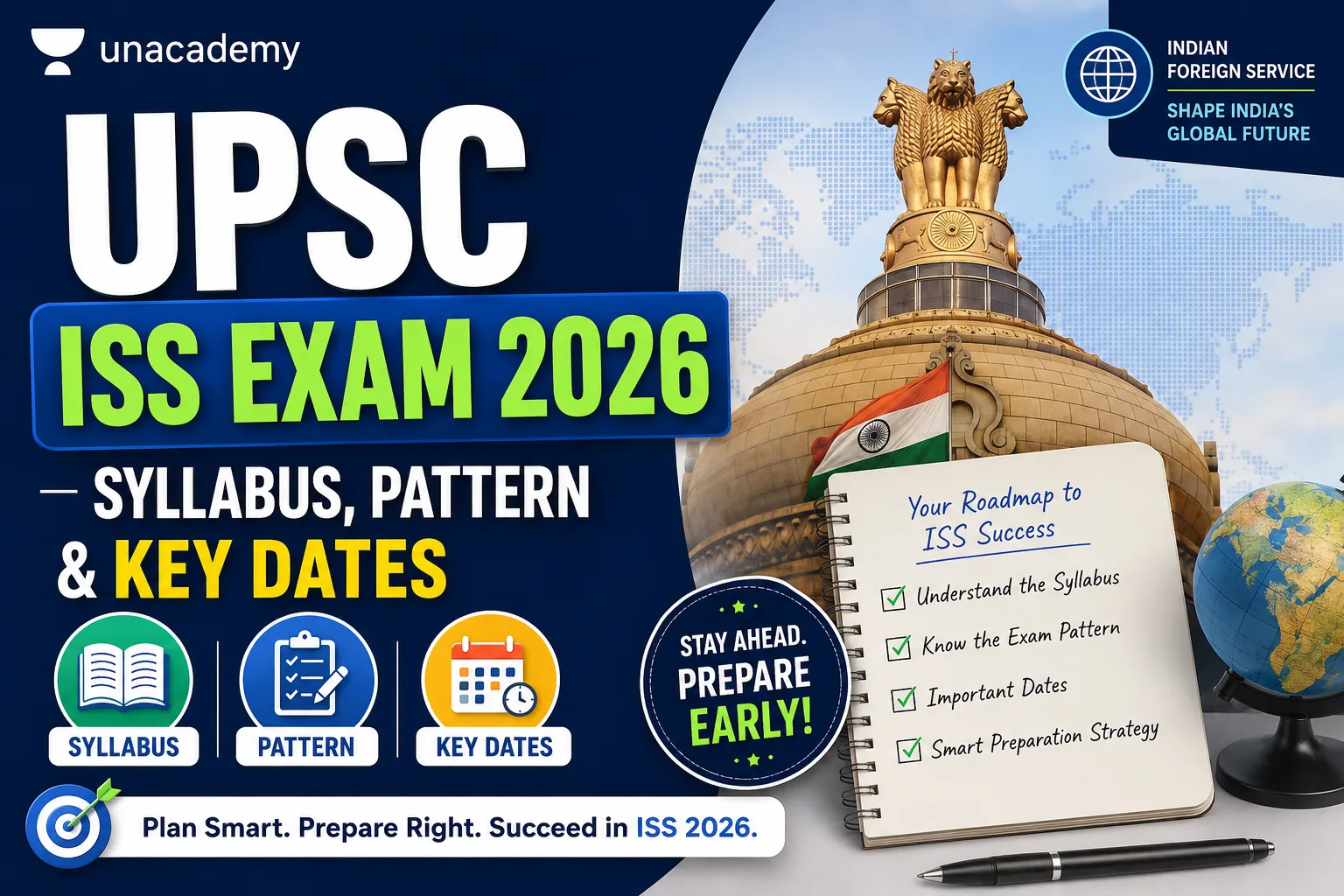

If you have spent hours staring at probability distributions, linear models, and sample surveys, wondering how all that theoretical math translates into real government policy, you are not alone. Preparing for the indian statistical service examination 2026 is a unique journey. Unlike general civil services exams that demand a mile-wide and inch-deep understanding of everything under the sun, this path asks for something different: deep, rigorous technical mastery paired with administrative aptitude. Whether you are navigating the nuances for the first time or fine-tuning your previous attempt, getting a firm handle on the syllabus, exam pattern, and critical dates is your baseline for success.
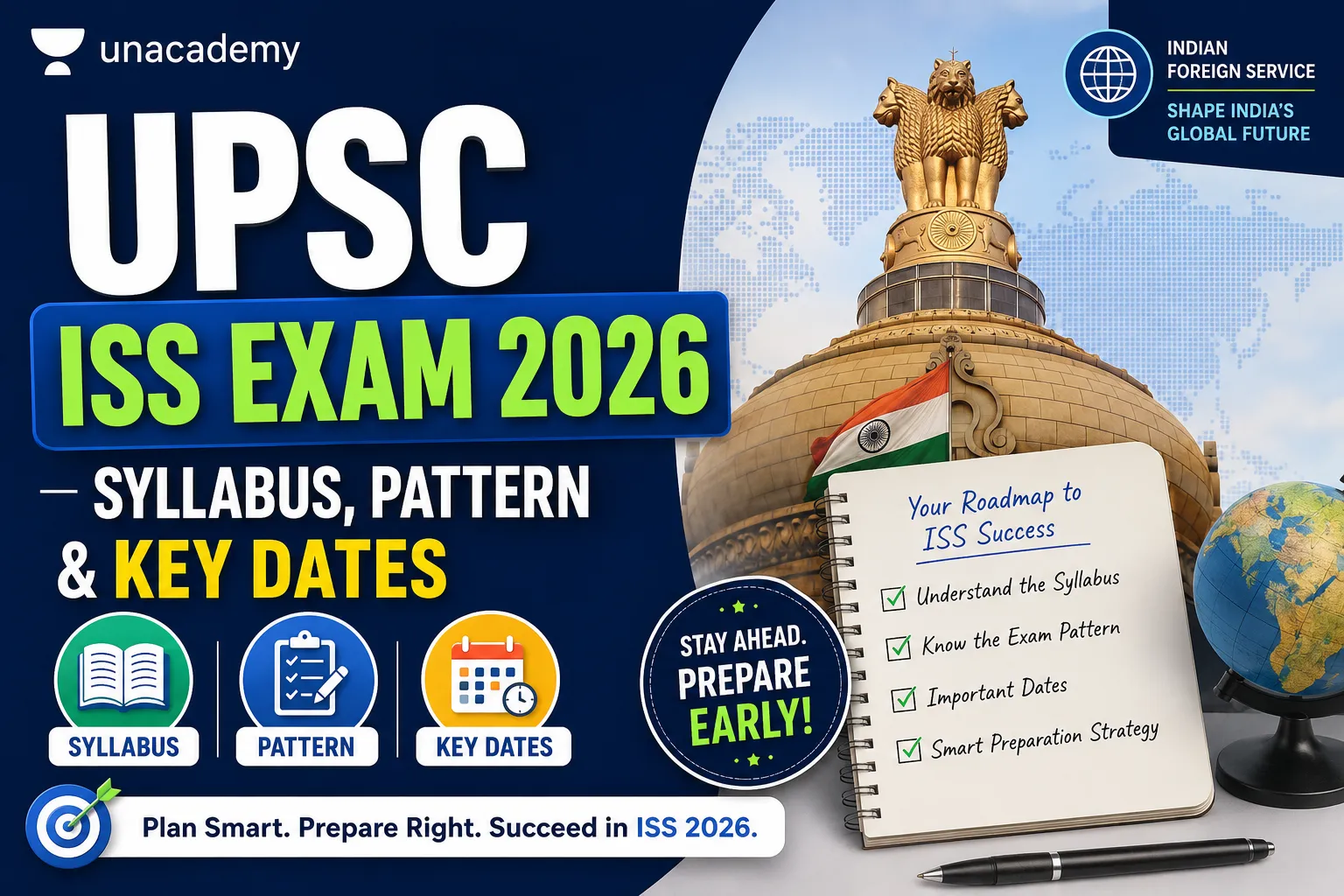
Understanding the Core Structure of the UPSC ISS Exam 2026
The upsc iss exam 2026 is structured to test both your foundational grasp of statistical theory and your ability to apply quantitative methods to actual socioeconomic problems. Conducted over three intensive days, the examination evaluates candidates across six papers.
Let's break down the structure so you know what you are walking into. The written component consists of both objective and descriptive formats, separating general administrative awareness from heavy-duty statistical analysis.
Paper-Wise Breakdown and Pattern
- General English: 100 marks (Descriptive, 3 hours) — Tests your command over essay writing, précis, comprehension, and grammar.
- General Studies: 100 marks (Descriptive, 3 hours) — Covers current affairs, history, geography, Indian polity, and basic economic issues.
Statistics I (Objective): 200 marks (2 hours) — Focuses on probability theory, calculus, and statistical inference.
Statistics II (Objective): 200 marks (2 hours) — Covers linear models, statistical inference, and design of experiments.
- Statistics III (Descriptive): 200 marks (3 hours) — Deep dives into sampling techniques, econometrics, and applied statistics.
- Statistics IV (Descriptive): 200 marks (3 hours) — Focuses on specialized fields like demography, operations research, survival analysis, and time series.
Decoding the Detailed Syllabus for the Indian Statistical Service Examination 2026
Knowing the official notification headings is only half the battle. When you look closely at the upsc indian statistical service examination 2026 syllabus, the secret lies in balancing theoretical derivations with practical computations.
Probability and Distribution Theory: Make sure your grasp of axioms, conditional probability, expectation, and standard discrete/continuous distributions is rock solid. Examiners love testing edge cases here.
Sampling Techniques and Design of Experiments: Central to the mandate of the Ministry of Statistics and Programme Implementation (MoSPI). Pay close attention to stratified sampling, cluster sampling, and ANOVA models.
- Econometrics and Applied Statistics: Regression analysis, heteroscedasticity, multicollinearity, and time-series forecasting are perennial favorites in the descriptive papers.
Key Dates and Timeline You Need to Keep Track Of
Timing your preparation right means keeping a close eye on the calendar. For the indian statistical service exam, the timeline moves quickly once the official notification drops.
Notification Release: February 11, 2026
Application Window: February 11 to March 3, 2026
Written Examination Dates: June 19 to June 21, 2026
Admit Card Release: Late May / Early June 2026
Keeping your documents updated and tracking these milestones prevents last-minute administrative panic, allowing you to channel your energy into revision.
Common Mistakes and Things You Should Know
Even brilliant statisticians stumble during this exam if they approach it like a university semester test. Here are a few traps you should consciously avoid:
- Neglecting Descriptive Practice: Because Statistics I and II are objective, candidates often spend all their time practicing multiple-choice questions. Do not forget that Statistics III and IV are fully descriptive. Writing out lengthy mathematical proofs and derivations by hand takes physical stamina and structural clarity.
- Ignoring General Studies and English: Many aspirants with strong quantitative backgrounds treat English and GS as afterthoughts. Remember, clearing the minimum cutoff in these qualifying papers is mandatory for your core statistics papers to even be evaluated.
Over-relying on Rote Memorization: The exam rewards conceptual clarity over memorized formulas. If you do not understand the underlying assumptions of a statistical model, a twisted application-based question in the exam hall will catch you off guard.
Real Aspirant Experiences
“Balancing my master's thesis while prepping for the upsc iss exam 2026 felt overwhelming at first. I realized halfway through that practicing previous years' descriptive papers under timed conditions changed everything. It wasn't about studying more hours; it was about writing cleaner mathematical steps.”
— Raghav S., Delhi University alumnus
“The biggest trap I fell into was ignoring official reports published by government bodies like MoSPI. Once I started connecting standard textbook econometrics with actual Indian socioeconomic data sets, the subjective papers made a lot more sense.”
— Ananya M., Hyderabad
Frequently Asked Questions (FAQs)
What is the educational qualification required for the upsc iss exam 2026?
Candidates must possess a Bachelor's degree with Statistics, Mathematical Statistics, or Applied Statistics as one of the subjects, or a Master's degree in Statistics, Mathematical Statistics, or Applied Statistics from a recognized university.
Is there any negative marking in the objective papers of the indian statistical service examination 2026?
Yes, objective papers (Statistics I and II) carry standard negative marking for incorrect answers marked in the OMR sheet. It is always wise to calculate risk carefully rather than guessing blindly.
How many attempts are allowed for the upsc indian statistical service examination 2026?
Unlike the Civil Services Examination (CSE), there is no fixed restriction on the total number of attempts for this exam, provided you satisfy the prescribed age criteria (typically 21 to 30 years as of August 1st of the respective exam year).
What is the salary structure after clearing the indian statistical service exam?
Selected candidates join as Grade IV officers (Junior Time Scale) in a Group A Central Service under Pay Level 10 (₹56,100 basic pay per month), along with Dearness Allowance (DA), House Rent Allowance (HRA), and other standard government perks.
Can candidates from engineering or pure mathematics backgrounds apply?
Pure mathematics or general engineering graduates are generally not eligible unless their specific degree transcripts explicitly include Statistics, Mathematical Statistics, or Applied Statistics as core mandatory subjects meeting the explicit credit criteria outlined in the official notification.
Conclusion
Cracking a specialized administrative examination requires patience, consistency, and a clear alignment between mathematical theory and practical application. By mapping out your revision according to the official syllabus and respecting the distinct demands of both objective and descriptive formats, you build a steady path toward your professional goals. Keep your focus sharp, trust your preparation methodology, and take it one concept at a time.





























Sign in to leave a comment.