

Ask ten brokers along the Yamuna Expressway whether land near Jewar Airport is a good buy, and all ten will say yes. That's not surprising — it's their job to sell it. The harder, more useful question is the one most sales pitches skip: good for whom, under what conditions, and over what timeframe?
Noida International Airport is no longer a promise on paper. It became operational in March 2026, which changes the entire investment conversation. Airport-driven real estate typically moves in three waves — first on construction announcements, then on the actual opening, and finally on the years of infrastructure build-out that follow. The Jewar corridor has already lived through the first two. What's left is the third wave, and that's exactly where the real ROI decisions get made.
This guide breaks down what's genuinely driving value near the airport, what a realistic return actually looks like, where the risks sit, and how to decide if this fits your goals — not just a seller's script.
Why Jewar Airport Investment Is Getting Attention in 2026
Three things changed the calculus for anyone weighing a Jewar Airport investment this year:
- The airport is live, not speculative. Flights, cargo operations, and connected infrastructure are no longer "expected" — they're happening.
- Land values along the Yamuna Expressway have already climbed sharply since 2020, tracking construction and launch milestones fairly closely.
- Large anchor projects — Film City, the Defence Corridor, and a logistics and industrial belt — are now moving from planning documents into actual construction, each pulling a different kind of demand into the surrounding market.
None of this guarantees future appreciation. What it does mean is that the purely speculative phase — buying on a "maybe it happens" bet — is over. The next phase of returns depends on how quickly the surrounding ecosystem matures, and that's a very different kind of question than "is there an airport nearby."
What Actually Drives ROI Near Jewar Airport
"Near the airport" is a marketing phrase. It isn't an investment thesis. The plots that perform well over time share a specific set of characteristics, and the ones that underperform usually fail on one of these points.
1. Legal Approval Status
A plot approved by the Yamuna Expressway Industrial Development Authority (YEIDA) or registered under RERA is dramatically easier to resell, mortgage, or develop than unapproved land. This single factor is often the difference between an investment that appreciates smoothly and one that becomes difficult to exit at all. Before you look at price or location, confirm approval status directly with the authority — never take a verbal assurance at face value.
2. Actual Distance From the Operational Corridor
Ten minutes from the terminal and forty minutes from the terminal are not the same investment, even if both are marketed as "near Jewar Airport." Proximity to the functioning corridor — not the district boundary — is what tends to correlate with faster appreciation and stronger rental or resale demand.
3. What's Being Built Around the Plot
Film City is expected to drive media, entertainment, and tourism-linked footfall. The Defence Corridor brings manufacturing and skilled employment. Logistics and industrial development pull warehousing and blue-collar housing demand. Each of these creates a different kind of buyer or tenant pool, so it's worth understanding which demand driver is closest to the plot you're evaluating — that's a better predictor of returns than the airport alone.
4. Holding Period
Land tied to infrastructure catalysts rewards patience. Historically, the sharpest gains in comparable airport-led corridors show up in the years after operations stabilize, not in the months immediately surrounding launch. Anyone expecting a quick flip is playing a different game than the one this market actually rewards.
What a Realistic Timeline Looks Like
It helps to separate the hype cycle from the actual value cycle:
| Phase | What Typically Happens | Investor Takeaway |
|---|---|---|
| Pre-construction | Prices rise on announcement and land-pooling news | Highest risk, hardest to verify |
| During construction | Steady appreciation as infrastructure visibly progresses | Entry still attractive, less speculative |
| Operational launch | A price jump around the opening event | Already priced in by many sellers |
| Post-launch (2–5 years) | Gradual, sustained appreciation as jobs, housing, and commerce mature | Historically the strongest long term investment near Jewar Airport window |
Jewar is currently sitting between the third and fourth rows of that table. That's a meaningful detail for anyone trying to time an entry.
The Honest Risks — What Could Go Wrong
No credible guide to a Jewar Airport investment skips this part, so here it is plainly.
- Unapproved or disputed land. This remains the most common way buyers lose money in this corridor. Always verify YEIDA or RERA status independently before paying anything.
- Hype-driven pricing. Some listings price purely off "airport proximity" language rather than actual infrastructure timelines or comparable sales. Cross-check any quoted price against current, published rates rather than a broker's verbal number.
- Underestimating the holding period. If you need your capital back within two to three years, land is generally the wrong vehicle. This asset class rewards patience, not urgency.
- Assuming appreciation is uniform. Not every sector or corridor near the airport moves at the same pace. Treating "near Jewar Airport" as one blanket investment story ignores real differences in location, approval status, and nearby development.
If any of these apply to your situation, it's worth resolving them before committing capital — not after signing paperwork.
Residential, Commercial, or Industrial — Which Fits Your Goal?
Property investment near Jewar Airport isn't a single decision; it's three distinct ones, depending on what you actually want out of the investment.
Residential Plots
The broadest resale pool, generally steadier (if slower) appreciation, and the easiest category to finance through a bank. This is usually the more approachable entry point for first-time land investors.
Commercial Property
Higher upfront cost, but real rental-yield potential once the surrounding area matures and businesses actually move in. Returns here are more directly tied to the pace of commercial development nearby, so timing matters more.
Industrial Plots
Often the lowest entry cost of the three, and closely linked to logistics, warehousing, and manufacturing demand growing around the airport and the Defence Corridor. This category tends to suit investors comfortable with a longer, infrastructure-dependent timeline.
There's no universally "best" category — the right one depends on whether you're optimizing for easy resale, rental income, or a longer-horizon industrial play.
A Simple Framework Before You Commit
Before putting money into any plot near the airport, work through these four questions honestly:
- Can I hold this for at least two to three years without needing the capital back sooner?
- Have I personally verified RERA or YEIDA approval — not just accepted the seller's word for it?
- Have I compared the quoted price against a current, published price list, rather than relying on a single broker's number?
- Does the plot type — residential, commercial, or industrial — actually match what I'm trying to achieve, whether that's income, resale, or a long term investment near Jewar Airport?
If you can answer yes to all four, this corridor remains one of the more well-documented growth stories in NCR real estate right now. If any answer is no, that's the thing to fix first — not something to work around after the purchase is done.
How Anugrah Homes Approaches This Market
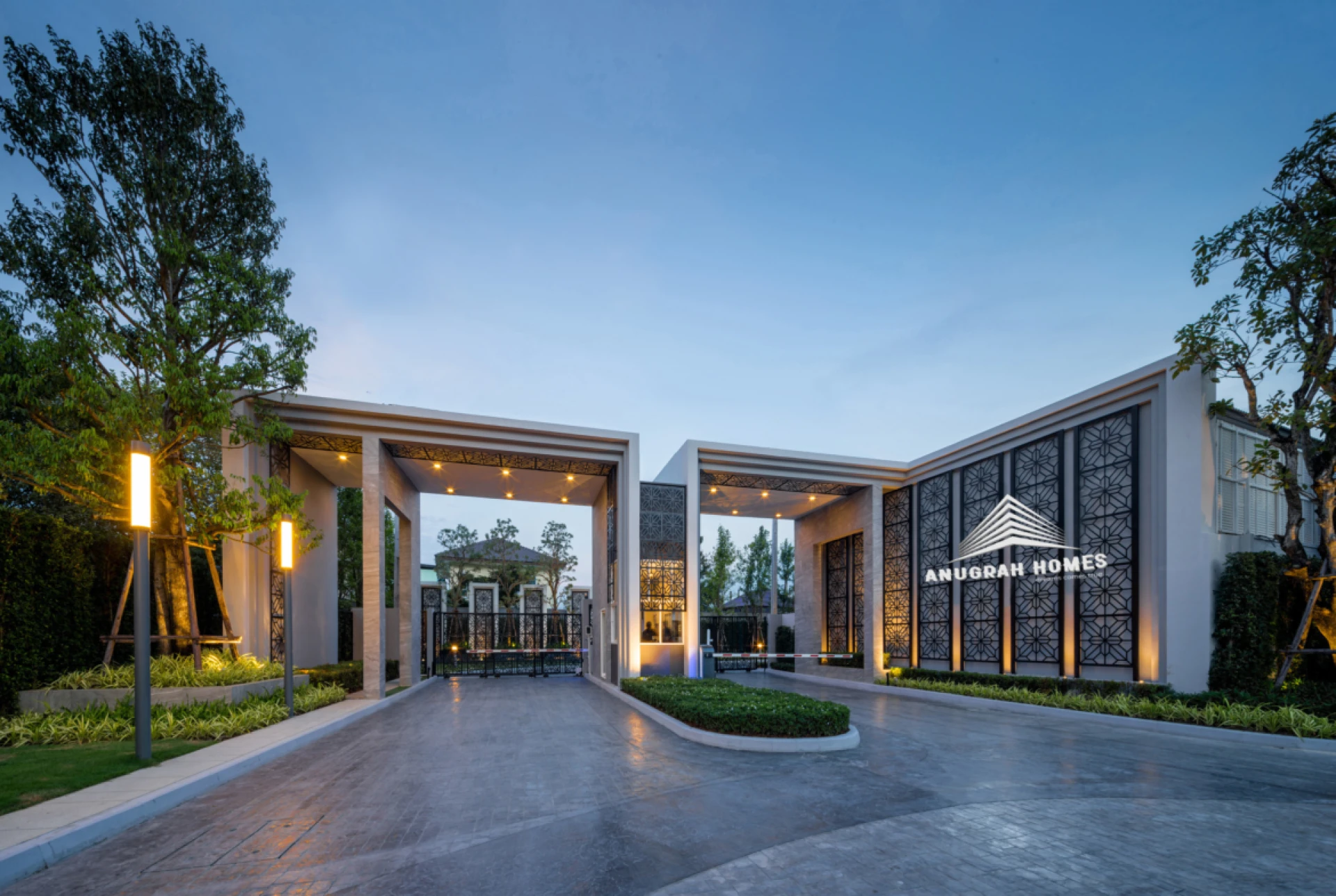
Anugrah Homes, developed by Maxpine Group, offers RERA-verified plots in Jattari, roughly ten minutes from the Jewar Airport corridor along the Yamuna Expressway. The approach is straightforward: transparent, published pricing, verified approvals, and no hidden charges layered on after the fact.
For anyone seriously weighing a property investment near Jewar Airport, a site visit tends to answer more real questions in an hour than another brochure can — current pricing, actual approval documentation, and a firsthand look at what's being built nearby.
Frequently Asked Questions
Is a Jewar Airport investment still worth it in 2026?
For buyers who can hold for several years and are willing to verify approval status before purchasing, yes — the corridor shows a well-documented appreciation pattern tied to the airport's operational launch. It is not designed to be a short-term flip.
How long should I hold a plot near Jewar Airport?
Plan for a multi-year hold. In comparable airport-led corridors, the strongest gains typically appear in the years after operations stabilize, not in the immediate window around launch.
Is residential or commercial a better property investment near Jewar Airport?
Residential plots offer a broader resale pool and easier financing. Commercial plots cost more upfront but carry stronger rental-yield potential once the area matures. The better fit depends on whether you're prioritizing liquidity or income.
What's the single biggest risk when investing near Jewar Airport?
Buying land that isn't properly approved. Always confirm YEIDA or RERA registration directly through the official portals before making any payment.
Is this a good long term investment near Jewar Airport, or mainly for quick resale?
The data and historical pattern from similar airport corridors both point toward this being better suited as a long term investment near Jewar Airport rather than a fast flip. Investors expecting quick, short-cycle profits are usually disappointed; those planning a multi-year hold tend to see the more meaningful gains.
This article is for general informational purposes and does not constitute financial or investment advice. Property values are influenced by market conditions and infrastructure timelines that can change; always verify current pricing and legal approvals independently before making a purchase decision.





























Sign in to leave a comment.