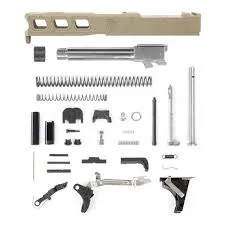

For decades, metal-framed handguns defined durability, reliability, and performance. Steel and aluminum alloys were the unquestioned standard, shaping everything from military sidearms to civilian carry pistols. But in recent years, polymer has emerged as a serious contender — not just as an alternative, but in many cases as the preferred material for modern handgun builds.
For those already exploring compact polymer builds, terms like PF940SC Compatibility have become part of the conversation early on, reflecting how deeply customization and component matching are now embedded in the modern handgun experience.
So the question isn’t just which is stronger — it’s which is better for today’s shooter?
The Evolution of Handgun Materials
From Steel Dominance to Polymer Innovation
Traditional metal frames built their reputation on rigidity and long-term durability. Steel, in particular, offers exceptional strength and resistance to wear. Aluminum frames brought weight reduction while maintaining structural integrity, making them popular for carry guns.
Polymer, however, introduced something fundamentally different: flexibility without fragility. Modern reinforced polymers are engineered to absorb stress, resist environmental damage, and reduce overall weight — all while maintaining structural reliability under repeated use.
This shift wasn’t just about replacing metal. It was about rethinking what a handgun frame should do.
Weight and Carry Comfort
Where Polymer Clearly Wins
One of polymer’s most immediate advantages is weight reduction. A polymer-framed handgun can be significantly lighter than its metal counterpart, which directly impacts:
- Everyday carry comfort
- Reduced fatigue during extended use
- Faster handling and maneuverability
For concealed carry users especially, this difference is hard to ignore. A lighter firearm is easier to carry consistently — and consistency matters more than marginal gains in material strength.
Durability and Environmental Resistance
Not as Simple as “Metal Is Stronger”
It’s easy to assume metal is more durable — but that depends on what kind of stress you’re talking about.
Metal frames:
- Can corrode without proper maintenance
- Are more susceptible to surface wear and finish damage
- May deform under repeated impact stress over time
Polymer frames:
- Resist rust and corrosion entirely
- Handle moisture, sweat, and temperature changes better
- Absorb recoil stress instead of transferring it directly
In real-world conditions, especially for everyday carriers and range users, polymer often proves more resilient where it actually counts.
Recoil and Shooting Experience
Flex vs Rigidity
Material choice directly affects how a firearm feels when fired.
Metal frames:
- Heavier weight helps reduce felt recoil
- Provide a more “solid” shooting feel
- Often preferred by competition shooters for stability
Polymer frames:
- Slight flex helps absorb recoil impulse
- Can feel snappier due to lighter weight
- Offer quicker follow-up shot potential for some shooters
This comes down to preference. Some shooters favor the stability of metal, while others appreciate the responsiveness of polymer.
Customization and the DIY Advantage
Why Polymer Leads the Builder Movement
This is where polymer truly separates itself.
Polymer frames — especially in the DIY build space — allow for:
- Easier modification and finishing
- Lower barrier to entry for first-time builders
- Broad compatibility with aftermarket parts
This flexibility is a major reason polymer has become central to the growing DIY firearms movement.
Cost Considerations
Performance Without the Premium
Metal frames, particularly steel, are more expensive to manufacture. That cost is passed on to the buyer.
Polymer frames:
- Cost less to produce
- Lower the total build price
- Allow builders to invest more in performance components (barrels, triggers, optics)
For many enthusiasts, this shift in cost allocation makes polymer the smarter choice.
So, Is Polymer Better Than Metal?
The honest answer: it depends on what you value.
Choose metal if you prioritize:
- Maximum rigidity
- Traditional feel and balance
- Reduced recoil through weight
Choose polymer if you prioritize:
- Lightweight carry
- Environmental durability
- Customization and DIY builds
- Cost efficiency
The Bigger Picture
It’s Not Replacement — It’s Evolution
Polymer isn’t here to replace metal entirely. Instead, it has expanded what’s possible in handgun design and ownership.
For modern shooters — especially those interested in building and customizing their firearms — polymer offers a level of accessibility and flexibility that metal simply can’t match.
And that’s ultimately what this shift is about: giving the user more control over how their firearm is built, feels, and performs.
Final Thoughts
The debate between polymer and metal will continue, but the market trend is clear. Polymer has moved from “alternative” to “mainstream,” driven by real-world advantages and a growing community of builders who value customization over convention.
If your goal is to create something tailored to your exact preferences — not just choose from what’s available — polymer isn’t just better.
It’s enabling an entirely new way to own a handgun.























Sign in to leave a comment.