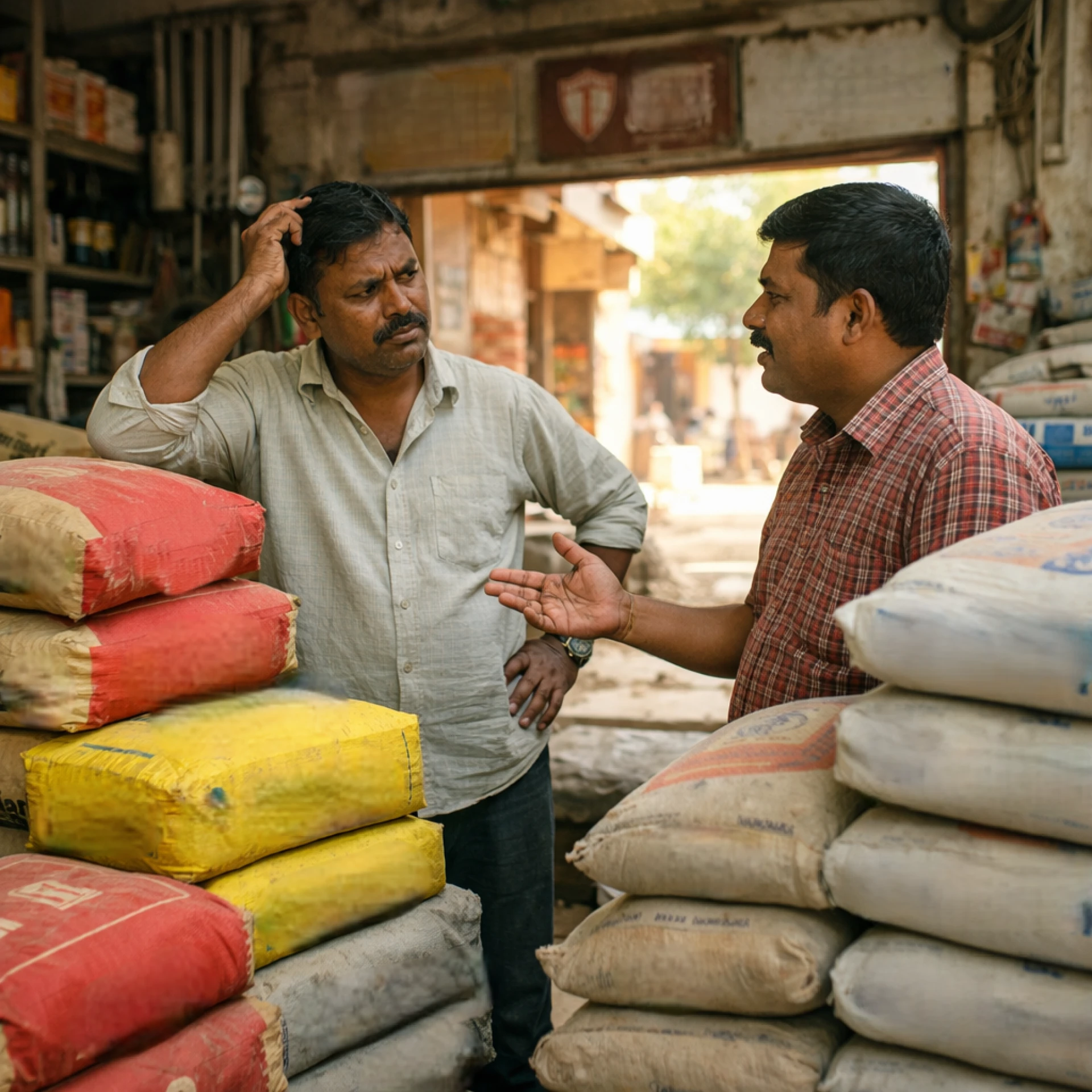

You often hear people talk about the ‘best cement’, as if it is a fixed product that works perfectly for every project. A neighbour recommended one brand because it worked for their house. A contractor insists on another because it is “stronger.” When you stand at a cement shop, surrounded by bags with familiar names, making a perfect choice of the ‘best cement’ becomes all the more confusing.
The truth is, choosing cement is not about chasing the most popular brand. It is about understanding what your construction actually needs.
Why “Best Cement” is Not the Same for All Projects
Every structure carries a different kind of load and faces different conditions. The cement that works well for a boundary wall may not be the right choice for a multi-storey building.
When you choose the best cement, you are choosing what suits your construction best. Things like soil condition, moisture around the site, local weather, and the type of structure all matter here. Cement is not just a binding material; it is a long-term contributor to the strength and durability of your building. Therefore it is important to match your cement type as per usage rather than following brand popularity.
Here are some things you need to know before picking any random sack-bag of cement.

Understand Cement Types
Cement is available in different grades and types to suit different construction needs. Ordinary Portland Cement, Portland Pozzolana Cement, and Portland Slag Cement are made to perform in their own ways. Some are better at handling moisture, while others are known for gaining strength faster during the early stages.
If your construction site is in a humid area or close to water, the best cement is the one that aligns with these specific requirements rather than trying to meet every condition at once.
Brand Name vs Performance on Site
You may trust a well-known cement brand because it feels reliable and easy to source, and that trust is understandable. However, once construction starts, the brand name alone does not decide how the cement will actually perform on your site.
What really affects the outcome is how the cement is used. You need to check the quality of sand and aggregates, and the amount of water mixed into it. Even the best cement can fail if it has absorbed moisture, is used beyond its shelf life, or is mixed in the wrong proportions.
Learn from Practical Experience
When you speak with experienced engineers or local contractors, their advice usually comes from years spent on real construction sites, not from brochures or advertisements. They tend to talk less about brand names and more about what they have seen work over time. You will often hear them mention things like fewer cracks, smoother finishes, and how well the cement behaves during curing.
Their real-world insights help you to look beyond labels and focus on what will actually suit your project and your site conditions,
Bottom Line
The best cement is not defined by the logo on the bag, but by how well it suits your construction requirements. Consider where it will be used, the conditions it will be exposed to, and how long it is expected to perform. This choice keeps your building strong and reliable for years to come.



























Sign in to leave a comment.