
It was a hot afternoon in Faisalabad. A factory manager walked across the production floor and noticed that one section of the plant had suddenly lost power. “Yaar, phir wiring ka masla?” he asked the electrician.
The electrician smiled and said, “Sir, cable ka material bhi bohat matter karta hai. Har metal current ko same tarah handle nahi karta.”
That simple conversation raises an interesting question. Why is copper used so widely in electrical power cables when other metals can also carry electricity?
The answer comes down to a combination of electrical conductivity, heat performance, strength, flexibility, connection quality, and long service performance. Copper conductors have properties that make them highly suitable for electrical power cables used in homes, commercial buildings, factories, substations, and industrial networks.
Here are the 10 main reasons why copper is used in electrical power cables, with facts and practical examples that explain why copper remains a popular choice in electrical systems in Pakistan and around the world.
1. Copper Has Excellent Electrical Conductivity
The first and most important reason is conductivity.
Electrical conductivity tells us how easily a material allows electric current to pass through it. Copper has very high electrical conductivity, with a conductivity value of roughly 58 million siemens per metre at 20°C. Its electrical resistivity is approximately 1.68 × 10⁻⁸ ohm metre at 20°C.
This matters because lower electrical resistance means less energy is converted into unwanted heat while current travels through a cable.
For electrical power cables, this is especially important when large amounts of current need to travel over a significant distance. A good conductor helps maintain efficient power transmission when the cable has been correctly sized for its load.
This is one reason copper wires remain widely used across electrical systems. When engineers select copper conductors for electric cables, they are choosing a material with a long history of strong electrical performance.
For buyers searching for the best copper cables in Pakistan, conductivity should be one of the first technical characteristics they examine rather than simply looking at the cable price.
2. Copper Produces Less Electrical Resistance
Copper's high conductivity also means it can carry current with relatively low resistance.
Think about electricity moving through a cable like water moving through a pipe. A restricted path makes movement harder. Electrical resistance creates a similar problem for current. As resistance increases, more energy turns into heat.
This relationship is described through the basic electrical equation:
Power loss = I²R
Here, I represents current, and R represents resistance.
The equation shows why resistance becomes especially important when current is high. If current increases, power loss rises rapidly because current is squared.
For electrical power cables carrying heavy loads, controlling resistance is therefore a major engineering concern. Proper conductor size remains essential, but the conductor material also matters.
Copper's low resistivity makes it a practical choice for power transmission and distribution applications.
3. Copper Handles Heat Well When Correctly Sized
Electrical current creates heat inside a conductor. Every cable therefore needs proper thermal design.
Copper has a high melting point of approximately 1,085°C, which gives the metal substantial thermal tolerance compared with many common materials. This does not mean a copper cable can safely operate at extremely high temperatures. Cable insulation, conductor size, ambient temperature, installation method, and load rating all set practical operating limits.
The important point is that copper has useful thermal characteristics for electrical applications.
When an electrical cable is correctly selected and operated within its rated capacity, copper helps maintain stable current-carrying performance.
This becomes especially important in factories and commercial buildings where electrical equipment may operate for long periods.
A cable should never be selected simply because it contains copper. The conductor cross-sectional area, insulation system, installation conditions, and expected load all need proper engineering assessment.
4. Copper Offers Strong Mechanical Performance
A power cable does not only carry electricity. It also needs to survive handling during manufacturing, transportation, installation, bending, termination, and maintenance.
Copper has useful mechanical properties that make it practical for cable manufacturing. It can be drawn into fine wires while maintaining good electrical performance.
This makes copper suitable for different conductor constructions, including solid conductors and stranded conductors.
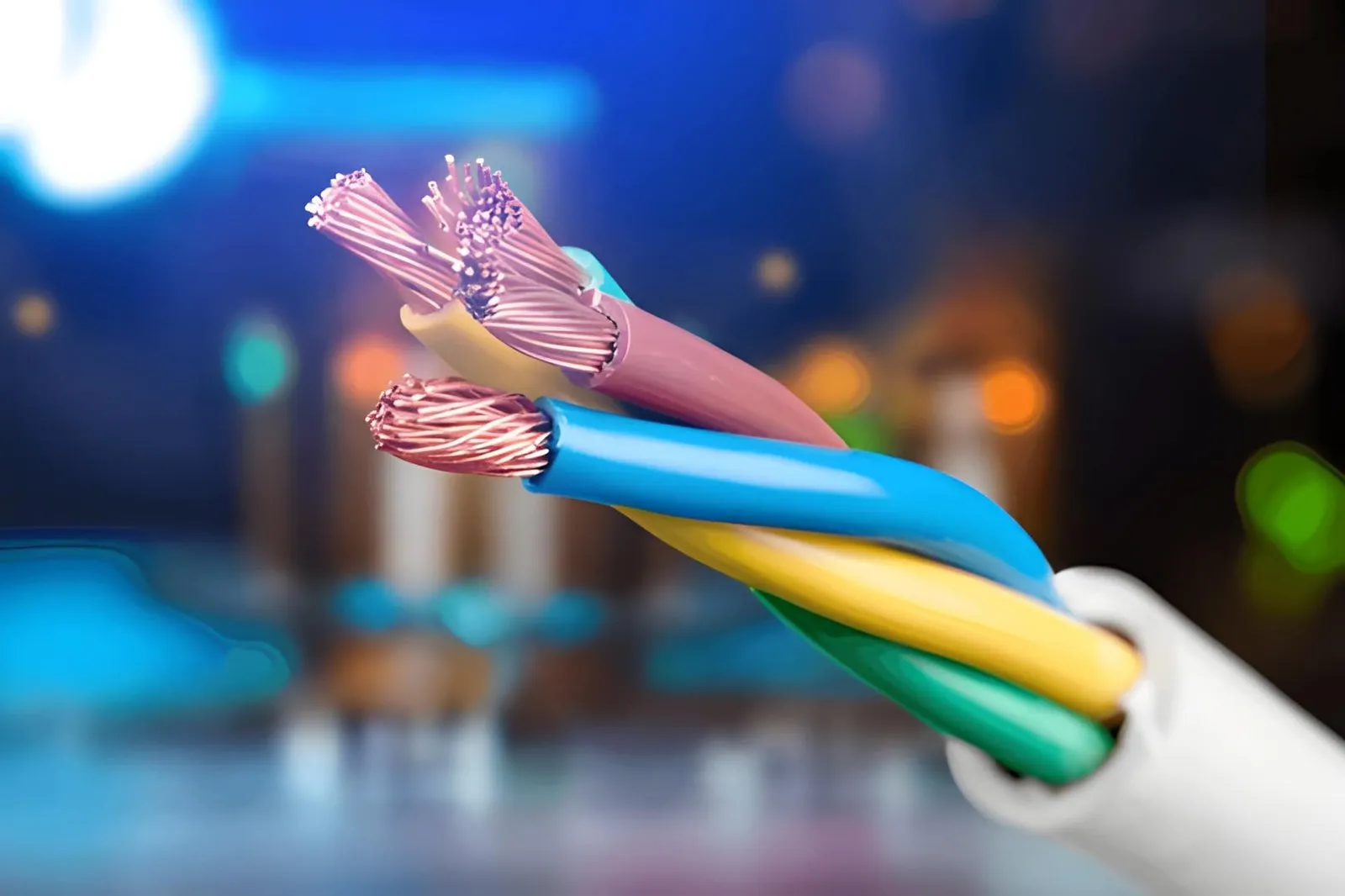
Stranded copper conductors are especially useful where a cable needs greater flexibility during installation. This can make cable routing easier inside electrical panels, buildings, industrial facilities, and other installations.
The mechanical strength of the conductor also matters during cable preparation and termination. A properly manufactured copper cable can handle normal installation procedures without losing its electrical purpose.
That combination of conductivity and mechanical usefulness is a major reason copper conductors remain common in electrical power cables.
5. Copper Works Well With Electrical Connections
A cable is only useful when electricity can move safely through the entire circuit. The connection points at terminals, lugs, switches, breakers, busbars, and other equipment are therefore extremely important.
Copper has good compatibility with many electrical connection systems and is widely used with copper terminals, lugs, busbars, and other copper-based components.
A properly prepared copper conductor can form a good electrical connection when the correct terminal, lug, crimping method, tightening torque, and installation procedure are used.
This is important because a poorly made connection can create resistance at a specific point. That resistance can create local heating even when the main cable is correctly sized.
For this reason, copper's advantage is not just about what happens inside the cable. Its practical usefulness also extends to the connection points that complete the electrical circuit.
6. Copper Can Be Used in Many Types of Electrical Systems
Another major reason for copper's popularity is its wide range of applications.
Copper conductors can be used in many electrical power cable designs suited to different voltage levels and installation environments.
Common applications include:
- Residential electrical wiring
- Commercial electrical installations
- Industrial power distribution
- Electrical panels
- Motor circuits
- Transformer connections
- Distribution networks
- Control and power systems
- Renewable energy installations
A residential building may need copper wires for general electrical circuits, while a factory may require larger copper conductors inside industrial power cables.
The same basic conductor material can therefore serve many different electrical requirements when the cable construction and conductor size are properly selected.
This versatility is particularly useful for electrical contractors and engineers working across different types of projects in Pakistan.
7. Copper Has Good Thermal Conductivity
Copper is also an excellent conductor of heat. Its thermal conductivity is roughly 400 W/m·K at room temperature, although the exact value changes with temperature and material condition.
Why does this matter inside an electrical cable?
When current flows through a conductor, heat develops. Good thermal conductivity helps copper move heat through the material, although the overall cable temperature still depends on insulation, surrounding air or soil, cable grouping, installation method, current level, and ambient temperature.
This is particularly relevant in electrical installations where cables run close together.
For example, a factory may have several electrical cables installed inside a tray. If too many cables are grouped together without proper thermal calculations, heat can accumulate.
Copper cannot solve poor cable design. Correct cable sizing and installation remain essential. Still, its strong thermal properties make it a suitable conductor for many electrical power cable applications.
8. Copper Is Highly Suitable for Stranded Cable Designs
Not every electrical cable needs a rigid conductor.
Some installations require cables that can bend around corners, enter panels, pass through conduits, or connect with equipment that creates movement during installation.
Copper can be manufactured into fine strands, creating flexible conductor designs.
This is useful in:
- Electrical panels
- Industrial machinery
- Motor connections
- Building wiring
- Flexible electrical equipment
- Areas with complicated cable routes
A stranded copper conductor contains multiple small copper strands rather than one solid piece. The strands work together electrically while allowing the cable to bend more easily.
This makes copper wires practical for installations where handling and routing matter.
For electricians working on commercial or industrial wiring in Pakistan, cable flexibility can make installation work considerably easier when the correct conductor construction has been selected.
9. Copper Has a Long History in Electrical Engineering
Copper is not a new material in electrical engineering. Its use stretches back more than a century, giving engineers and manufacturers extensive experience with copper conductors.
That history matters because electrical infrastructure needs materials with well understood properties.
Engineers know copper's conductivity, resistivity, thermal behaviour, mechanical characteristics, and connection requirements. Manufacturers also have established methods for producing copper wires and copper cables for different electrical applications.
This does not mean every copper cable is automatically good.
The quality of the copper, conductor construction, insulation, manufacturing process, testing, cable sizing, and installation all affect the final result.
Still, copper's long record in electrical engineering gives designers a large technical knowledge base when selecting electric cables for homes, commercial buildings, factories, and distribution networks.
“We often miss opportunity because it's dressed in overalls and looks like work.” Thomas Edison
In electrical engineering, established materials can sometimes seem ordinary, but their proven characteristics are exactly what make them useful.
10. Copper Offers a Strong Balance of Electrical and Physical Properties
The final reason brings everything together.
Copper is not popular simply because it conducts electricity well. Its appeal comes through the combination of several useful properties.
A copper conductor offers:
- High electrical conductivity
- Low electrical resistivity
- Good thermal conductivity
- Useful mechanical strength
- Good flexibility in stranded designs
- Practical connection characteristics
- Wide application across electrical systems
- Well understood engineering properties
This balance makes copper suitable for many electrical power cable applications.
For example, an industrial facility may need a conductor capable of carrying substantial current, handling installation, connecting with electrical equipment, and operating within a designed temperature range. Copper can meet these requirements when the correct cable design is selected.
This is also why comparing copper purely on purchase price can give an incomplete picture. Engineers look at electrical performance, conductor size, installation requirements, operating conditions, maintenance, and expected service life.
DID YOU KNOW?
Pure copper is one of the most conductive commercially used metals. At around 20°C, copper has an electrical conductivity of approximately 58 MS/m, while its resistivity is around 0.0172 ohm mm² per metre.
Copper's density is much higher than aluminium, roughly 8.96 g/cm³ compared with about 2.70 g/cm³ for aluminium. This means copper cables can be heavier, even though copper offers excellent conductivity.
This difference explains an important engineering point: the best conductor material depends on the complete cable design and application, not one specification alone.
Why Does Copper Remain Popular for Electrical Cables in Pakistan?
Pakistan has a wide range of electrical applications, including residential buildings, commercial facilities, factories, agricultural installations, construction projects, and industrial plants.
Each environment creates different demands on electrical cables.
In a residential building, copper wires may be used for lighting, sockets, air conditioning circuits, water pumps, and other appliances. In an industrial facility, larger copper conductors can carry power toward motors, machines, distribution boards, and other heavy electrical loads.
This is why buyers searching for electric wires in Pakistan should look beyond conductor material alone. Cable size, insulation, voltage rating, current capacity, installation method, and manufacturing quality all matter.
A quality copper conductor inside an incorrectly sized cable is still a poor choice.
The same principle applies when comparing different electric cables in Pakistan. The right product should match the actual electrical requirement rather than simply carrying a familiar material name.
How Does Universal Cables Industries Ltd. Use Copper's Advantages?
For projects that require copper conductors, choosing an experienced manufacturer can make the selection process easier. Universal Cables Industries Ltd. has been active in Pakistan's cable industry for decades and is recognised as one of the leading electric cables manufacturers in Pakistan.
The company has built its product experience around electrical cables used across different applications. Its long-standing market presence is reflected in the statement “Pakistan's premium selling copper cables since 1978.”
For customers looking for the best cables in Pakistan, the important question should not only be which manufacturer sells copper cables. The bigger question is whether the cable construction, conductor size, insulation, voltage rating, and intended application match the electrical system.
Copper has strong natural advantages, but manufacturing quality and correct product selection still matter. A properly designed copper cable can make excellent use of the metal's high conductivity, thermal properties, flexibility, and connection characteristics.
What Is the Main Reason Copper Is Used in Power Cables?
If all ten reasons are reduced to one central idea, it is the balance copper offers.
Copper combines very high electrical conductivity with useful thermal and mechanical properties. It can carry electrical current efficiently, work in different conductor designs, form practical electrical connections, and serve applications ranging from household wiring to industrial power networks.
That is why copper conductors continue to appear in electrical power cables across Pakistan and international markets.
The material itself is only one part of the equation. Correct cable sizing, suitable insulation, proper installation, quality manufacturing, appropriate protection, and safe electrical design all remain necessary.
For anyone choosing copper wires or electrical power cables, the smartest approach is simple: match the cable with the electrical requirement instead of choosing a product only because it is made of copper.
Final Takeaway: Why Does Copper Continue to Lead?
Copper remains widely used in electrical power cables because it brings several useful qualities together. Its high conductivity helps reduce resistance, its thermal properties support controlled operation, and its mechanical characteristics make it practical for manufacturing and installation. Its flexibility also makes stranded copper wires useful across many electrical applications.
The ten reasons discussed here explain why copper conductors remain common in residential, commercial, and industrial electrical systems. In Pakistan, the same principles apply when selecting electric wires and electrical power cables.
Still, copper alone does not guarantee a safe electrical installation. The conductor size, insulation, voltage rating, manufacturing quality, installation method, and actual electrical load all need proper attention.
The right cable is the one that matches the system.
Visit here for more informative blogs



























Sign in to leave a comment.