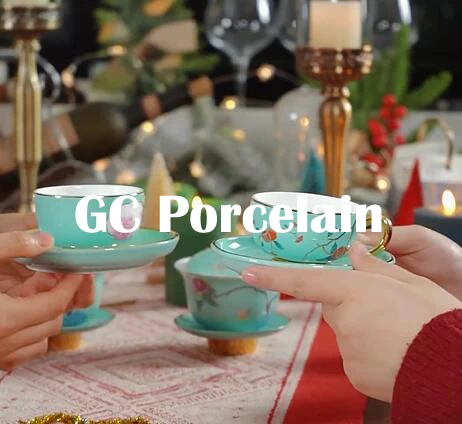

In the realm of art and craftsmanship, few things embody the fusion of tradition and culture as beautifully as Japanese porcelain china. These delicate pieces are not just artifacts; they are a harmonious blend of centuries-old craftsmanship and a cultural identity that has evolved over time. This article takes you on a journey through the captivating world of Japanese porcelain china, exploring its historical development, the elegance of simplicity it exudes, its integral role in traditional ceremonies, and the seamless integration of modern interpretations.
Craftsmanship Through Time: A Historical Odyssey
The evolution of Japanese porcelain china is a story of artistry that spans centuries. It's fascinating to trace the journey from its humble beginnings influenced by Chinese porcelain to the emergence of distinct Japanese styles. The early adoption of Chinese techniques led to the creation of iconic Japanese porcelain styles, such as Arita and Imari ware. These styles became known not only for their beauty but also for the unique artistic expressions they offered.
Elegance in Simplicity: Embracing Wabi-Sabi
One of the defining characteristics of Japanese porcelain china is its understated elegance, a quality deeply rooted in the Japanese aesthetic philosophy of wabi-sabi. This worldview celebrates imperfection, finding beauty in the natural and the transient. Japanese porcelain china embodies this philosophy through its unpretentious designs and muted color palettes. Each piece carries the marks of human hands and the passage of time, reminding us of the fleeting nature of existence.
Influence on Ceremonies: Where Craft Meets Tradition
Japanese porcelain china is intricately woven into the fabric of traditional Japanese ceremonies, most notably the revered tea ceremony. In these rituals, every aspect is carefully considered, from the selection of the tea to the vessels used. Japanese porcelain china plays a central role in these ceremonies, providing a canvas for cultural expression and an embodiment of hospitality. The delicate cups and pots enhance the sensory experience, elevating the ritual to an art form.
Modern Interpretations: Bridging the Past and Present
While Japanese porcelain china has a rich history, it doesn't remain confined to the past. Contemporary artists and designers continue to breathe new life into this tradition, reinterpreting its forms and patterns to resonate with modern sensibilities. The fusion of modern aesthetics with traditional craftsmanship is a testament to the enduring relevance of Japanese porcelain china. This evolution ensures that these delicate pieces remain relevant in a rapidly changing world.
Conclusion: The Harmony of Craft and Culture
Japanese porcelain china is more than just ceramics; it's a bridge that connects craftsmanship with cultural identity. It carries the echoes of generations of artisans who have poured their skills and passion into each piece. At the same time, it reflects a culture that values simplicity, imperfection, and the art of mindful living.
As we gaze upon a Japanese porcelain cup or dish, we're not just observing a utilitarian object; we're witnessing the convergence of history, art, and cultural heritage. In each brushstroke and glaze, we see the hands of artisans who have shaped the narrative of this craft. In the fusion of craft and culture, Japanese porcelain china becomes a vessel that transports us through time, inviting us to explore the rich tapestry of a nation's artistic journey.



























Sign in to leave a comment.