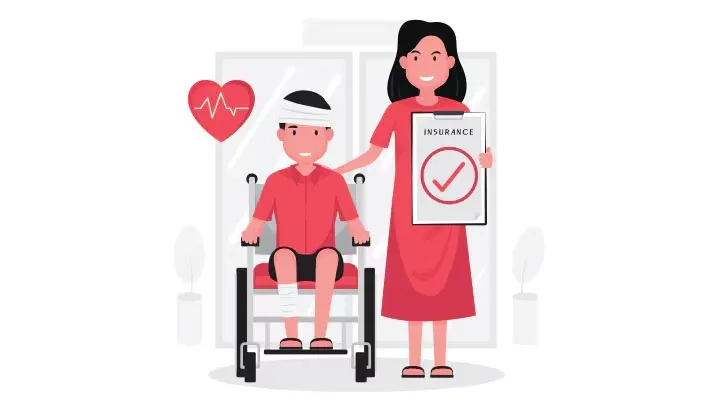

The Kerala High Court ruling on personal accident insurance in motor accident claims has established clarity in an area that often leaves insurance policyholders apprehensive. The judgment addresses whether the statutory compensation provided under motor accident claims can be adjusted against benefits derived from a personal accident insurance policy. This article delves into the industry's standard practices concerning personal accident insurance, group personal accident insurance, and their intersection with motor accident compensation.
Understanding Personal Accident Insurance
Personal accident insurance serves as a critical financial safeguard for individuals in case of accidental injuries, permanent disabilities, or death arising from unforeseen incidents. It ensures compensation to policyholders or their beneficiaries without being contingent on culpability or fault. Predominantly, this insurance provides a lump-sum payment enabling policyholders to manage medical expenses or sustain their livelihood after an accident.
Unlike traditional health insurance policies, personal accident insurance focuses on providing coverage specifically for accidents. Its benefits are accessible even in situations outside the purview of motor accident coverage, making it indispensable for individuals exposed to occupational or lifestyle risks. Policyholders invest in this coverage with the assurance that they will receive direct financial help during distress without deductions or conditions linked to other insurance claims they may file.
The Framework of Group Personal Accident Insurance
Group personal accident insurance is an industry-standard practice offered by employers or organizations to ensure collective coverage for employees or specified groups. Serving as an affordable alternative to individual plans, this policy operates under similar principles of accident-specific coverage but provides benefits on a group basis. Group personal accident plans are cost-effective due to pooled risk distribution and wide participation, making it ideal for corporates, institutions, or associations where multiple individuals require coverage.
While group personal accident insurance mirrors individual policies in terms of standard inclusions like compensation for accidental death or disability, it is critical to note that the benefits provided under these plans belong solely to the policyholder. In industries with a high likelihood of workplace accidents, group personal accident insurance acts as a fundamental pillar of financial support.
Motor Accident Compensation and Its Purpose
Motor accident compensation arises when victims of motor vehicle accidents claim statutory or legal compensation for damages sustained in the incident. Motor insurance policies include third-party liability cover, designed to address financial recovery for victims who have suffered injuries or property damage caused by the insured vehicle.
The Motor Vehicles Act in India emphasizes mandatory third-party insurance policies to protect accident victims against financial losses. Such statutory compensation is governed strictly by prescribed law, ensuring coverage for individuals irrespective of their social or financial circumstances. Compensation amounts determined by motor accident claims may often differ from contractual benefits offered under private personal accident insurance policies, creating complexities for policyholders attempting to reconcile the two forms of financial awards.
Kerala HC Clarifies the Non-Deductibility of Personal Accident Cover
The Kerala High Court's decision has reinforced the stance that benefits under personal accident insurance cannot be deducted from motor accident compensation amounts. The ruling emphasizes that statutory compensation is paid to victims due to legal liability arising from automobile accidents, while personal accident insurance is a voluntary contractual insurance purchased by individuals for added protection.
This judgment is pivotal because it removes the ambiguity that sometimes exists when insurers attempt to offset statutory compensation with benefits derived from personal contracts, which are independent of motor accident claims. The court clearly distinguished between the two forms of compensation: motor accident claims arise under statutory law, while personal accident insurance serves as a distinct contractual payment. As such, these two sources of compensation cannot be intertwined or treated as substitutes for one another.
Standard Industry Practices and Their Implications
The insurance sector globally adheres to certain best practices in handling personal accident insurance and motor accident compensation claims. These include:
- Non-adjustment of Independent Policies: Insurers do not typically deduct personal accident insurance payouts from motor accident claims. Payments under personal accident insurance remain independent as they are contractual benefits acquired through premiums paid by the policyholder.
- Prompt Processing of Claims: One hallmark of insurance industry standards is timely processing and payment of claims. Both statutory compensation and personal accident insurance payouts are typically processed expeditiously to provide the necessary financial assistance when it is most needed.
- Clear Policy Terms: Insurers are obligated to issue transparent policy documents to eliminate confusion regarding coverage, exclusions, or the interaction between various types of insurance policies. Policyholders, for their part, should be aware of the distinctive purpose behind personal accident insurance and statutory motor accident compensation claims.
- Distinctive Nature of Coverage: Standard practices dictate that motor insurance and personal accident insurance cater to separate objectives. Motor insurance is designed to protect against the financial consequences of vehicle-related incidents, whereas personal accident insurance coverage extends to any accidental event regardless of the circumstances or cause.
- Legislative Mandates on Third-Party Liability: The emphasis on mandatory third-party motor insurance is underscored by legislative frameworks worldwide to protect individuals from financial hardship due to accidents caused by insured vehicles. As personal accident insurance is not legally mandated, it operates in a voluntary realm, further highlighting its standalone nature.
Significance of the Kerala HC Ruling
The Kerala High Court's judgment reiterates the necessity of distinguishing between statutory financial obligations and contractual rights. Its significance resonates across multiple spheres—the legal, insurance, and consumer domains. For policyholders, this ruling bolsters confidence in personal accident insurance as an independent entity that delivers untethered financial relief, regardless of other compensations they may receive.
For insurers, the judgment provides a clearer framework for assessing claims and ensures uniform treatment across varied compensation cases. By separating statutory motor accident claims from contractual personal accident insurance benefits, insurers can streamline claims management without creating misunderstandings with policyholders.
Consumer Awareness: A Crucial Aspect
While the Kerala HC judgment is a milestone in legal clarity, it is also a call to action for consumers to better understand their policies. In the evolving insurance landscape, individual policyholders must educate themselves on the nuances of personal accident insurance and group personal accident cover. It is imperative to know details such as:
- Coverage Limits: Understand the maximum amount payable under personal accident insurance policies to ensure you secure adequate coverage suited to your requirements.
- Exclusions: Familiarize yourself with scenarios that may not be eligible for compensation under personal accident insurance—such as injuries resulting from intoxication, self-inflicted harm, or non-accidental causes.
- Overlap of Policies and Claims: Be aware of the limitations and independent nature of each insurance policy. Your personal accident insurance cover will not reduce statutory compensation, and vice versa.
- Employer-provided Group Policies: For those covered under group personal accident insurance, verify the terms of the group policy to understand what circumstances activate your entitlement to compensation.
The Road Ahead for the Insurance Industry
The Kerala HC judgment is expected to influence the insurance sector as insurers align their policies and practices with the legal principle outlined in the ruling. It may also encourage companies to issue clearer policy documentation to ensure a better understanding of personal accident insurance among consumers.
Insurance standards may experience refinements with improved communication about overlaps between motor accident compensations and personal accident insurance coverage. This will further enhance consumer trust while simplifying the claims process. Furthermore, with growing legal clarity, insurers are likely to offer innovative personal accident insurance products tailored to evolving consumer needs without concerns of offsets or deductions against statutory compensations.
Conclusion
The Kerala HC ruling serves as a crucial precedent, affirming that personal accident insurance benefits remain a separate compensation mechanism irrespective of motor accident claims. As contractual benefits, they provide independent financial support, ensuring policyholders receive the full measure of protection they paid for. By drawing a clear line between statutory motor accident compensation and personal accident insurance benefits, this judgment importantly safeguards policyholders' fiscal rights while contributing to broader clarity in the insurance industry's operational framework.
For individuals and institutions alike, understanding the distinction between personal accident insurance and motor accident compensation claims is essential for making informed decisions regarding insurance coverage. With greater awareness and adherence to industry best practices, policyholders can unlock the full benefits of their insurance investments without jeopardizing potential payouts or facing unwarranted adjustments through group personal accident or individual plans.































Sign in to leave a comment.