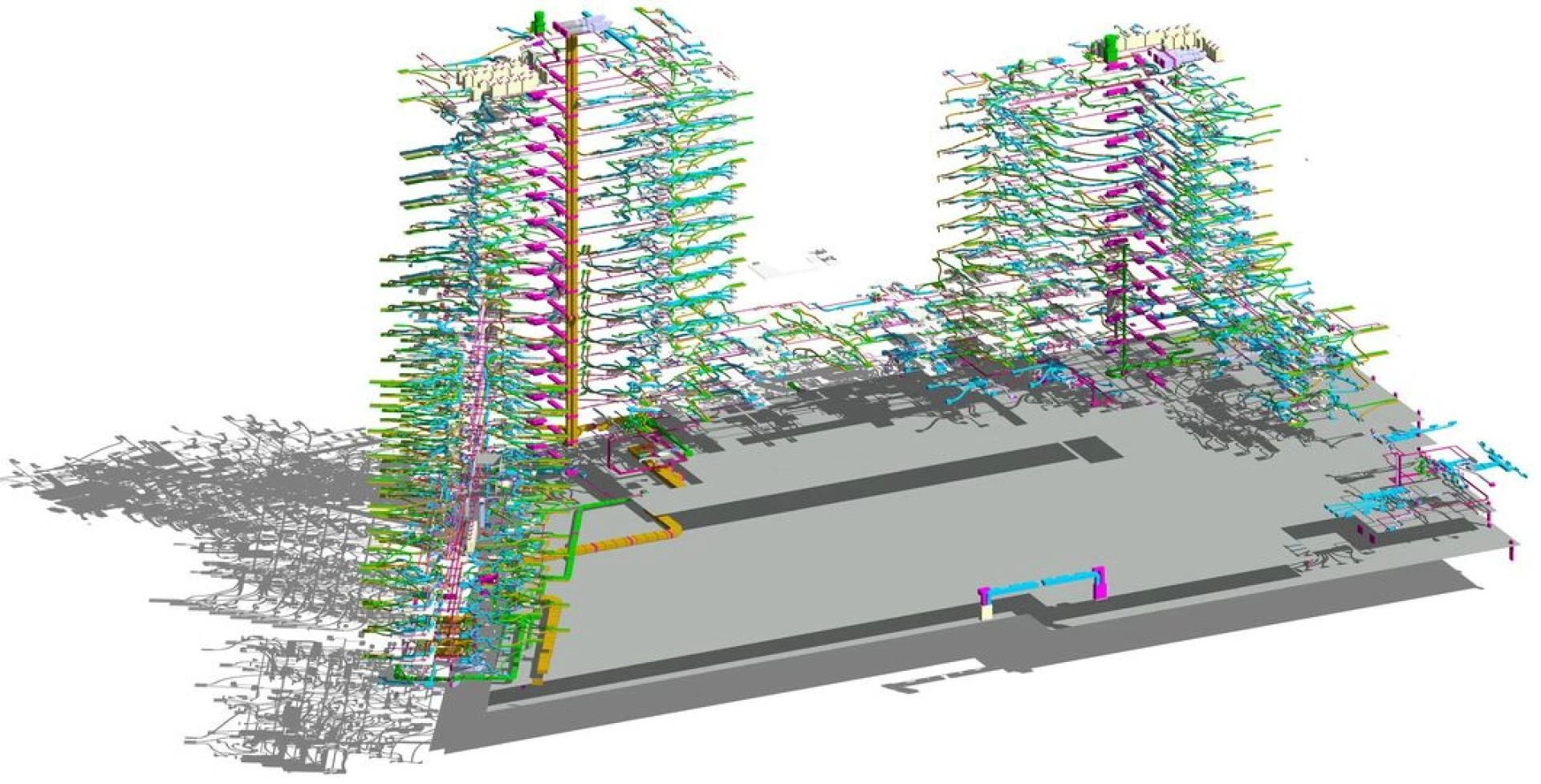

The design and construction world is transforming as rapidly as many other sectors, and Building Information Drafting (BID) and Building Services Coordination (BSC) have emerged as revolutionary tools, redefining traditional design, build, and management approaches for ease of use, seamless communication between all parties and significant cost efficiency. Their implementation has become integral to modern construction projects, offering a digital illustration of a building's physical and functional characteristics that have, since their inception, transformed how buildings are designed, constructed, and project managed.
What is Building Information Drafting (BID)?
Building Information Drafting, also known as building information modelling (BIM), involves creating digital representations of the physical and functional characteristics of a building. BIM utilises advanced software tools to generate intelligent 3D models that can be used for architectural planning, structural design, MEP (mechanical, electrical and plumbing) coordination, and facilities management. It is a collaborative process involving all project stakeholders' input, including architects, engineers, contractors, and owners.
Let's explore the key aspects of Building Information Drafting and their revolutionary impact on the construction industry.
3D Modelling: The New Dimension in Building Design
3D Modelling in BID is a powerful means of offering a visual and realistic representation of the building during the initial design stages. Unlike 2D drafting, it presents a comprehensive view of the building from various angles and incorporates all aspects of a construction project. It allows for real-time alterations and observations, offering room for creativity and precision, and ultimately, it reduces the chances of potential design errors and costly reworks.
Collaboration: Bridging the Communication Gap
BID and BSC, through their integration, have enhanced multi-disciplinary collaboration by leaps and bounds. The platforms connect all stakeholders, including architects, engineers, constructors and owners, to promote seamless communication and improved decision-making. It provides a shared workspace, fostering collective intelligence and reducing miscommunication and misunderstandings. This leads to a more efficient construction process where adaptations to a project can be applied, simulated and tested in real time before implementation, reducing the risk of delays and budget overruns.
Information Integration: The Centralized Approach
With BID, every minute detail of the structure, from design details to cost factors, is integrated into one single model. The centralised approach facilitates easy access to data for all stakeholders, ensuring transparency, consistency, and convenience. It eliminates data redundancy and ensures that all information is updated and consistent across all parts of the project and accessible to everyone involved.
Parametric Design: A Shift to Flexibility
Parametric Design is another significant aspect of BID, making it a powerful tool in modern construction. It lets designers quickly adjust and update design elements based on parametric rules and relationships. This flexible approach allows for alterations even in the advanced design stages, enhancing project efficiency and reducing the time and cost involved in late-stage changes.
Clash Detection: Pre-empting Potential Conflicts
Clash Detection in BID identifies and resolves conflicts between different building components in the design stage. This preemptive approach prevents costly mistakes during construction and reduces the need for rework. It ensures that all parts of the design are compatible, thus promoting a smooth and hassle-free construction process where a bird's eye view of the project can be achieved, and any potential clashes can be resolved before they become costly mistakes.
Quantity Takeoff: Optimising Resources
With BID, Quantity Takeoff becomes a more streamlined process. It provides accurate and efficient material estimation, reducing wastage and ensuring the optimal use of resources. It helps constructors plan their purchases better, leading to improved budgeting and sustainable practices.
Construction Sequencing: Timely and Efficient Project Delivery
Construction Sequencing tools in BID visualise the project timeline in a way that traditional methods cannot. It allows for better project management, timely completion, and efficient resource allocation. Providing a visual representation of the construction sequence helps stakeholders anticipate potential issues and adjust their plans accordingly.
Cost Estimation: Accurate Financial Planning
Cost Estimation in BID goes beyond traditional methods by providing a clear and detailed financial blueprint for the project. It considers all potential expenses, helping stakeholders plan their budgets effectively. It ensures that projects remain financially viable and that all costs are considered from the start. Any amendments made can have the budget easily updated to mitigate the chances of financial surprises later on.
Cost Efficiency: Streamlining Project Management
BIM tools enhance efficiency by streamlining project management processes and minimising costs. With real-time information sharing and collaboration, any clash detection or design discrepancies can be identified early in the process, avoiding changes later that can run into significant unplanned expenses. BID also allows for accurate quantity forecasting, thus reducing outlay and waste.
Sustainability Analysis: Building for a Sustainable Future
Sustainability Analysis in BID plays a critical role in modern construction. It helps evaluate the building design's environmental impact and identifies ways to improve the plan. Considering sustainability at the design stage ensures that buildings are energy-efficient, resource-efficient, and environmentally friendly.
Facility Management: Efficient Post-Construction Operation
Facility Management with BID ensures efficient building operation and maintenance post-construction. Providing a comprehensive view of the building's operations helps in the efficient management of resources and facilities, thereby reducing operating costs and ensuring the longevity of the building.
Standardisation: Consistency Across Projects
Standardisation in BID improves consistency, reduces errors, and enhances communication. Standardised templates and procedures ensure that all stakeholders are on the same page, leading to high-quality outcomes and increased productivity.
Training and Education: Empowering the Workforce
Proper Training and Education are crucial for the effective adoption of BID. It ensures that all parties can leverage its potential and are up to date with the latest tools and techniques. Training ensures that the workforce is equipped to handle the complex aspects of BID, thereby improving overall project outcomes.
Legal and Contractual Considerations: Navigating Legal Complexities
BID often challenges traditional contractual relationships, making legal and contractual considerations critical. It ensures that all contractual terms are clear and that all parties know their rights and responsibilities. It helps navigate the legal complexities of modern construction projects, providing a greater likelihood the project will be a smooth and conflict-free operation.
Data Security: Protecting Confidential Information
With BID, sensitive project information is stored and shared digitally, making Data Security a top priority. It ensures that all data is protected through robust security measures and access controls. It also reduces the risk of data loss and theft, providing stakeholders with peace of mind.
Conclusion
BIM Integration in modern construction has revolutionised how buildings are designed, built, and managed. It has become essential for improving project outcomes and promoting stakeholder collaboration. Its benefits extend beyond the construction phase, making it a long-term investment in the industry's future. With proper implementation and training, BIM Integration is transforming the construction industry into a more efficient, sustainable, and collaborative space. So, it's safe to say that BIM Integration is the future of modern construction and that the industry's future is exciting thanks to this technology.
With the assistance of the BIM experts at Drafttech, you can start leveraging this technology today to streamline projects, reduce costs, and promote sustainable practices. Contact us today to learn more about our BIM Integration services and how we can help take your projects to the next level.





























Sign in to leave a comment.