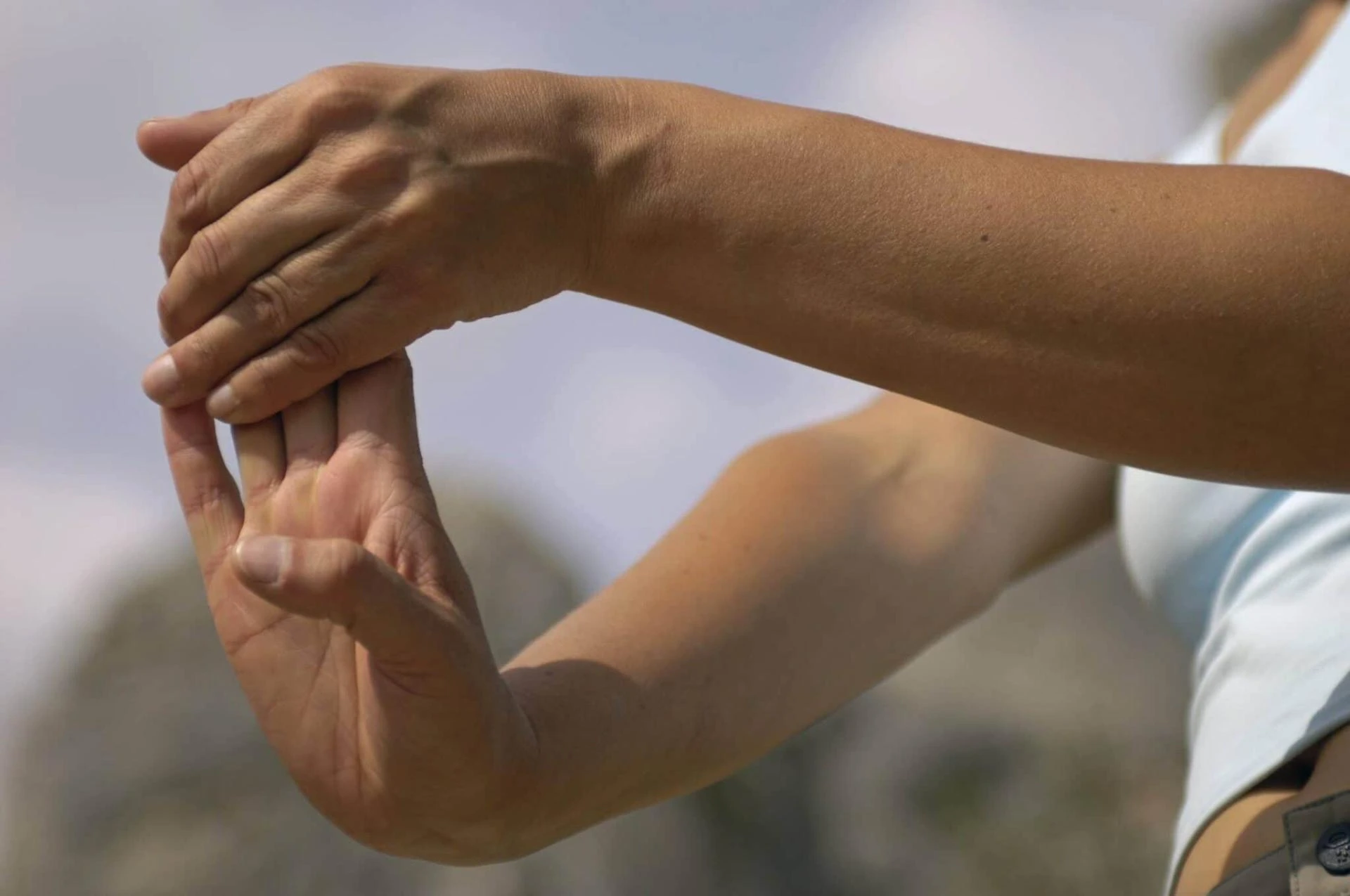

Dupuytren's disease is a medical condition that affects the tissues of the hand—the rubbery layer of flesh that lies under the skin in the palm and the fingers. Patient's suffering from Dupuytren's experience thickening of fascia that starts to tighten over time. This causes the fingers of your hands to bend inward towards the palm, resulting in "Dupuytren's contracture."
In some cases, the worsening Dupuytren's contracture restricts the hand movement, making it hard for them to complete their daily activities. When this happens, there is a different surgical and nonsurgical treatment for Dupuytren's to help slow down the development of the disease and recover the movement in the affected fingers.
Explanation
The fascia is the sheet of tissue that help to stabilize and anchor the skin on the palm. With no fascia, the skin of the palm would get loose. Instead, the patient's suffering from Dupuytren's disease experience thickening and tightening of the palmar fascia.
Commonly, Dupuytren's is detected when the lumps of tissue are formed under the skin in the palm. The formation of the pit follows this on the surface of the palm as the affected tissues pull the covering skin.
As Dupuytren's develops, a layer of the tissues in the palm starts to get thick affecting one or more fingers to bent towards the palm. This is known as "Dupuytren's contracture." Although the lumps in the palm look like muscles, the muscles are not involved in Dupuytren's.
In other cases, a Dupuytren's contracture develops very slowly over the years and remain mild enough that no treatment is required. However, the condition makes it hard to straighten the fingers in severe cases. When this happens, treatment is required to help lessen the contracture and enhance the motion of the affected fingers. Usually, as a condition worsens, the tissue involvement becomes more severe, and the treatment possibly can't bring full correction.
Cause
The cause of this medical condition is not entirely known, but in most evidence, it is seen that genetics has the most important role.
Different studies show the emergence and worsening of Dupuytren's after the patient experiences hand injury or an open wound to their hand; however, there is no good evidence to support this. There is also no convincing evidence that it happens by overuse of the hand.
Risk Factors
Several reasons contribute to the growth and worsening of Dupuytren's disease, including:
Gender. Men are more expected to suffer from this condition than women.
Ancestry. People of northern European and Scandinavian ancestry are likely to develop the condition.
Heredity. Dupuytren's frequently runs in families.
Alcohol use. Drinking a lot of alcohol is linked with Dupuytren's.
Certain medical conditions. People suffering from diabetes and seizure are likely to have Dupuytren's.
Age. The occurrence of this medical condition increases with age.
Symptoms
A Dupuytren's contracture usually develops very slowly over some time. Signs of the condition include:
Nodules. You develop one or more small nodules or lumps in the palm of your hand. These nodules are usually fixed to the covering of the skin. Firstly, the nodules feel tender but, with time, this soreness goes away. There is development or a deep dent of the skin near the nodules in many cases.
Cords. The nodules thicken and contract, contributing to the pit formation and hard cords of tissue under the skin. These cords restrict the fingers from straightening or from spreading apart.
Treatment
There is no proper cure for Dupuytren's; however, the condition is not that life-threatening.
Although Dupuytren's contracture treatment differs from patient to patient, it generally progresses slowly and may not become upsetting for years. Unfortunately, however, this condition never progresses beyond developing lumps in the palm in some patients.
If the condition progresses, your doctor may recommend nonsurgical treatment to help slow the disease.
Nonsurgical treatment
Steroid injection. Adrenal cortical steroid is a strong anti-inflammatory tablet that are injected into the painful nodule. In some cases, an adrenal cortical steroid injection slows down the development of the condition. The effectiveness of a injection differs from patient to patient.
Splinting. Splinting is known to prevent the development of finger contracture. Strong stretching of the affected finger is not helpful, and it causes an injury in the finger or hand.
Splinting is the major Dupuytren's contracture home treatment used after surgery to protect the surgical area; however, it is not known if this reduces the risk of recurring contracture and tightening the healing wound.
Surgical treatment
If the contracture restricts hand function, your doctor will recommend surgical treatment. The goal of this Dupuytren's contracture therapy is to lessen the contracture and recover movement of the affected fingers.
Though there is no exact cure for Dupuytren's contracture, surgery aims to "set back the clock" by reducing the confining effect of the cords and nodules by either unsettling or removing them. Inappropriately, the healing of tissues forms the same potential to develop cords in the future, but it helps bring back the hand function that is still substantial.
The surgical Dupuytren's contracture treatment is commonly performed are:
Fasciotomy
Subtotal palmar fasciectomy
Your doctor will let you know which treatment is best in your case, depending on the severity of your symptoms.




























Sign in to leave a comment.