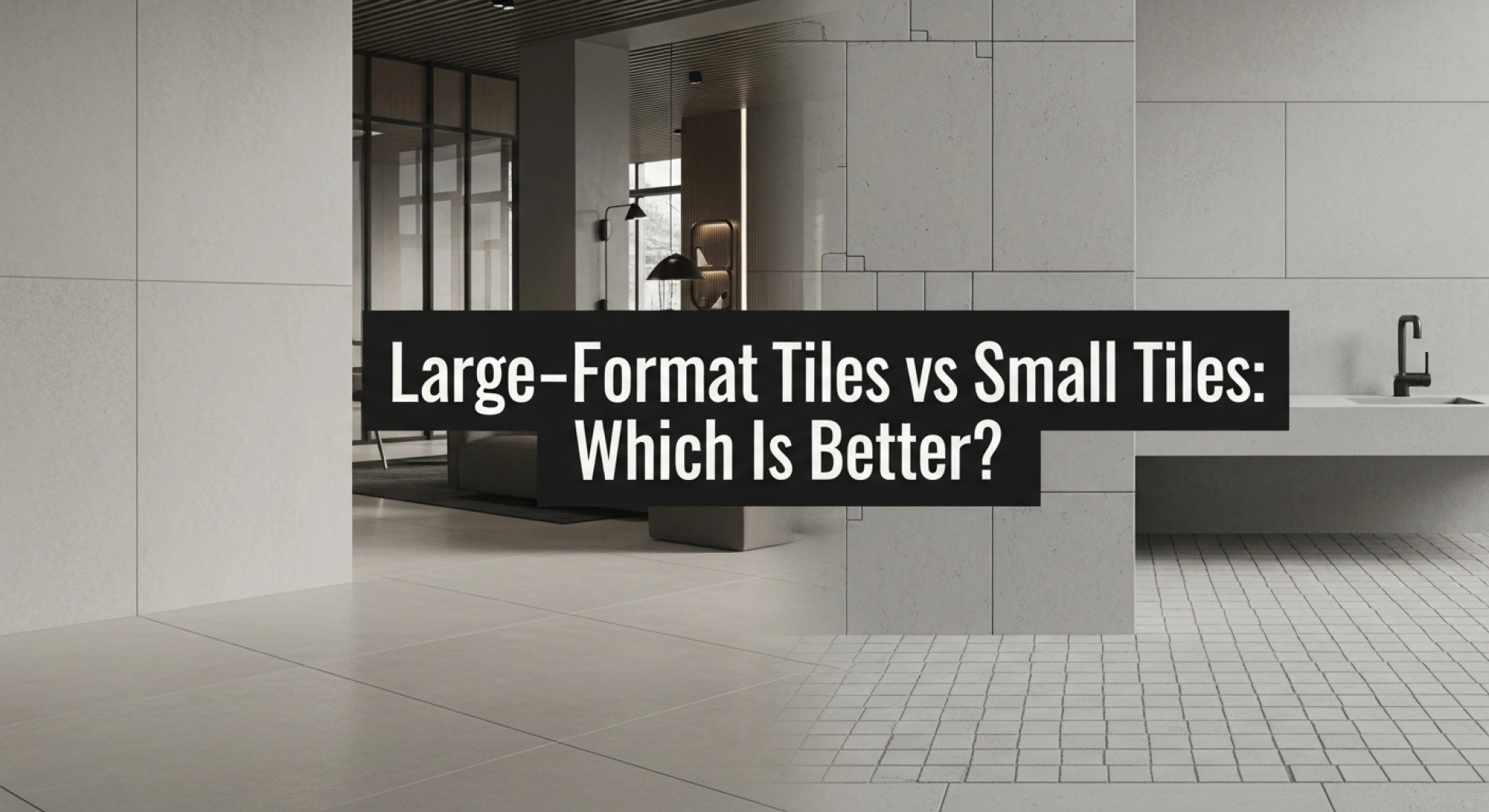

Choosing between large-format tiles and small tiles is a common decision point in residential and commercial flooring projects. Each option has its own advantages, and the right choice depends on factors such as space size, usage, maintenance needs, and installation conditions.
With the growing demand for modern flooring, large-format porcelain tiles are increasingly compared with traditional smaller tiles to determine which performs better in real-world applications.
Understanding Large-Format Tiles
Large-format tiles generally refer to tiles with one side longer than 600 mm. Sizes like 1200x1200 mm and 800x1600 mm are widely used in contemporary construction.
Projects sourcing materials from a 1200x1200 porcelain tiles manufacturer in Iraq often choose large formats because they create a clean, continuous surface with fewer grout lines. This helps improve both visual consistency and long-term maintenance.
Large-format tiles are commonly used in:
- Commercial halls and office floors
- Shopping malls and retail spaces
- Large residential living areas
When Small Tiles Make More Sense
Small tiles are easier to handle, transport, and install, especially in compact or irregular spaces. Bathrooms, balconies, and areas with multiple corners often benefit from smaller tile formats.
Because they have more grout joints, small tiles can provide better slip resistance in wet areas. They are also more forgiving during installation when surface leveling is not perfect.
Practical Comparison: Performance and Maintenance
One of the biggest differences between large and small tiles is maintenance. Larger tiles mean fewer joints, which reduces dust accumulation and cleaning effort.
For mid-large formats, many contractors prefer sourcing from an 800x1600 porcelain tiles supplier in Iraq, as this size balances ease of installation with the visual benefits of larger tiles.
From a durability perspective:
- Both formats perform well when properly installed
- Tile thickness and material quality matter more than size
- Correct adhesive and leveling are critical for large tiles
Common Mistakes When Choosing Tile Size
A frequent mistake is selecting tile size based only on appearance. Large tiles may look modern, but they require skilled installation and proper surface preparation.
Another issue is using small tiles in large open areas, which can create visual clutter due to excessive grout lines.
Understanding space layout, usage patterns, and maintenance expectations helps avoid these problems.
Which Tile Size Is Better Overall?
There is no single answer that fits every project. Large-format tiles work best in open, high-traffic areas where visual continuity and easy maintenance are priorities. Small tiles remain practical for compact spaces and areas requiring more flexibility.
Manufacturers like Rollence Granito focus on offering multiple tile sizes to suit different functional and architectural needs rather than promoting one option over the other.
Final Thoughts
Both large-format and small tiles have their place in modern construction. The better option depends on how the space is used, the level of foot traffic, and installation conditions.
Carefully evaluating tile size, finish, and technical specifications ensures better long-term performance and fewer maintenance issues, regardless of the format selected.

























Sign in to leave a comment.