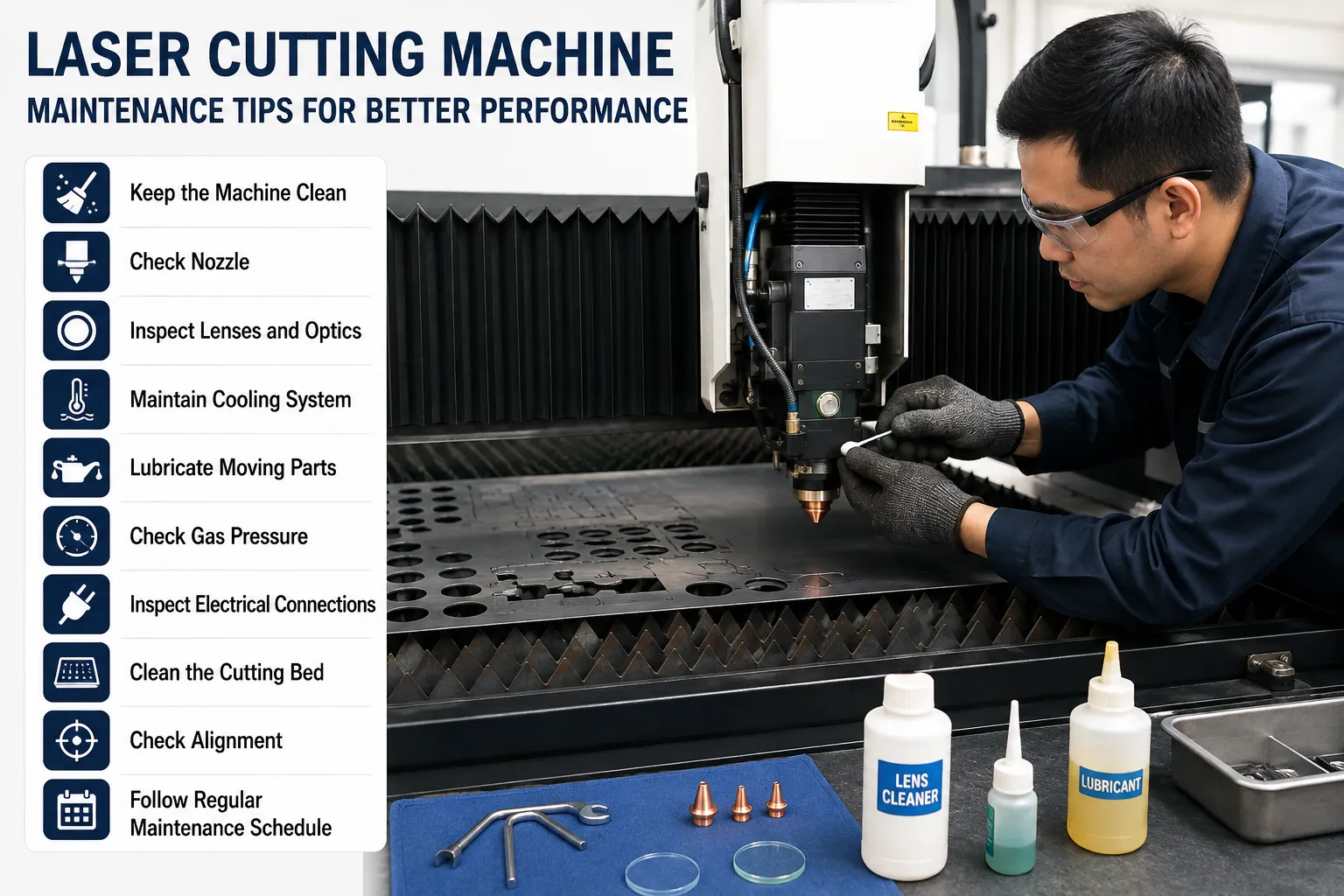

A laser cutting machine is a high-precision system designed to deliver fast, accurate, and consistent cutting across a wide range of industrial applications. However, even the most advanced laser cutting equipment requires proper maintenance to continue performing at its best.
Regular maintenance helps manufacturers reduce unexpected downtime, maintain cutting quality, extend machine life, and avoid unnecessary repair costs. Small issues such as dirty optics, poor lubrication, incorrect gas pressure, or accumulated dust can gradually affect machine performance if they are ignored.
A structured maintenance routine can keep the machine efficient, reliable, and ready for daily production.
Why Laser Cutting Machine Maintenance Is Important
Laser cutting machines operate with high-speed motion systems, precision optics, electrical components, cooling systems, and cutting gases. All these systems must work together correctly to maintain consistent cutting performance.
Without proper maintenance, businesses may experience problems such as:
- Poor cutting quality
- Rough or uneven edges
- Reduced cutting speed
- Increased material waste
- Machine overheating
- Unplanned production stoppages
- Higher repair expenses
- Reduced component life
Preventive maintenance allows operators to identify small problems before they turn into major failures.
1. Keep the Machine Clean
Cleanliness is one of the most basic but important parts of laser cutting machine maintenance.
Dust, metal particles, smoke residue, and debris can accumulate around the cutting area, guide rails, protective covers, sensors, and other machine components.
Operators should regularly clean:
- Cutting bed
- Machine enclosure
- Guide rails
- Sensors
- Dust collection areas
- Nozzle surroundings
- Protective windows
- Ventilation areas
Keeping the machine clean helps maintain smoother movement and prevents contamination from affecting sensitive components.
2. Check the Laser Cutting Nozzle
The nozzle plays a key role in directing assist gas toward the cutting area.
A damaged, dirty, or incorrectly positioned nozzle can affect the laser beam alignment and cutting quality.
Operators should inspect the nozzle for:
- Dirt or contamination
- Physical damage
- Incorrect alignment
- Burn marks
- Deformation
If the nozzle is damaged, it should be replaced with the correct type and size recommended for the cutting application.
Maintaining the nozzle properly can help improve cutting consistency and reduce defects.
3. Inspect Protective Lenses and Optics
Optical components are extremely important in laser cutting systems.
Dust, smoke, oil, or metal particles on protective lenses can reduce laser transmission and negatively affect cutting performance.
Optical components should be inspected according to the manufacturer's recommended schedule.
When cleaning lenses, operators should use approved cleaning materials and proper handling techniques.
Touching optical surfaces directly with fingers should generally be avoided because oils and dirt can damage or contaminate sensitive surfaces.
Regular optical inspection helps maintain laser efficiency and consistent beam quality.
4. Maintain the Cooling System
Laser cutting machines generate significant heat during operation.
The cooling system helps maintain stable temperatures for the laser source and other critical components.
Operators should regularly monitor:
- Coolant level
- Water quality
- Cooling temperature
- Chiller performance
- Filters
- Pipes and connections
If coolant becomes contaminated or the cooling system stops working correctly, the machine may overheat and experience performance problems.
Cooling system maintenance is therefore essential for machine reliability.
5. Check Lubrication Regularly
Laser cutting machines contain moving mechanical components that require proper lubrication.
Guide rails, bearings, gears, and transmission systems should receive the correct type and quantity of lubricant.
Insufficient lubrication can increase friction and wear.
Too much lubrication can also attract dust and contamination.
Follow the machine manufacturer's maintenance schedule for lubrication intervals and recommended lubricant specifications.
Proper lubrication helps ensure smoother movement and can extend the life of mechanical components.
6. Inspect Guide Rails and Motion Systems
The motion system determines how accurately the laser cutting head moves across the material.
Guide rails and related components should be kept clean and properly maintained.
Operators should check for:
- Unusual noise
- Excessive vibration
- Uneven movement
- Dirt accumulation
- Loose components
- Signs of wear
Any irregular movement should be investigated quickly because motion problems can directly affect cutting accuracy.
7. Monitor Assist Gas Pressure
Assist gases are used during laser cutting to support the cutting process and remove molten material from the cut.
Common gases may include oxygen, nitrogen, or compressed air, depending on the application.
Incorrect gas pressure can cause:
- Poor edge quality
- Incomplete cutting
- Excessive slag
- Increased material waste
- Slower cutting speed
Operators should regularly inspect gas connections, pressure settings, regulators, and hoses.
Gas purity should also meet the requirements of the cutting process.
8. Check the Laser Beam Alignment
Correct beam alignment is essential for precision cutting.
If the laser beam becomes misaligned, operators may notice inconsistent cutting performance, reduced efficiency, or poor-quality edges.
Beam alignment should be checked when required by trained technicians.
In some machines, alignment systems may be automated, while others may require manual inspection.
Operators should follow the manufacturer's recommended procedure instead of attempting complex adjustments without appropriate training.
9. Inspect Electrical Connections
Laser cutting machines depend heavily on electronic control systems.
Loose electrical connections or damaged cables can create machine errors or unexpected shutdowns.
Electrical components should be periodically inspected for:
- Loose connections
- Damaged cables
- Burn marks
- Overheating
- Unusual smells
- Connector damage
Electrical maintenance should always be performed by qualified personnel following proper safety procedures.
10. Maintain the Exhaust and Dust Extraction System
Laser cutting produces smoke, fumes, dust, and fine particles.
A properly functioning exhaust and filtration system helps remove these contaminants from the cutting area.
Filters should be inspected and cleaned or replaced when necessary.
Blocked filters can reduce airflow and increase contamination inside the machine.
Effective extraction also helps create a cleaner and safer production environment.
11. Clean the Cutting Bed
The cutting bed supports the material during production.
Over time, molten metal and cutting residue can accumulate on the support slats.
Excessive buildup can interfere with material placement and affect cutting performance.
Operators should regularly remove slag and inspect damaged slats.
Replacing heavily worn support components can help maintain proper material positioning.
12. Monitor Cutting Quality
Cutting quality itself can be used as an early warning signal.
Operators should pay attention to changes such as:
- Increased burr formation
- Rough edges
- Incomplete cuts
- Excessive slag
- Wider kerf
- Burn marks
- Inconsistent dimensions
When cutting quality changes unexpectedly, the machine should be inspected before production continues.
Small quality problems may indicate issues with nozzles, optics, focus, gas pressure, machine settings, or material condition.
13. Keep Machine Software Updated
Modern laser cutting machines rely on sophisticated software and control systems.
Software updates may improve machine performance, fix known issues, or introduce new functionality.
Manufacturers should keep machine software updated according to supplier recommendations.
Before installing updates, businesses should ensure important machine settings and production files are backed up when necessary.
14. Follow a Preventive Maintenance Schedule
Maintenance should not depend only on visible problems.
A preventive maintenance schedule provides a structured approach to equipment care.
A typical schedule may include daily, weekly, monthly, quarterly, and annual inspections.
Daily Checks
Daily maintenance may include:
- Cleaning the work area
- Checking the nozzle
- Inspecting lenses
- Monitoring gas pressure
- Checking coolant levels
- Removing visible debris
Weekly Checks
Weekly inspections may involve:
- Cleaning guide rails
- Inspecting filters
- Checking lubrication
- Examining extraction systems
- Inspecting hoses and cables
Monthly Checks
Monthly maintenance may include:
- Detailed mechanical inspection
- Alignment checks
- Cooling system inspection
- Electrical connection checks
- Calibration verification
Major servicing should follow the manufacturer's recommended maintenance intervals.
15. Train Machine Operators Properly
Operator training is a major part of machine maintenance.
A trained operator is more likely to notice unusual machine behaviour before a breakdown occurs.
Operators should understand:
- Normal machine sounds
- Basic troubleshooting
- Cleaning procedures
- Correct cutting parameters
- Safety procedures
- Warning messages
- Daily inspection requirements
Proper training reduces operator errors and improves overall machine reliability.
16. Use Genuine or Recommended Spare Parts
When components need replacement, businesses should use suitable parts that match machine specifications.
Low-quality or incompatible parts can affect precision, reliability, and machine safety.
Common replacement items may include:
- Nozzles
- Protective lenses
- Filters
- Lubricants
- Cooling components
- Seals
- Sensors
- Electrical components
Using manufacturer-recommended parts can help maintain consistent machine performance.
17. Keep Maintenance Records
Maintenance records help manufacturers track machine condition and identify recurring problems.
A maintenance log can include:
- Inspection dates
- Components replaced
- Repairs performed
- Machine errors
- Cutting quality issues
- Service technician visits
- Lubrication schedules
These records provide useful information for preventive maintenance planning and future troubleshooting.
Benefits of Regular Laser Cutting Machine Maintenance
A consistent maintenance program can provide several operational benefits.
Better Cutting Quality
Clean optics, correct alignment, proper gas pressure, and smooth machine movement help maintain accurate cuts and clean edges.
Reduced Downtime
Preventive inspections allow businesses to identify potential failures before they stop production.
Longer Machine Life
Proper care can reduce unnecessary wear on critical components and extend equipment lifespan.
Lower Repair Costs
Small maintenance tasks are generally more economical than major emergency repairs.
Improved Productivity
A properly maintained machine can operate more consistently, helping manufacturers maintain stable production schedules.
Better Safety
Regular inspections can also help identify damaged electrical connections, blocked ventilation systems, and other potential safety concerns.
Conclusion
Regular maintenance is essential for keeping a laser cutting machine accurate, efficient, and reliable.
Cleaning the machine, inspecting nozzles and optics, maintaining the cooling and lubrication systems, checking gas pressure, monitoring cutting quality, and following a structured preventive maintenance schedule can significantly reduce operational problems.
Businesses should also train operators properly, maintain service records, and follow manufacturer guidelines for technical inspections and component replacement.
By investing in consistent maintenance, manufacturers can improve cutting performance, reduce downtime, control operating costs, and protect their equipment investment. Paratech Industries understands the importance of reliable laser technology and proper machine support for maintaining efficient modern manufacturing operations.
Frequently Asked Questions
1. How often should a laser cutting machine be maintained?
Basic cleaning and inspections should be performed regularly, often daily or weekly. More detailed servicing should follow the manufacturer's recommended monthly, quarterly, or annual maintenance schedule.
2. Why does laser cutting quality decrease over time?
Cutting quality can decline because of dirty lenses, damaged nozzles, incorrect gas pressure, poor focus, worn machine components, or alignment issues.
3. How can I extend the life of a laser cutting machine?
Regular cleaning, proper lubrication, cooling system maintenance, correct operating parameters, preventive servicing, and trained operators can help extend machine life.
4. What components require regular inspection?
Important components include nozzles, protective lenses, optics, guide rails, cooling systems, gas lines, filters, electrical connections, and the cutting bed.
5. Can poor maintenance increase operating costs?
Yes. Poor maintenance can lead to higher material waste, reduced cutting speed, unexpected downtime, frequent repairs, and premature component replacement.
























Sign in to leave a comment.