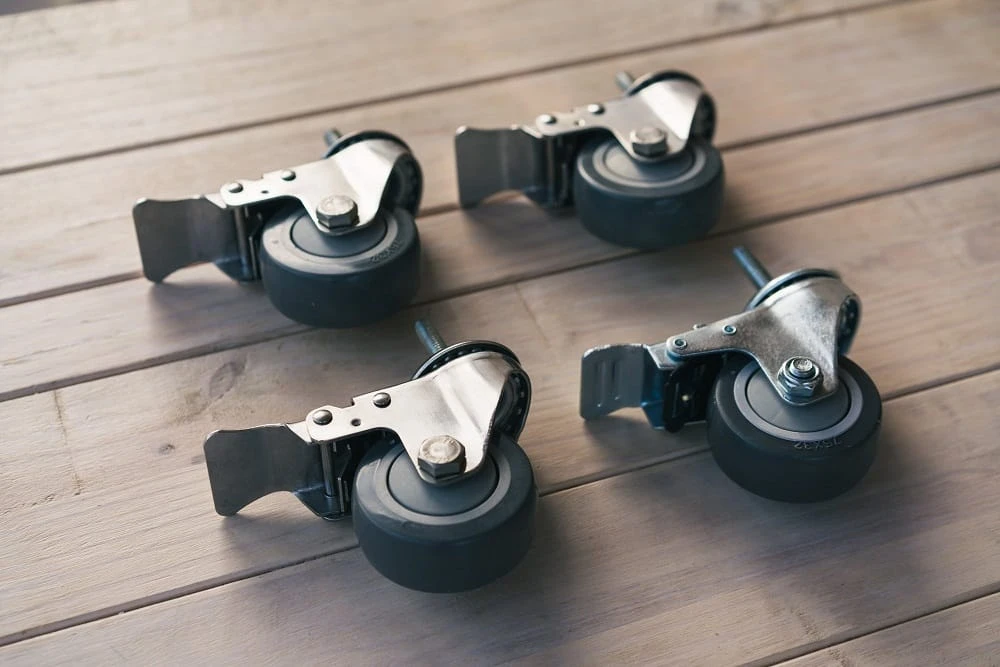

A caster wheel is a non-driven wheel that is attached to the bottom of a larger object. The wheel is designed to move the larger object from one place to another. There are three basic types of caster wheels: Removable caster wheels, Rubber Tired wheels, and V-groove wheels. Let's examine each of these types to better understand the purpose of these wheels. They are useful for moving objects around a room or across an entire floor.
Removable caster wheels
The Roura removable caster pad is a convenient solution for changing out sets of casters without a hassle. It attaches to the hardware of the furniture and slides the caster's base into grooves secured by a locking bolt. Removing the caster's pad is as easy as unscrewing the bolt. You can upgrade your casters and enjoy a new set of wheels with added functionality.
Demountable caster wheels are also available for heavy-duty applications. The caster wheels come with a heavy-duty corner bracket to protect your Zinger crates. Moreover, the casters themselves feature polyurethane tires with double-action braking. The engagement lever is designed to stop the wheel's swivel with ease. Moreover, roller bearings keep the crate rolling smoothly.
Polyolefin wheels
When it comes to caster wheels, polypropylene/polyolefin are the most popular and economical choice. They are lightweight and resistant to moisture, oils, and chemicals. Polypropylene wheels are generally the quietest option, but can be noisy in some environments. TPR wheels are also an affordable option, but are recommended for wet environments. Polypropylene wheels should not be used in environments with acid-containing solutions, such as cleaning fluids.
For heavy-duty use, polyolefin caster wheels are a good choice. These wheels are available in a variety of diameters, including 4", 5", and 6" wheel sizes. They are made with high-quality polyurethane foam to prevent rusting and other damaging effects from punctures. These wheels are also available in swivel designs for easier maneuverability.
Rubber Tired wheels
The most common types of caster wheels are rigid and rubber tired. The rigid type consists of a stationary fork with a wheel attached to the outer side. When mounted to a vehicle, the caster maintains traction along the straight path. Rubber tired caster wheels are not limited to this application. They are also a popular choice for a variety of other purposes, including cart wheels and rollers.
V-groove wheels
If you have to move heavy objects, a V-groove wheel may be the best solution for your needs. These wheels are available in different sizes, with sizes ranging from 7/8 to 1.75 inches. They are made from cast iron, forged steel, stainless steel, phenolic plastic, or inverted angle iron. When choosing a caster, a Colson representative will advise you on the correct caster for your application.
V-groove caster wheels are the most common type of caster wheel used in automotive and industrial shops. They are also used in garbage bins and office chairs. They are used for heavy-duty moving of cargo over steel or raised iron tracks. They have many uses, from automobile assembly to food processing, welding, and lumber processing. Due to their versatility, they are perfect for a variety of applications.
Metal components
Caster wheels are made of six common materials. Each has its own benefits and drawbacks. Here's a closer look at each of them. You might be surprised to find out which one is best for your needs. Find out why below. Here's a quick breakdown of each type of caster wheel. And if you're still confused, you can find a full list of their benefits here. So, what makes a caster wheel a good choice for your application?
Caster wheels were traditionally made from metal components. However, these days, you'll find caster wheels made entirely of plastic. These are more lightweight and durable, but still are not ideal for industrial settings, where they often bear heavy loads. Listed below are three types of caster wheels that are most suitable for your needs. For the most part, industrial casters are made from metal components. These wheels are highly resistant to chemicals and can withstand high loads.
Round tread wheels
When purchasing caster wheels, you will need to determine what type of tread you need. There are two basic types of tread: flat and crowned. Flat tread casters have the lowest friction, while crowned tread casters are harder and may not be suitable for all applications. If you are unsure of which type of tread you need, talk to a caster expert. They can recommend the best type for your application.
Rubber casters feature a special rubber tread that is chemically bonded to an aluminum core. The result is a smooth, quiet ride on uneven surfaces. This type of caster wheel also protects your floor from damage. These wheels are available in several sizes and treads. Listed below are the main differences between different types of rubber casters. You can also choose a caster wheel that has a softer tread for a more comfortable ride. For more info - castercentral.com.
0
0
0




























Sign in to leave a comment.