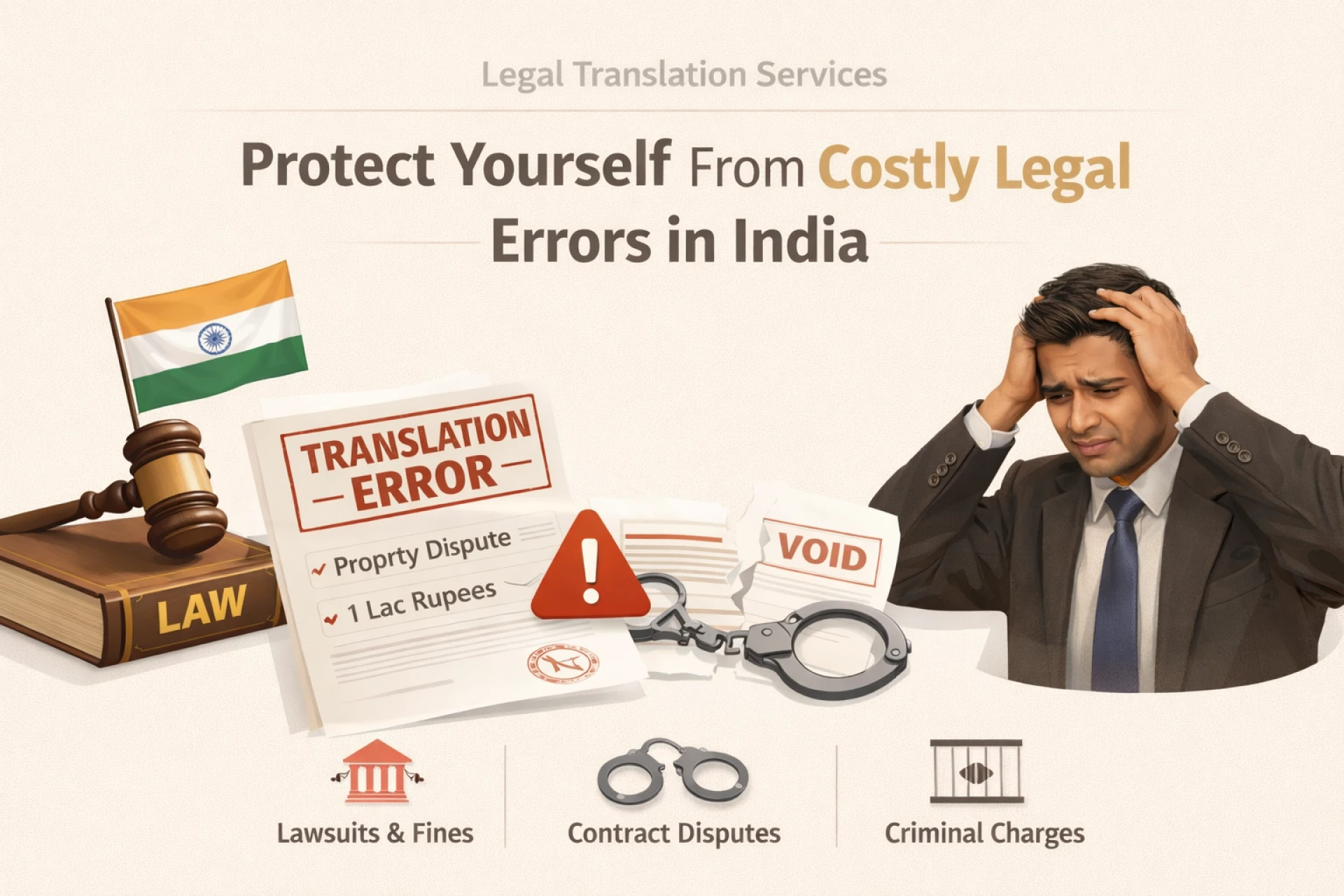

The Indian legal system is vast, containing thousands of laws, acts, and articles—we all know that. But did you know that the Indian law is also multilingual? It operates across a diverse linguistic landscape, including Hindi, English, and several regional languages. While this vastness reflects India’s exceptional diversity, it also creates a practical challenge. Courts, authorities, individuals, and law practitioners need to clearly understand the legal document. In India, where these documents can be in several languages, legal translation services play a vital role.
In this blog, we will discuss the necessity of legal translations in India, which documents need it, how notarization works, and how to choose the right service provider.
Legal Translation Services in Indian Law
The Indian Constitution recognizes 22 scheduled languages at the state and central levels. Legal proceedings, court cases, property registrations, contracts, and court submissions are often in one of these 22 languages. However, it is not necessary that all parties involved in a legal tussle speak the same language. Hence, accurate translation of legal documents is necessary. Without them, misunderstandings can arise, leading to delays, disputes, or even legal setbacks.
Legal document translation services help by:
- Ensuring clear communication between parties using different languages.
- Facilitating proper interpretation of rights, obligations, and liabilities.
- Complying with courts, government, and regulatory requirements.
For businesses, accurate translations protect commercial interests. For individuals, they ensure access to justice and fair representation.
Legal Documents That Commonly Require Translation
Legal translations are needed for personal, corporate, and judicial reasons. Some commonly translated documents include:
- Contracts and Agreements: Legal enforcements that are signed by different parties.
- Court Judgments and Legal Notices: Court notices that are to be enforced by the judiciary.
- Power of Attorney Documents: A highly sensitive document that grants authority to act on someone else’s behalf.
- Property Deeds and Sale Agreements: These documents safeguard the transfer of land or property to a different party.
- Affidavits and Declarations: Written statements of oaths that can be used in court or other institutions.
- Company Incorporation and Compliance Documents: Business documents that legalize a business with the Registrar of Companies (ROC).
- Wills and Trusts: A stamped declaration that transfers property or monetary funds to a different party.
Like translation, subtitling is also a vital part of the legal industry. Know more in our related blog: Legal Subtitling Explained: What Every Courtroom Must Know.
Understanding the Importance of Notarized Translations
Not all legal translations are the same; some official bodies need notarized translations to confirm the document’s authenticity. A notarized translation includes the translated document along with a signed statement from the translator or the agency, which is then verified by the public notary.
Notarization is important because:
- It confirms the translator’s credentials and whether they are certified to carry out a legal translation.
- Prevents fraud as it adds a layer of legal credibility to the translation.
- It makes documents acceptable to courts, embassies, and government offices.
- Creates voluntary consent. Importance for high-stakes documents such as wills and testimonies.
Notarized translations are often required in litigation, immigration, property matters, and internal legal transcriptions.
Certified vs. Notarized Legal Translations
While both are vital, they serve different purposes:
- Certified translations include a declaration of accuracy from the translator or the agency.
- Notarized translations go a step further by having that declaration authenticated by a notary.
Many institutions request certified legal translation services, while others specifically insist on notarization.
How to Find a Reliable Legal Translation Service in India?
Choosing a legal translation service in India is vital, as errors in translation can have serious consequences.
Always look for:
- Experienced and qualified legal translators
- Deep understanding of Indian legal terminology
- Strong quality assurance processes
- Data security and confidentiality
- Compliance with global standards
A trusted name in the Indian legal translation landscape is Somya Translators, an ISO 17100:2015-certified language service provider. We follow compliant workflows, work with experienced legal linguists, and practice extensive quality assurance steps for all legal translation projects.
When legal documents demand clarity, their translations require credibility. With Somya Translators, you can ensure all your legal translations are clear, accurate, compliant, and acceptable in every courtroom.
Are you looking for reliable legal translation solutions?
Reach out to us today!
Call: +91-9990094796
Email: [email protected]































Sign in to leave a comment.