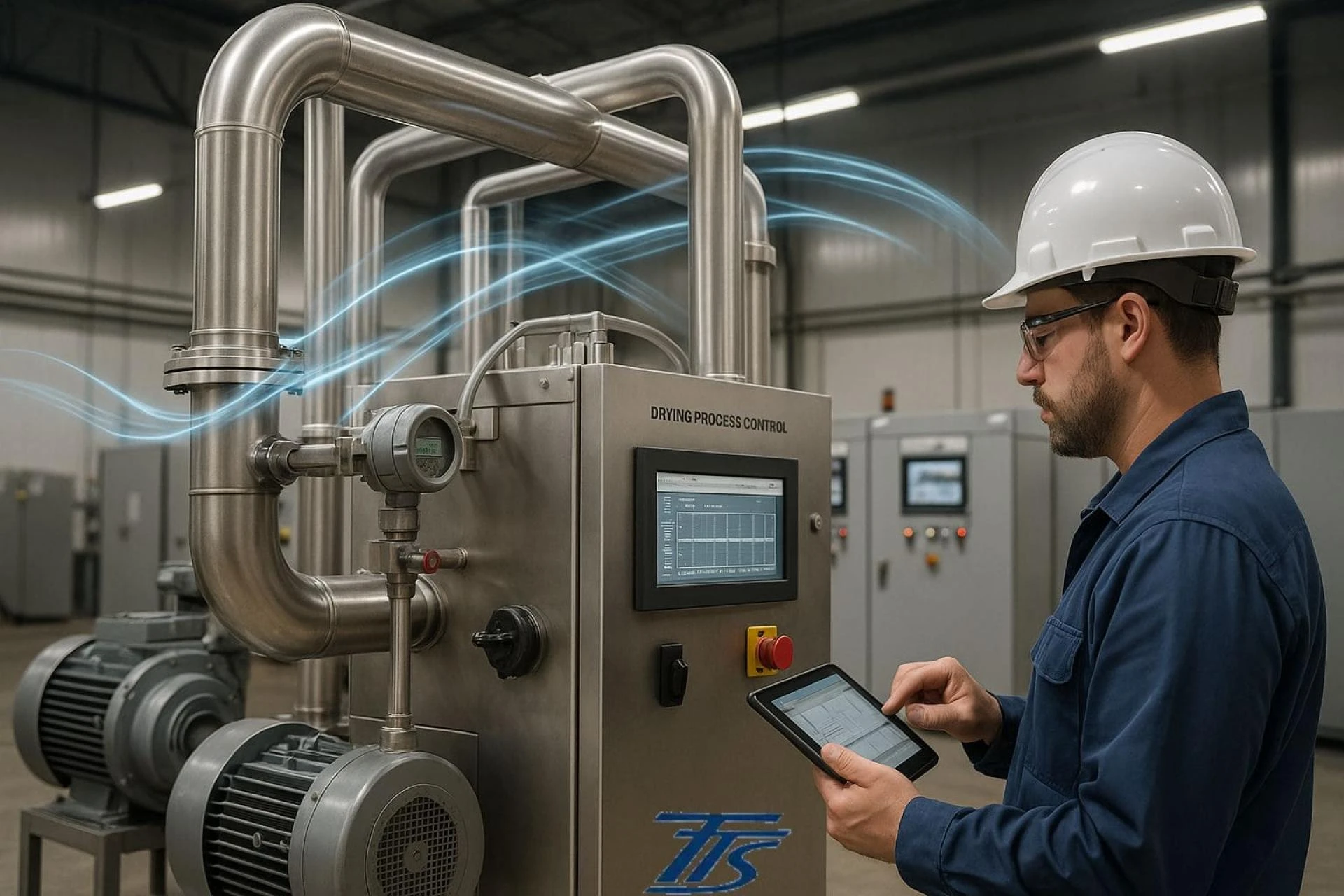

Accurate and reliable level measurement is essential across modern industrial processes. Whether monitoring the liquid level in a storage tank, managing slurry levels in a treatment plant, or tracking solid materials in a silo, level transmitters provide the continuous, real-time data needed to maintain safety, efficiency, and process stability.
As automation becomes more advanced and industries demand higher accuracy, level transmitters have evolved into intelligent instruments capable of operating in harsh conditions, handling complex materials, and integrating seamlessly with digital control systems.
This blog provides a comprehensive overview of level transmitters—how they work, the main types available, common challenges, industry applications, and the key factors to consider when selecting the right device for your plant.
What Is a Level Transmitter?
A level transmitter is an instrument used to measure the height or volume of material—liquid, slurry, or solid—inside a tank or vessel. It converts the measured level into an electrical output signal (typically 4–20 mA, HART, Modbus, or Fieldbus) that can be used by controllers such as PLC, DCS, or SCADA systems for monitoring and automation.
Unlike basic level indicators or point-level switches, level transmitters provide:
- Continuous measurement
- High accuracy
- Real-time feedback
- Automation compatibility
This makes them essential in applications where precision and reliability directly influence production quality and operational safety.
How Level Transmitters Work
Although level measurement technologies differ, all transmitters follow a core concept:
➡ The instrument senses a physical change caused by the material level
➡ Converts that change into an electrical signal
➡ Sends the signal to a monitoring or control device
Here’s how the major technologies function:
1. Radar Level Measurement (Non-Contact)
Radar transmitters emit microwave pulses toward the material surface. The time it takes for the signal to return determines the level.
Key advantages:
- Immune to temperature, vapor, and pressure changes
- Works in harsh chemical environments
- High accuracy for tall or complex tanks
Ideal for oil & gas, chemical processing, and storage tank farms.
2. Guided Wave Radar (Contact Type)
Uses a waveguide probe to direct microwave signals into the material. The reflected signal indicates the level.
Benefits:
- Excellent accuracy
- Effective in foam, vapor, and turbulence
- Capable of interface measurement (e.g., oil over water)
Widely used in refineries, power plants, and chemical vessels.
3. Ultrasonic Level Measurement (Non-Contact)
Sends sound waves toward the material; the echo return time determines level.
Strengths:
- No contact with the process
- Simple installation
- Suited for water and wastewater applications
Less effective in heavy vapor, condensation, or dense foam.
4. Differential Pressure (DP) Level Transmitters
Measures pressure at the bottom of the tank. Liquid height is calculated based on hydrostatic pressure.
Advantages:
- Proven, reliable technology
- Works in pressurized and high-temperature systems
- Compatible with remote diaphragm seals for corrosive materials
Common in chemical plants, refineries, boilers, and storage vessels.
5. Capacitive Level Transmitters
Measure changes in capacitance caused by level variation. Good for solids and some liquids.
Advantages:
- Ideal for powders, grains, and bulk solids
- Suitable for sticky or high-viscosity materials
Requires stable dielectric properties for best performance.
Where Level Transmitters Are Used: Industry Applications
Level measurement is critical across a wide range of sectors:
Chemical & Petrochemical
- Reactive vessels
- Solvent tanks
- Corrosive and hazardous fluids
Oil & Gas
- Storage and buffer tanks
- Separator vessels
- Interface measurement in desalting
Water & Wastewater Treatment
- Lift stations
- Clarifiers
- Sludge handling
Food & Beverage
- Mixing vessels
- Ingredient storage
- Fermentation systems
Pharmaceuticals & Biotech
- Bioreactors
- CIP/SIP systems
- High-purity storage tanks
Bulk Material Handling & Mining
- Silos, hoppers, ore bins
- Dust-loaded environments
- High-volume solid storage
Each industry presents unique challenges, and selecting the right technology is crucial for reliable operation.
Challenges in Level Measurement and How to Overcome Them
Even with advanced technologies, level measurement can be affected by environmental and process conditions. Key challenges include:
Foam Formation
Foam absorbs ultrasonic signals and affects measurement.
Solution: Radar or guided wave radar.
Heavy Vapor or Condensation
Ultrasonic performance drops significantly.
Solution: Non-contact radar.
Low Dielectric Materials
Certain hydrocarbons reflect radar weakly.
Solution: Guided wave radar with optimized configuration.
Turbulence & Agitation
Causes fluctuating readings.
Solution: Use signal damping or stilling wells.
Dusty Environments (Solids)
Ultrasonic waves scatter in dust.
Solution: Radar designed for solids or guided wave radar.
Understanding these challenges helps engineers choose the right transmitter for long-term accuracy.
How to Select the Right Level Transmitter
Choosing a level transmitter requires careful evaluation of process conditions:
1. Material Properties
- Liquid, slurry, or solid
- Viscosity
- Dielectric constant
- Conductivity
2. Process Conditions
- Temperature
- Pressure
- Vapor or dust presence
- Corrosiveness
3. Accuracy Requirements
Some applications require ±1 mm accuracy, while others tolerate ±1%.
4. Maintenance & Installation
- Contact vs. non-contact
- Need for calibration
- Access to mounting points
5. Output Signal and Communication
- 4–20 mA
- HART
- Fieldbus
- Modbus
A well-selected transmitter enhances safety, reduces downtime, and ensures consistent product quality.
The Transmitter Shop Advantage (Commercial Section)
The Transmitter Shop (TTS) offers a wide range of remanufactured and new-surplus level transmitters from trusted brands including Rosemount, Foxboro, Vega, and Aplisens.
Each transmitter provided by TTS is:
- Fully tested
- Calibrated
- Verified for performance
- Ready for field installation
With decades of experience supporting process industries, TTS helps customers find reliable, cost-effective level measurement solutions tailored to their operating needs.
FAQs
1. Which level transmitter is best for chemical tanks?
Radar or guided wave radar due to vapor and temperature resistance.
2. Can level transmitters measure interface levels?
Yes—guided wave radar and DP transmitters are commonly used.
3. Do level transmitters require calibration?
DP transmitters require periodic checks; radar transmitters often need minimal calibration.
4. What communication protocols do level transmitters use?
Common protocols include 4–20 mA, HART, Fieldbus, and Modbus.
5. Are non-contact transmitters better for corrosive fluids?
Yes, radar and ultrasonic transmitters minimize process contact and maintenance.























Sign in to leave a comment.