Understanding liabilities accounting examples is important for managing a company’s finances properly. Liabilities are the amounts a business owes to others, such as suppliers, lenders, or employees. These obligations must be paid over time and are a key part of financial reporting.
What Are Liabilities in Accounting?
Liabilities are debts that arise from past transactions and require future payment. They are usually divided into:
- Current liabilities: Paid within one year (like bills and short-term loans)
- Long-term liabilities: Paid over a longer period (like loans or mortgages)
Common Types of Liabilities
- Accounts payable: Money owed to suppliers
- Accrued expenses: Costs incurred but not yet paid (like salaries)
- Unearned revenue: Payments received before delivering goods or services
- Short-term loans: Debts due soon
- Long-term debt: Loans or bonds paid over several years
Liabilities Accounting Examples
- Accounts payable: A business buys goods on credit and records it as a liability until paid
- Accrued expenses: Salaries earned by employees but paid later are recorded as a liability
- Unearned revenue: Advance payment from customers is recorded as a liability until services are delivered
- Long-term debt: A loan taken for several years is recorded and reduced as payments are made
These liabilities accounting examples show how businesses track what they owe and ensure accurate records.
How Liabilities Affect Financial Statements
- Balance sheet: Shows liabilities along with assets and equity
- Income statement: Expenses like interest reduce profit
- Cash flow: Loan repayments and payments to suppliers reduce cash
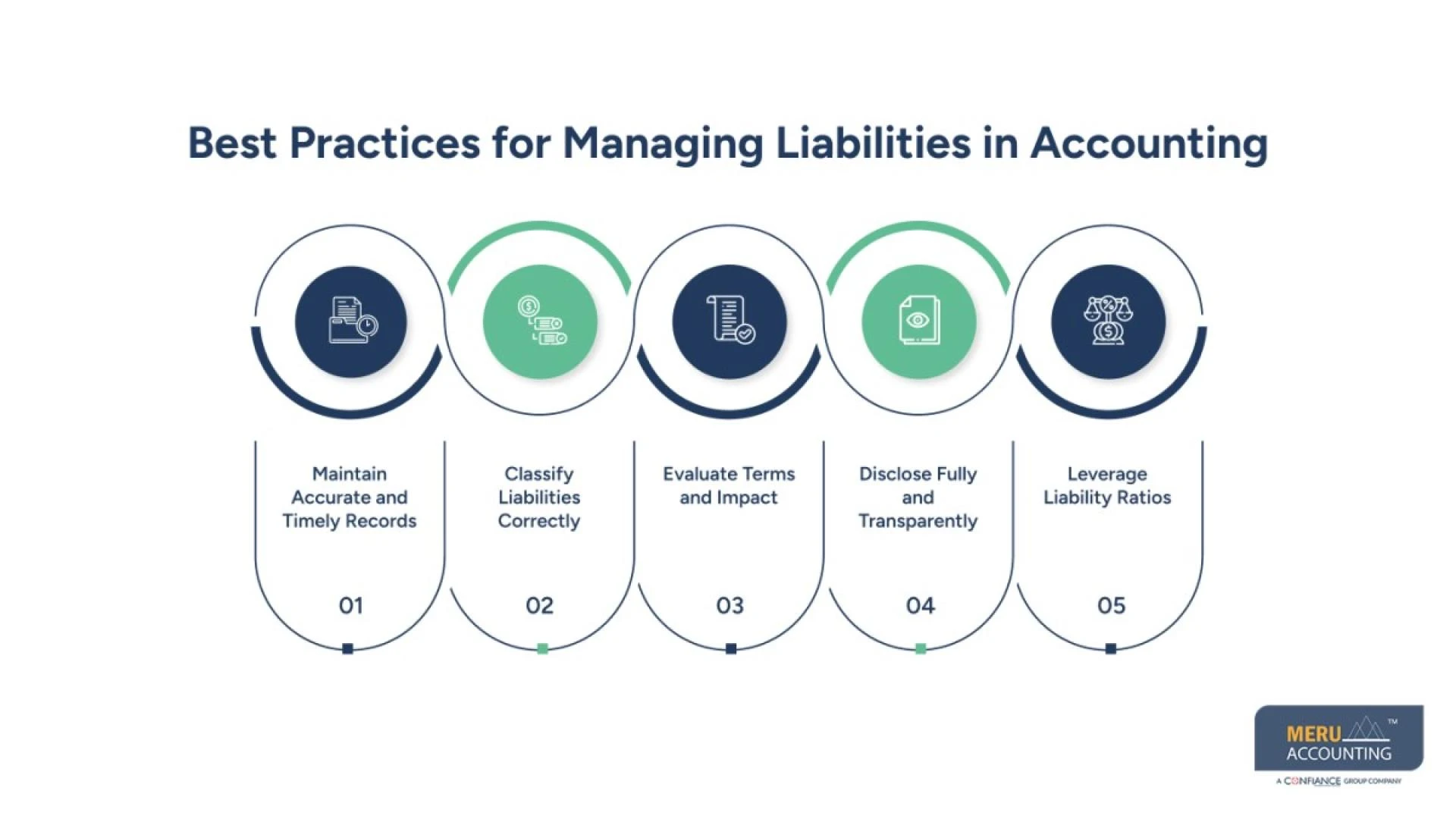
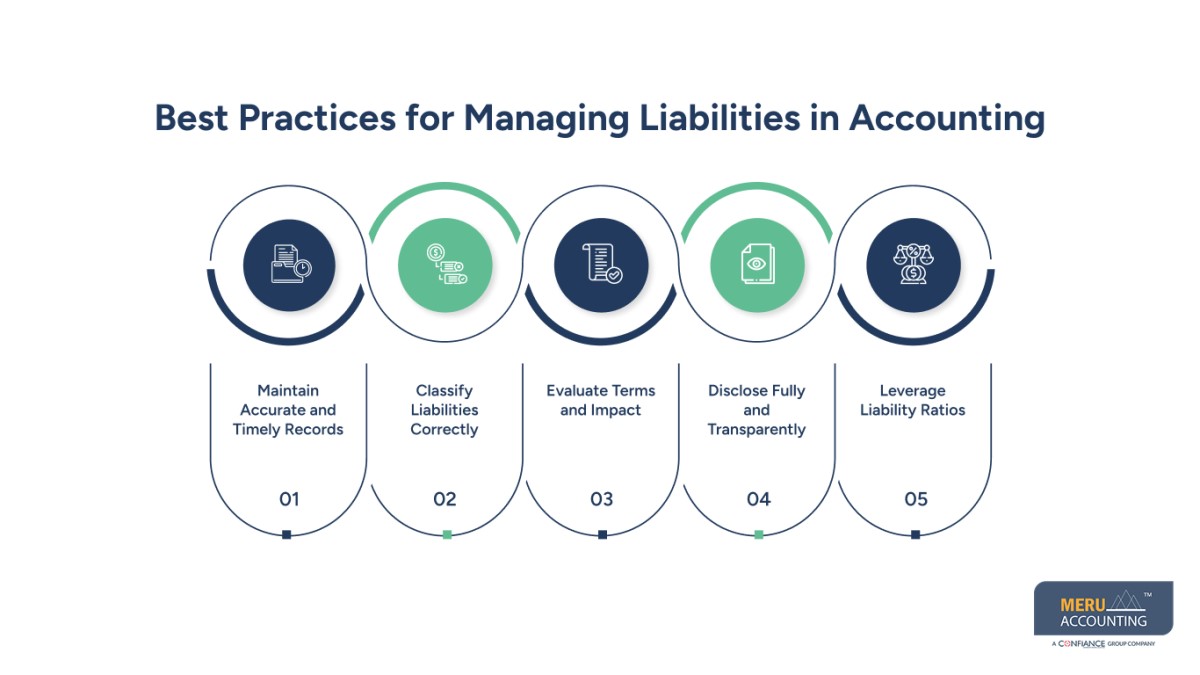
Best Practices for Managing Liabilities
- Keep records accurate and updated
- Separate short-term and long-term liabilities clearly
- Review payment terms and deadlines
- Share complete details in financial reports
Why It Matters
Understanding liabilities accounting examples helps businesses track debts, avoid missed payments, and plan finances better. Proper management improves financial stability and supports better decision-making.
Final Thought
Clear knowledge of liabilities accounting examples helps businesses maintain accurate records and stay financially healthy. With proper tracking and planning, companies can manage their obligations effectively and support long-term growth.
Meru Accounting specializes in delivering professional accounting services tailored to modern business needs, including thorough management of liabilities. Their expert team ensures accurate classification, recognition, and reporting of liabilities in compliance with the latest accounting standards. Meru Accounting also offers customized financial advisory to help organizations optimize their debt structure, improve cash flow, and maintain transparency for stakeholders.



























Sign in to leave a comment.