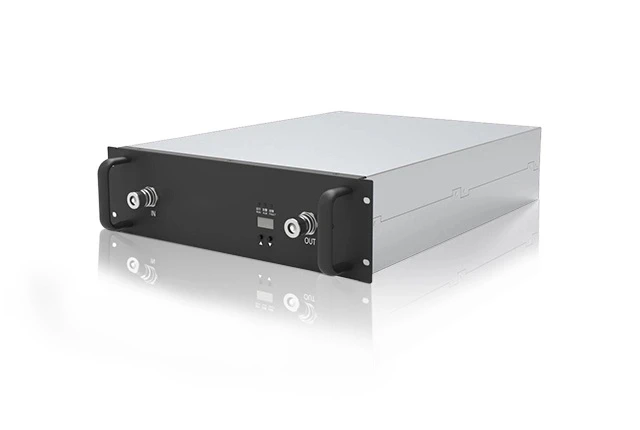

A liquid cooling module uses liquid cooling technology to reduce the temperature of charging equipment. It absorbs and dissipates heat using liquid coolant, which maintains the operating temperature of the charging device within an acceptable range. These modules are ideal for high-power charging scenarios, providing better heat dissipation and charging performance, especially for electric vehicles requiring frequent high-power charging.
Different Types of liquid modules
40KW Liquid Cooling Module
40KW 1000V High Voltage Charging Power Module
40KW Liquid Cooling Module
The 40 kW liquid-cooled car charging module offers efficient, safe, and compact fast charging for EVs, ideal for stations and service centers.
60KW Liquid Cooling Module
60kW 1500V liquid-cooled dc fast charging module for electric vehicle chaging station
60kW 1000V dc power supply liquid cooling rectifier module
60KW Liquid Cooling Module
The 60 kW liquid-cooled charging module efficiently dissipates heat and is ideal for high-demand applications like electric vehicle fast chargers, industrial equipment, and energy storage systems.
What Are The Features of Car Charging Modules That Use Liquid Cooling?
Liquid-cooled charging modules for electric vehicles have several features that make them superior to air-cooled charging systems.
Firstly, they have high power output capabilities, measured in kilowatts (KW), which enables them to charge electric vehicles faster and shorten charging times.
Secondly, liquid cooling systems effectively control the temperature of charging equipment and provide excellent heat dissipation. By reducing energy losses and keeping charging devices operating efficiently, liquid cooling systems improve charging efficiency.
Thirdly, high power module have a compact design that takes up less space, making them ideal for different types of charging scenarios, including public charging stations, parking lots, and residential charging piles.
Fourthly, these modules usually have various safety protection functions, such as overvoltage protection, overcurrent protection, temperature monitoring, and short circuit protection, to ensure the safety of the charging process and prevent potential failures and safety risks.
Fifthly, liquid-cooled charging modules generally support compatibility with different types of electric vehicle charging interfaces. This makes them more flexible and compatible with various makes and models of electric vehicles.
Sixthly, these modules may have charging management functions such as energy measurement, charging billing, and charging progress display, which provide better charging experience and management.
Lastly, liquid-cooled charging modules efficiently utilize energy by controlling device temperature and providing efficient heat dissipation. By doing so, more energy is converted into charging electricity instead of being wasted on heat generation.
In conclusion, technological innovation and development in liquid-cooled automotive charging modules are continuously improving their efficiency and performance, providing more efficient and reliable solutions for electric vehicle charging.
What Is The Charging Efficiency Of The Liquid-Cooled Charging Module?
Liquid-cooled charging modules are generally more efficient at charging than traditional air-cooled systems. The use of liquid cooling technology creates an optimized charging environment by effectively managing heat dissipation and temperature control, which ultimately improves charging efficiency.
The specific charging efficiency is influenced by multiple factors, including the design of the charging equipment, the effectiveness of the liquid cooling system, and power control during the charging process. In general, liquid-cooled charging modules are better equipped to control temperature during the charging process and reduce heat loss, resulting in improved energy conversion efficiency.
On the other hand, traditional air cooling systems may struggle with insufficient heat dissipation during high-power charging, leading to increased temperatures and energy loss. By using a liquid cooling medium, the liquid cooling system can more efficiently absorb and disperse the heat generated during the charging process, effectively control the temperature, and improve charging efficiency.
It's important to note that charging efficiency can be affected by many factors including the design quality of the charging equipment, the efficiency of the charging module, the charging state of the electric vehicle and battery characteristics, and so on. In addition, charging power and speed during the charging process also affect charging efficiency. Therefore, actual charging efficiency may vary depending on the specific circumstances and may differ between different charging equipment and vehicles.
Overall, liquid-cooled charging modules generally improve charging efficiency by providing better heat dissipation management and temperature control, which results in more electrical energy being converted into charging energy for electric vehicles.
FAQs of Liquid Cooling Module
QHow is a liquid-cooled charging post module different from a traditional air-cooled charging post module?
A
While traditional charging post modules typically use fans and radiators to dissipate heat, liquid-cooled charging post modules use a liquid cooling system to cool the module more efficiently. The liquid cooling system provides better heat dissipation and allows the charging module to better control the temperature during high power charging.
QWhat are the advantages of liquid-cooled charging post modules?
A
The advantages of liquid-cooled charging post modules include:
Better heat dissipation: The liquid cooling system can effectively absorb and dissipate the heat generated during the charging process, thus keeping the temperature of the charging post module within a controlled range.
Improved Charging Efficiency: By controlling the temperature of the charging module, the liquid cooling system improves charging efficiency and reduces energy loss.
Increase Module Life: By maintaining the proper temperature, the liquid cooling system helps to reduce thermal stress on the charging pile module and extend its life.
Provides Higher Power Charging: The liquid cooling system's ability to dissipate heat efficiently allows the charging post module to support higher power charging operations.
QAre liquid-cooled charging post modules available for all electric vehicles?
A
Liquid-cooled charging post modules can be adapted to most electric vehicles, especially those that require high power charging. However, compatibility may vary depending on different charging post standards and EV models. When selecting a liquid-cooled charging post module, you need to ensure that it is compatible with your electric vehicle and meets the appropriate charging standards.
QWhat are the coolant options for liquid-cooled charging post modules?
A
Common liquid-cooled charging post module coolant options include water and coolant. Water is a common coolant that has good heat transfer properties but can freeze in extreme temperatures. Coolant can be used as an antifreeze to prevent the coolant from freezing at low temperatures and provide additional protection against corrosion and thermal transfer properties.
As a ev charger module supplier, we provide low voltage power module, power module inverter, power module car, etc. For more info about charger module quotes and how to use a power supply module, contact us.























Sign in to leave a comment.