

Maintaining a building's exterior is an important responsibility for every property owner in New York City. The facade protects the structure from weather, moisture, and environmental damage, but it is constantly exposed to harsh conditions. Over time, bricks can crack, mortar joints can deteriorate, lintels can rust, and water can penetrate exterior walls. These problems may affect the appearance of a building, but they can also create serious safety concerns.
For this reason, New York City has established the Facade Inspection and Safety Program, commonly associated with Local Law 11. Property owners of eligible buildings must arrange periodic facade inspections and address any dangerous or deteriorating conditions. Working with an experienced Local Law 11 Contractor NYC can help ensure that required facade repairs are completed professionally and efficiently.
What Is Local Law 11?
Local Law 11 is connected to the city's facade safety inspection requirements. Buildings that are more than six stories high are generally subject to periodic facade inspections under the Facade Inspection and Safety Program, also known as FISP.
A Qualified Exterior Wall Inspector, or QEWI, examines the exterior walls and other important facade components. The purpose of this inspection is to identify unsafe conditions before they cause injuries, property damage, or more serious structural problems.
During the inspection, professionals may look for:
- Cracked brickwork
- Loose masonry
- Deteriorated mortar
- Water infiltration
- Rusted lintels
- Damaged parapet walls
- Cracked concrete
- Failing exterior elements
After the inspection, the facade receives a condition classification. If repairs are necessary, property owners must arrange for qualified professionals to complete the required work.
Why Facade Maintenance Is Important
A building facade is constantly exposed to environmental stress. Rainwater can enter cracks and damaged mortar joints. Freezing temperatures can cause moisture to expand inside masonry. Strong winds and pollution can also contribute to gradual deterioration.
Without proper maintenance, small facade problems may become serious issues.
Professional facade maintenance helps:
Protect Structural Integrity
Repairing damaged masonry and deteriorated mortar helps maintain the strength of the building exterior.
Prevent Water Infiltration
Sealing cracks and restoring damaged surfaces reduces the risk of moisture entering the structure.
Improve Public Safety
Repairing loose bricks and unstable facade components helps protect pedestrians and occupants.
Reduce Long-Term Costs
Early repairs are generally more affordable than extensive restoration after years of neglect.
Preserve Property Value
A well-maintained building exterior improves curb appeal and helps protect the property's market value.
Common Repairs Required After Facade Inspections
Different buildings have different repair needs. Some of the most common facade repairs include the following.
Brick Repointing
Mortar joints naturally deteriorate over time. Repointing involves removing damaged mortar and installing new mortar to restore the masonry wall.
This repair can:
- Improve wall strength
- Prevent water penetration
- Restore the appearance of the facade
- Extend the life of brickwork
Masonry Replacement
Cracked or severely damaged bricks may need to be removed and replaced. Professional contractors carefully match new materials with the existing facade to create a consistent appearance.
Lintel Replacement
Lintels provide support above windows and doors. When steel lintels rust, they can expand and cause surrounding masonry to crack.
Replacing damaged lintels helps restore structural support and prevents further deterioration.
Waterproofing
Waterproofing is an important part of facade maintenance. Contractors may use sealants, coatings, and other protective methods to reduce moisture penetration.
Proper waterproofing can help prevent:
- Interior leaks
- Mold growth
- Masonry deterioration
- Structural damage
Stucco Repair
Stucco surfaces can develop cracks and other damage due to weather exposure and aging. Professional repairs restore the surface and improve resistance to moisture.
Parapet Wall Restoration
Parapet walls are exposed to rain, snow, and temperature changes. Cracks, loose masonry, and damaged coping can create safety and water infiltration problems.
Professional restoration helps maintain the condition of these important facade components.
Signs Your Building May Need Facade Repairs
Property owners should regularly observe the exterior of their buildings. Some visible signs may indicate the need for professional evaluation.
These include:
- Cracks in bricks or concrete
- Missing or crumbling mortar
- Loose bricks
- Bulging masonry
- Rust stains around windows
- Water stains
- Peeling or cracked stucco
- Spalling concrete
- Falling exterior debris
Even small signs of deterioration should not be ignored. Early repairs can prevent more serious damage.
The Role of a Local Law 11 Contractor
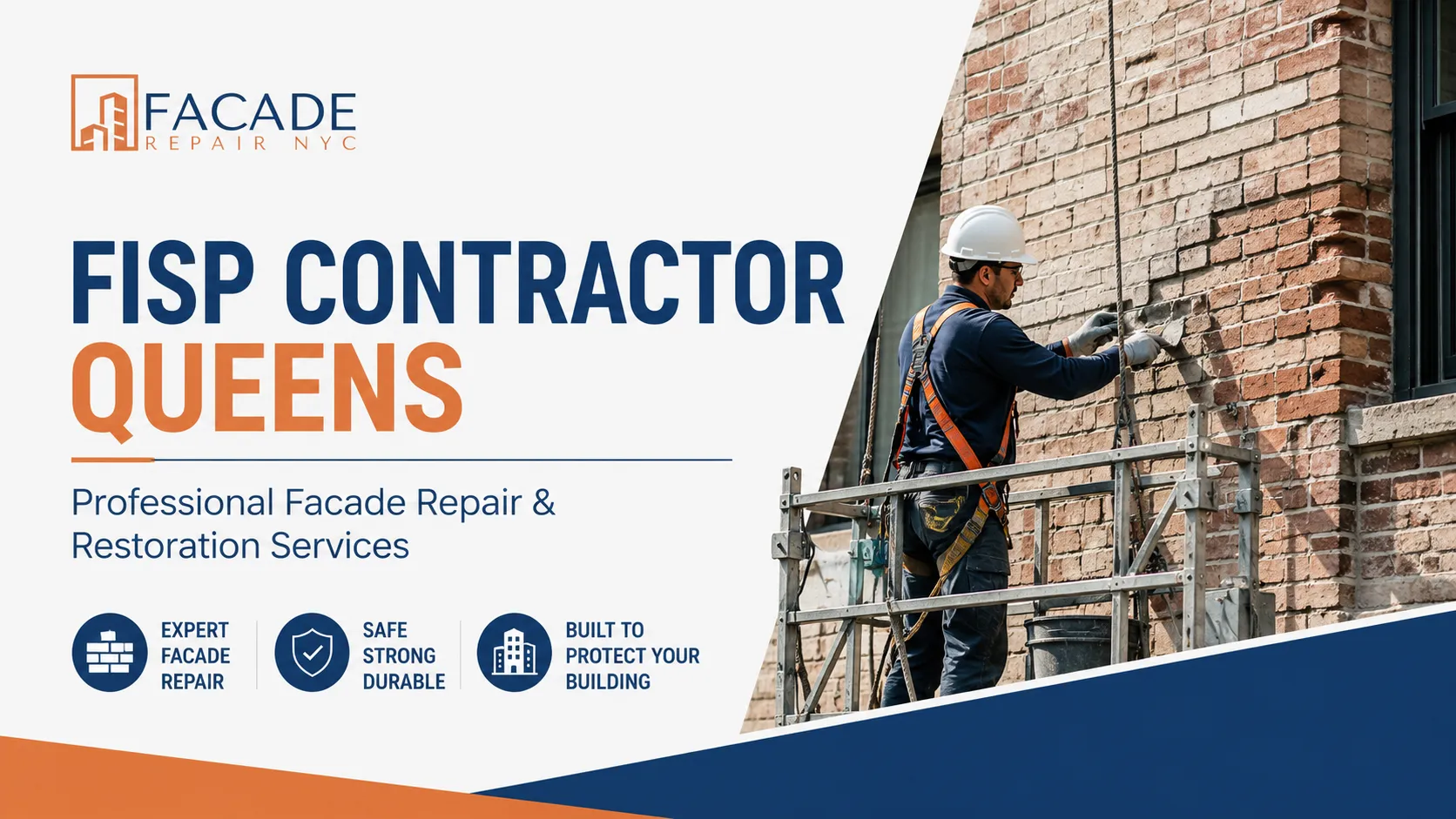
A professional contractor helps property owners address the physical repair needs identified during facade evaluations. Their work may involve inspecting damaged areas, preparing a repair plan, removing deteriorated materials, installing replacement materials, and restoring the exterior.
An experienced contractor should understand:
- Masonry repair techniques
- Waterproofing methods
- Building exterior materials
- NYC construction requirements
- Safety procedures
- Facade restoration practices
Choosing a contractor with relevant experience helps ensure that repairs are completed correctly.
How to Select a Reliable Contractor
Property owners should carefully evaluate potential contractors before beginning a project.
Review Experience
Look for contractors with experience handling facade repair and restoration projects in New York City.
Ask About Services
A professional company should offer the specific services your building requires, such as masonry repair, repointing, waterproofing, or lintel replacement.
Request a Detailed Estimate
A clear estimate should explain the scope of work and expected project costs.
Check Safety Practices
Facade repair often involves work at significant heights. Proper safety procedures are essential.
Consider Reputation
Reviews, references, and previous projects can help property owners evaluate a contractor's reliability and workmanship.
Preventative Maintenance After Repairs
Completing facade repairs is not the end of building maintenance. Regular care is essential for preserving the exterior.
Property owners should:
- Schedule periodic facade evaluations
- Monitor cracks and damaged areas
- Keep gutters and drainage systems clear
- Repair leaks promptly
- Maintain waterproofing
- Address minor masonry issues quickly
Preventative maintenance helps extend the life of the facade and reduce the risk of costly repairs.
Why Choose Facade Repair NYC?
Facade Repair NYC provides professional exterior restoration and repair services for properties throughout New York City. The company specializes in masonry restoration, brick pointing, waterproofing, lintel replacement, stucco repair, crack repair, parapet restoration, and other facade maintenance services.
With experienced professionals and quality materials, Facade Repair NYC helps property owners maintain safe, durable, and attractive building exteriors. Each project can be tailored to the condition and specific requirements of the property.
Conclusion
Maintaining a safe and durable building exterior is an important responsibility for New York City property owners. A professional Local Law 11 Contractor NYC can provide the expertise and restoration services needed to address facade deterioration and protect the structure.
From repointing and masonry repair to waterproofing, lintel replacement, stucco restoration, and parapet repairs, professional facade contractors offer comprehensive solutions for exterior building problems. By addressing damage early and following a regular maintenance plan, property owners can improve safety, prevent costly deterioration, and preserve the long-term value of their buildings.




























Sign in to leave a comment.